Published on March 2, 2026
What Is CNC Jewelry Manufacturing and Guilloché?
CNC (Computer Numerical Control) jewelry manufacturing uses digitally programmed machines to cut, mill, engrave, and shape precious metals and materials with sub-millimeter precision. Guilloché — also called engine turning — is one of the most celebrated applications of this technology, producing intricate, repetitive geometric patterns on metal surfaces that catch and scatter light in mesmerizing ways. Together, CNC machining and guilloché represent the intersection of advanced engineering and centuries-old decorative tradition in luxury jewelry production.
While traditional guilloché was performed on mechanical rose engines and straight-line lathes, modern CNC centers have expanded the possibilities dramatically. Today's 5-axis CNC machines can reproduce classic engine-turned patterns with perfect repeatability while also enabling entirely new designs that would be impossible to achieve by hand or with conventional mechanical lathes. From watch dial texturing and cufflink surfaces to ring bands and pendant faces, CNC guilloché has become a defining feature of contemporary luxury jewelry.
In this guide, we explore the full scope of CNC in jewelry manufacturing — from the fundamentals of precision milling and the rich history of guilloché to modern applications in stone carving, mother of pearl inlay, and hybrid CNC-plus-handcraft techniques that define today's finest jewelry pieces.
What Is CNC in Jewelry Manufacturing?
CNC stands for Computer Numerical Control — a manufacturing process where pre-programmed computer software directs the movement of cutting tools and machinery. In jewelry manufacturing, CNC machines interpret digital design files (typically generated from CAD software) and translate them into precise physical movements that remove material from a metal workpiece. The result is a finished component machined to tolerances as tight as ±0.01 mm, far exceeding what is achievable through manual methods alone.
Modern jewelry CNC operations employ 3-axis, 4-axis, and 5-axis machining centers. A 3-axis machine moves the cutting tool along the X, Y, and Z planes, suitable for flat engravings and simple surface textures. A 5-axis CNC center adds two rotational axes, allowing the tool to approach the workpiece from virtually any angle — essential for machining complex three-dimensional jewelry forms such as sculpted ring shanks, contoured pendant surfaces, and intricate bezel shapes without repositioning the piece. This multi-axis capability drastically reduces production time and eliminates the alignment errors that can occur with multiple setups.
CNC machines in jewelry work with the full range of precious and base metals: gold alloys (9K through 24K), sterling silver, platinum, palladium, brass, bronze, and stainless steel. Beyond metals, specialized CNC equipment is used for precision cutting of mother of pearl, abalone shell, hardstone, and other inlay materials. The versatility of CNC makes it indispensable in a modern vertically integrated jewelry manufacturing facility, where it serves as the backbone for guilloché, engraving, stone carving, mold making, and prototype development.
The Art of Guilloché
History & Origins
Guilloché traces its origins to the engine turning lathes of the late 16th century, though the technique reached its artistic pinnacle in 18th and 19th century Europe. Abraham-Louis Breguet, the legendary Swiss-French watchmaker, elevated guilloché to an art form by applying intricate engine-turned patterns to his watch dials — creating the shimmering, light-catching surfaces that became synonymous with haute horlogerie. Around the same time, the House of Fabergé in Russia employed guilloché as the foundation for its famous enameled eggs and objets d'art, applying translucent vitreous enamel over engine-turned gold and silver surfaces to create the luminous basse-taille effect that remains one of the highest expressions of decorative metalwork.
Traditional engine turning used two primary types of lathes: the rose engine, which produces curved and wavy patterns through the eccentric rotation of the workpiece against a fixed cutting tool, and the straight-line engine, which creates linear geometric patterns through reciprocating movement. Master engine turners spent years learning to control these mechanical devices, adjusting pressure, speed, and tool angle to produce the thousands of precisely spaced cuts that form a single guilloché pattern. By the early 20th century, the craft had declined as mass production methods overtook hand-operated machinery — but it has experienced a remarkable revival thanks to CNC technology.
How Guilloché Works Today
Modern guilloché production primarily uses CNC milling centers equipped with specialized engraving spindles and fine-point cutting tools. The pattern is designed digitally using CAD software, where every line, curve, depth, and spacing is precisely calculated before a single cut is made. The CNC machine then executes the design with absolute consistency — reproducing thousands of identical cuts at depths as shallow as 0.05 mm with line spacing measured in hundredths of a millimeter. This digital approach eliminates the trial-and-error of traditional engine turning while enabling patterns of complexity that would be physically impossible on a mechanical lathe.
However, some manufacturers — including a small number of heritage workshops — still operate original rose engines and straight-line lathes alongside their CNC equipment. These traditional machines produce subtle variations in cut depth and spacing that give hand-turned guilloché its distinctive organic character — a quality that connoisseurs and collectors can distinguish from CNC-produced patterns. The most sophisticated luxury manufacturers offer both CNC and hand-operated guilloché, allowing brands to choose the technique that best matches their product positioning and price point.
Popular Guilloché Patterns
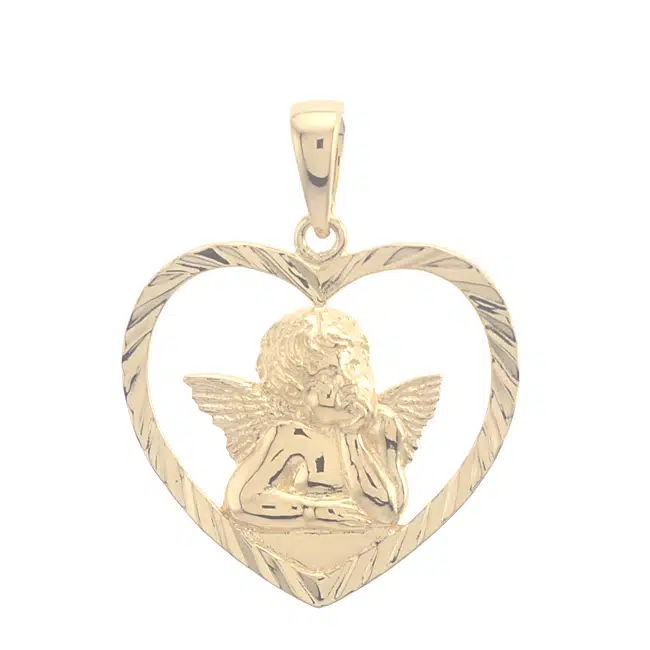
The repertoire of guilloché patterns has been refined over centuries and remains remarkably consistent in luxury jewelry and watchmaking. The barley grain (grain d'orge) pattern consists of small diamond-shaped facets that resemble an ear of barley, creating a subtle shimmer across the surface. The sunburst (soleil) pattern radiates lines outward from a central point, producing a dramatic light-catching effect. The wave (vague) pattern creates gentle, undulating parallel curves that evoke water movement. The basket weave (panier) pattern intersects two sets of parallel lines at angles to create a woven textile effect that adds depth and texture.
Beyond these classic designs, CNC technology has enabled contemporary jewelers to develop entirely new guilloché vocabularies — including spiral patterns, concentric circles with variable spacing, tapestry designs that mimic fabric textures, and freeform geometric compositions that blend multiple traditional motifs into unified surface treatments. When combined with translucent enamel overlay (the basse-taille technique), these patterns gain additional depth and color, transforming a textured metal surface into a luminous, jewel-like finish that defines the highest tier of luxury jewelry and watch production.
CNC Stone Carving & Mother of Pearl Inlay
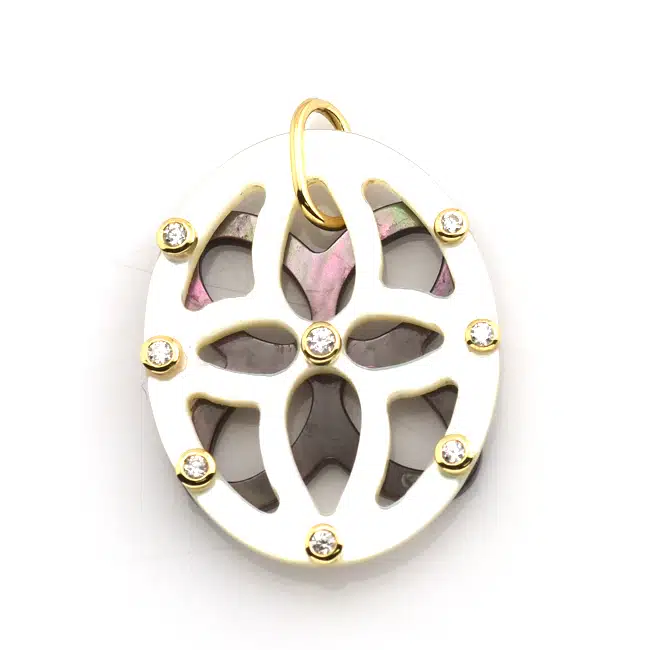
CNC technology extends well beyond metal machining in jewelry manufacturing. Precision stone carving — using CNC routers and milling centers equipped with diamond-tipped or carbide cutting tools — has become essential for producing custom-shaped cabochons, inlay pieces, decorative panels, and sculpted stone elements. Materials commonly machined include mother of pearl (MOP), abalone shell, onyx, malachite, lapis lazuli, turquoise, and various hardstones used in luxury jewelry and objets d'art.
Mother of pearl inlay is one of the most demanding applications of CNC in jewelry. MOP is a delicate organic material — the iridescent inner layer of mollusk shells — that fractures easily under excessive cutting force or heat. CNC machines control cutting speed, feed rate, and tool pressure with precision that prevents cracking and chipping, achieving tolerances of ±0.05 mm for perfectly fitting inlay pieces. The controlled cutting environment also minimizes material waste, an important consideration given the cost and limited availability of high-quality MOP and abalone shell.
CNC stone carving enables design possibilities that are impractical or impossible with manual stone cutting. Complex curved shapes, precisely tapered bezels, multi-piece mosaic inlays, and three-dimensional sculpted elements can be produced with consistent quality across production batches. For watch dials with mother of pearl backgrounds, CNC machines cut the MOP to exact dial dimensions, drill sub-dial apertures, and create date window openings — all in a single automated operation that ensures perfect alignment with the dial's other components.
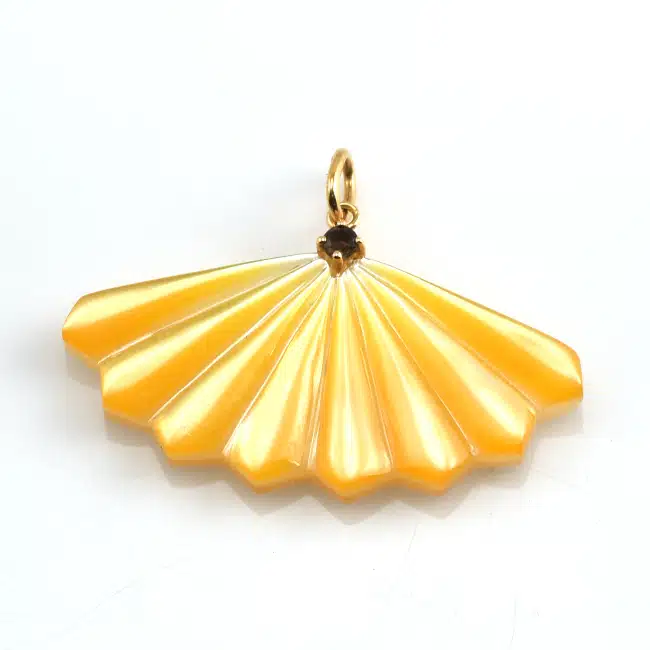
At Maneekan Siam, our stone cutting department combines CNC precision with hand-finishing techniques to produce inlay work for luxury jewelry brands worldwide. From single-piece MOP dial blanks to complex multi-material mosaic patterns, our CNC stone cutting capabilities integrate seamlessly with our metalworking, setting, and enameling departments — enabling fully finished pieces that combine precision-cut stone elements with guilloché-textured metal and hand-set gemstones.
CNC vs Hand Engraving
The comparison between CNC and hand engraving is not a matter of one being superior to the other — each technique excels in different areas and serves distinct purposes in luxury jewelry manufacturing. CNC engraving uses computer-controlled cutting tools guided by digital design files to remove material with mechanical precision and perfect repeatability. Every line, curve, and depth is identical from the first piece to the thousandth. This makes CNC the clear choice for guilloché patterns, geometric designs, logos, serial numbers, and any application where consistency across a production run is essential.
Hand engraving, by contrast, relies on the skill and artistic judgment of a trained engraver using gravers, burins, and other hand tools to carve designs directly into the metal surface. Each stroke reflects the engraver's pressure, angle, and intent — producing organic, one-of-a-kind results that carry the unmistakable character of human craftsmanship. Hand engraving excels at figurative work, scrollwork, portrait engraving, heraldic designs, and any application where artistic expression and individual character are valued over mechanical uniformity.
The most sophisticated luxury jewelry manufacturers employ hybrid approaches that combine the strengths of both methods. A common workflow involves using CNC to establish the primary geometric pattern or guilloché texture — ensuring perfect symmetry, consistent depth, and efficient production — then handing the piece to a master engraver who adds freehand decorative elements, refines edges, and introduces the subtle organic variations that distinguish handcrafted luxury from purely machine-made production. This hybrid method delivers the precision and efficiency of CNC with the artisanal character and emotional resonance of hand engraving.
Applications in Modern Jewelry
CNC guilloché and precision milling have found their way into virtually every category of luxury jewelry and accessories. Watch dials remain the most iconic application — the guilloché-textured dial, often finished with translucent enamel, is a hallmark of prestigious watchmakers and has become equally sought after in jewelry-watch crossover designs. Cufflinks and dress accessories are another natural fit for guilloché, where the flat or gently curved surface provides an ideal canvas for engine-turned patterns that catch the light with every gesture.
In fine jewelry, CNC machining enables the creation of ring bands with precisely textured surfaces, pendant faces with intricate relief patterns, and bracelet links with geometric or organic motifs that would be prohibitively time-consuming to produce by hand. Signet rings, once the exclusive domain of hand engravers, now benefit from CNC-cut crests and monograms that can be reproduced with identical precision across multiple pieces — essential for brands offering personalized or family crest jewelry. Brooches, earring bodies, and charm surfaces are also commonly guilloché-finished, adding a layer of refined texture that elevates otherwise simple forms.
The luxury positioning of guilloché work is undeniable. A guilloché-textured surface signals craftsmanship investment, manufacturing sophistication, and attention to detail — qualities that luxury consumers actively seek. For brands looking to differentiate their collections in a competitive market, CNC guilloché offers a visible, tactile quality marker that photographs beautifully for e-commerce and social media while delivering the in-hand experience of genuine luxury. Combined with Maneekan Siam's complementary expertises — enameling, stone setting, engraving, and fine finishing — CNC guilloché becomes part of a multi-technique approach that creates truly distinctive, market-differentiated jewelry.
Frequently Asked Questions
What is guilloché in jewelry?
Guilloché is a decorative engraving technique that produces intricate, repetitive geometric patterns on metal surfaces through precise, mechanically guided cuts. Originating from 16th-century engine turning lathes, the technique creates mesmerizing designs — such as barley grain, sunburst, wave, and basket weave patterns — that catch and reflect light distinctively. In modern jewelry manufacturing, CNC machines have largely replaced traditional rose engines, enabling even greater precision and pattern complexity while preserving the visual beauty that has defined guilloché for centuries.
How accurate is CNC machining for jewelry?
Modern CNC machines used in jewelry manufacturing achieve tolerances as tight as ±0.01 mm (10 microns), with 5-axis CNC centers capable of machining complex three-dimensional surfaces in a single setup. This level of precision surpasses what is achievable by hand and ensures perfect repeatability across production runs of any size. For guilloché work, CNC allows pattern depths as shallow as 0.05 mm with consistent line spacing, creating the subtle light-play effects that define high-quality engine-turned surfaces.
Can CNC be used to cut mother of pearl for jewelry?
Yes, CNC technology is widely used for precision cutting and shaping of mother of pearl (MOP), abalone shell, and other organic materials for jewelry inlay work. CNC routing and milling machines can cut MOP to tolerances of ±0.05 mm, enabling perfect-fit inlays for bezels, dials, pendants, and decorative panels. The controlled cutting speed and feed rate of CNC prevents the cracking and chipping that can occur with manual cutting of these delicate materials, resulting in higher yield rates and more consistent quality.
What is the difference between CNC engraving and hand engraving on jewelry?
CNC engraving uses computer-controlled cutting tools guided by digital design files to remove material with mechanical precision, while hand engraving relies on a skilled artisan using gravers and burins to carve designs freehand. CNC excels at perfectly repeatable patterns, geometric precision, and complex guilloché designs at scale. Hand engraving offers organic character, unique artistic expression, and real-time adaptability to the metal surface. Many luxury manufacturers use hybrid approaches — CNC for geometric foundations and hand engraving for final artistic details — combining the strengths of both methods.
What metals work best for CNC guilloché jewelry?
Gold alloys (18K and 14K) are the preferred metals for CNC guilloché due to their excellent machinability, consistent grain structure, and superior light-reflective properties after finishing. Sterling silver also machines well and produces striking guilloché effects, particularly when paired with translucent enamel overlays. Platinum can be guilloché-engraved but requires specialized tooling due to its hardness. Brass and bronze are commonly used for fashion jewelry and prototyping. The choice of alloy directly affects pattern quality — finer grain structures produce cleaner, more defined lines.
Precision, Heritage, and Modern Luxury
CNC machining and guilloché represent a compelling convergence of technological precision and centuries-old decorative artistry. From the engine-turned masterpieces of Breguet and Fabergé to today's 5-axis CNC centers producing complex patterns at micron-level accuracy, the evolution of guilloché reflects the broader story of jewelry manufacturing itself — a continuous dialogue between innovation and tradition. Whether the application is a guilloché-textured watch dial, a mother of pearl inlay pendant, a CNC-engraved signet ring, or a basse-taille enameled brooch, the underlying principle remains the same: precision in the service of beauty.
At Maneekan Siam, CNC is one of 17 specialized manufacturing expertises we offer under one roof. Our CNC department works in concert with our engraving, enameling, stone cutting, stone setting, and finishing teams to produce multi-technique pieces that combine guilloché textures, precision inlays, hand-finished details, and set gemstones — all within a single vertically integrated production flow. Whether you need a classic barley grain guilloché for a luxury cufflink line or a custom CNC-carved mother of pearl mosaic for a statement pendant collection, we have the technology, the craftsmanship, and the production capacity to deliver.