Published on March 2, 2026
Understanding Jewelry Enameling Techniques
The main jewelry enameling techniques are cloisonné, champlevé, plique-à-jour, basse-taille, and cold enamel. Each method uses a different approach to apply colored glass or resin onto metal, producing distinct visual effects — from the bold, cell-outlined patterns of cloisonné to the ethereal translucency of plique-à-jour. The technique a jeweler selects depends on the desired aesthetic, the metal substrate, production volume, and the intended durability of the finished piece.
Enameling has been used to decorate jewelry and decorative objects for over three thousand years. Ancient Egyptian goldsmiths, Byzantine artisans, and Chinese imperial workshops all mastered forms of enamelwork that remain in use today. In contemporary luxury jewelry manufacturing, these techniques continue to distinguish fine pieces from mass-produced alternatives, offering colors that never fade and surfaces that resist wear in ways that paint, lacquer, and plating cannot match.
In this comprehensive guide, we explore each major enameling technique in detail — how it works, what it looks like, where it excels, and how to decide which method is right for your next jewelry collection. Whether you are a brand creative director, a jewelry designer, or a buyer evaluating manufacturing capabilities, this article will give you the knowledge to make informed decisions about enamel in your product line.
What Is Jewelry Enameling?
Jewelry enameling is the art of fusing powdered glass (known as glass frit or flux) onto a metal surface using high heat. When fired in a kiln at temperatures between 750°C and 850°C, the glass particles melt, flow into the prepared areas of the metal, and solidify into a smooth, vitreous coating. The result is a hard, glass-like surface that is permanently bonded to the metal — resistant to fading, scratching, and most chemicals.
The raw material for vitreous enamel is a mixture of silica, metal oxides, and flux compounds. Different metal oxides produce different colors: cobalt yields deep blues, chromium creates greens, iron produces reds and browns, and gold chloride can create a range of pinks and purples. Manufacturers carefully formulate and test each enamel color to ensure consistent results across production batches — a critical consideration for brands requiring Pantone-matched colors across their collections.
The history of enameling stretches back to at least 1300 BCE, with some of the earliest known examples found in Mycenaean Greece and ancient Cyprus. The technique spread along trade routes to the Byzantine Empire, where cloisonné enamel reached extraordinary refinement, and to China, where it became a hallmark of imperial craftsmanship during the Ming Dynasty. Today, the same fundamental principles — metal cells, powdered glass, and controlled firing — underpin the work of modern jewelry manufacturers producing enameled pieces for the global luxury market.
Hot Enamel Techniques
Cloisonné: Wire-Cell Enameling
Cloisonné is the most widely recognized enameling technique, named after the French word cloison meaning 'partition.' The process begins with shaping thin metal wires — typically gold, silver, or copper — into the desired pattern and soldering them onto a prepared metal base. These wires create small cells (cloisons) that act as compartments for the enamel. Each cell is carefully filled with wet powdered glass enamel, which is then dried and fired in a kiln. Because enamel shrinks during firing, the filling and firing process is repeated several times until the enamel sits level with or slightly above the wire walls. The piece is then ground flat, polished, and sometimes given a final flash-firing to achieve a glossy finish.
Cloisonné has been practiced for over 2,500 years and remains one of the most prized enameling techniques in fine jewelry. The wire outlines create crisp, defined patterns that are impossible to replicate with other decoration methods. The technique is particularly effective for intricate multi-color designs, detailed motifs, and pieces where a clearly delineated pattern is part of the aesthetic. At Maneekan Siam, our enameling artisans produce cloisonné work on gold, silver, and brass substrates for luxury brands worldwide.
Champlevé: Carved-Cell Enameling
Champlevé (from the French champ levé, meaning 'raised field') takes the opposite approach to cloisonné. Instead of building up walls with wire, the jeweler carves, etches, or casts recesses directly into the metal surface. These recessed areas are then filled with enamel, fired, and polished so that the enamel sits flush with the surrounding raised metal. The result is a design where the metal itself forms the outlines and the enamel provides the color fields — the visual inverse of cloisonné, where wire outlines sit atop a flat base.
Champlevé is often combined with engraving techniques to create the initial recesses. CNC machining and chemical etching have made champlevé more accessible for production-scale manufacturing, allowing consistent depth and pattern precision across large batches. The technique is particularly well-suited for designs with bold graphic elements, heraldic motifs, corporate insignias, and pieces where a substantial metal presence is desired alongside vivid color accents. Because the enamel is held within the body of the metal rather than on its surface, champlevé pieces tend to be exceptionally durable.
Plique-à-jour: Translucent Stained-Glass Enamel
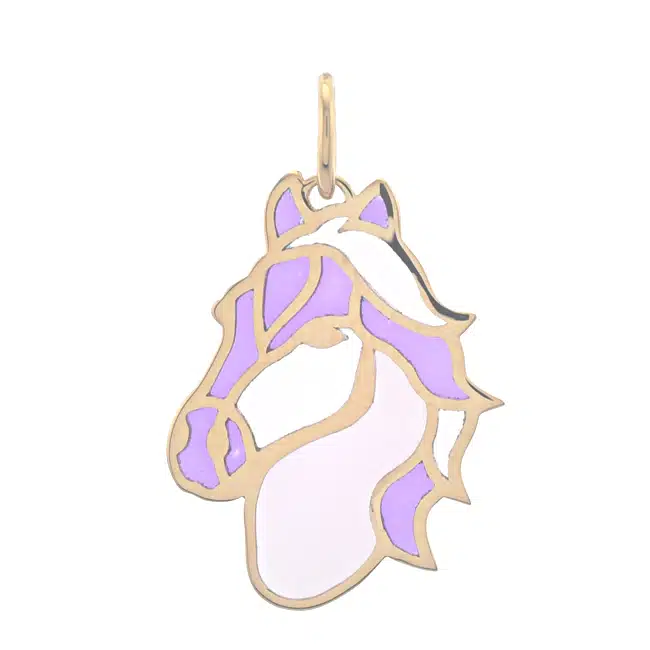
Plique-à-jour (French for 'letting in daylight') is the most technically demanding enameling technique. Like cloisonné, it uses metal cells to contain enamel — but there is no metal backing behind the enamel. The result is a translucent, stained-glass effect where light passes directly through the colored enamel, creating luminous, jewel-like surfaces that glow when illuminated. The technique is often compared to miniature stained-glass windows set in metal frames.
Producing plique-à-jour requires extraordinary skill and patience. The enamel must be applied in thin, carefully controlled layers and fired multiple times. Without a backing to support the molten glass during firing, the enamel can easily crack, sag, or collapse. Artisans sometimes use a temporary copper or mica backing that is dissolved or removed after firing. Because of this extreme difficulty, plique-à-jour pieces are rare, produced in very limited quantities, and command premium prices. The technique is most commonly seen in high-end Art Nouveau-inspired jewelry, collector pieces, and bespoke commissions where the ethereal translucent effect justifies the intensive labor involved.
Basse-taille: Engraved Relief Enameling
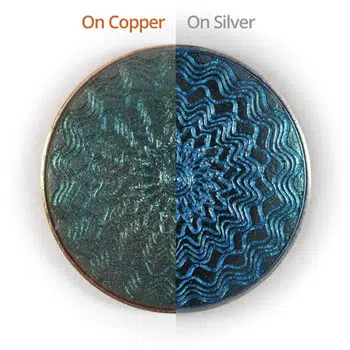
Basse-taille (French for 'low cut') is a technique where the metal surface is engraved or engine-turned with a decorative relief pattern before being covered with a layer of translucent enamel. Unlike cloisonné or champlevé, where enamel fills distinct cells, basse-taille applies a continuous sheet of transparent or semi-transparent enamel over the entire engraved surface. The varying depths of the engraving beneath the enamel create subtle light-and-shadow effects — deeper areas appear darker, while shallow areas glow with lighter, more luminous color.
Basse-taille is closely associated with guilloché — the art of engine-turned engraving that produces precise, repetitive geometric patterns. When translucent enamel is applied over a guilloché-engraved surface, the result is a shimmering, moiré-like effect that changes subtly as the piece catches light from different angles. This combination is a hallmark of haute horlogerie watch dials and luxury jewelry. Basse-taille enameling requires both engraving precision and enamel expertise, making it a technique that only vertically integrated manufacturers with both capabilities can execute efficiently.
Cold Enamel & Resin Alternatives
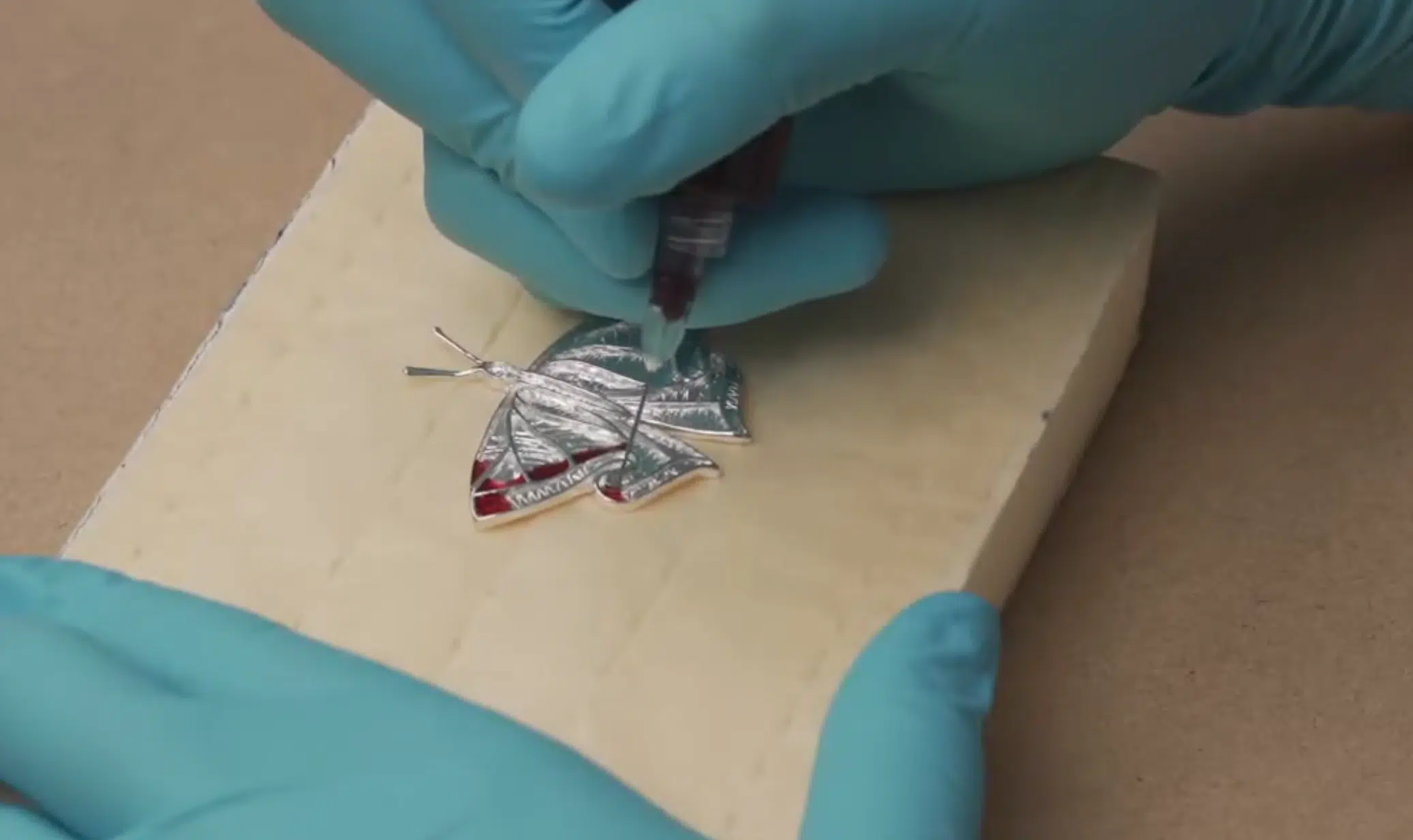
Cold enamel refers to colored resins and epoxies that mimic the appearance of vitreous enamel without requiring high-temperature kiln firing. Instead of glass frit, cold enamel uses two-part epoxy resins or UV-cured acrylic compounds that harden at room temperature or under ultraviolet light. The resulting surface can closely resemble traditional enamel in color and sheen, though it lacks the hardness, depth, and permanence of kiln-fired glass enamel.
The primary advantages of cold enamel are cost, speed, and versatility. Cold enamel can be applied to virtually any metal — including brass, stainless steel, aluminum, and plated surfaces that would not survive kiln temperatures. It cures in minutes (UV) or hours (epoxy) rather than requiring multiple firing cycles, dramatically reducing production time and cost per piece. The color range is virtually unlimited, and cold enamel can achieve effects — such as glow-in-the-dark, glitter, and gradient fills — that are impossible with vitreous enamel.
However, cold enamel has clear limitations. It is softer and more prone to scratching than glass enamel. It can yellow or discolor over time with UV exposure. It does not bond to metal at a molecular level, making it more susceptible to chipping or peeling with heavy wear. For fashion jewelry, promotional pieces, and designs where cost is a primary consideration, cold enamel is an excellent choice. For luxury and fine jewelry intended to last generations, hot vitreous enamel remains the gold standard.
Choosing the Right Enamel Technique for Your Brand
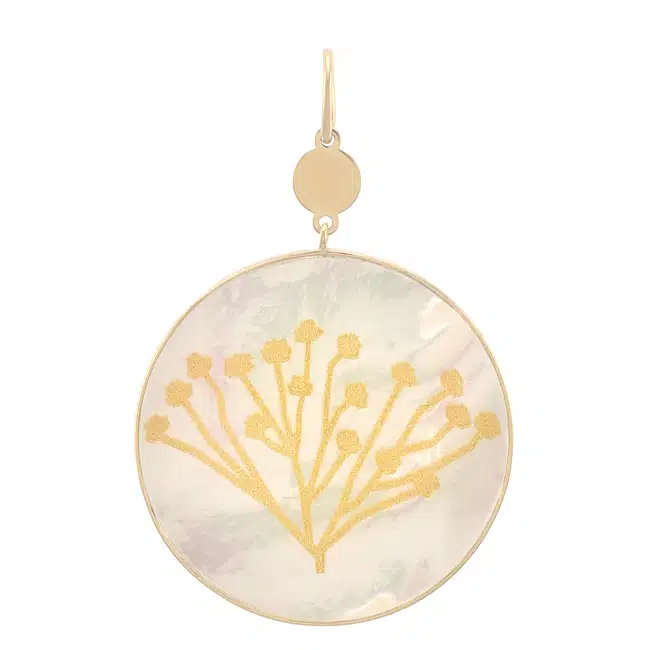
Selecting the right enameling technique for a jewelry collection requires balancing aesthetics, durability, production feasibility, and cost. Cloisonné is the most versatile hot enamel technique, suitable for detailed multi-color designs on pendants, earrings, brooches, and rings. Champlevé excels where bold graphic impact and metal-forward designs are desired, and is particularly cost-effective for production runs using CNC-machined recesses. Plique-à-jour is reserved for statement pieces and limited editions where its extraordinary translucent beauty commands a premium price.
For brands producing at scale, the choice between hot and cold enamel often comes down to product positioning and price point. A luxury brand selling at premium retail prices should invest in vitreous enamel for its superior durability and perceived value — customers paying luxury prices expect permanence, and hot enamel delivers it. A fashion brand with seasonal collections and accessible price points may find cold enamel or UV-cured resin more practical, allowing rapid color changes and lower per-unit costs without sacrificing visual appeal.
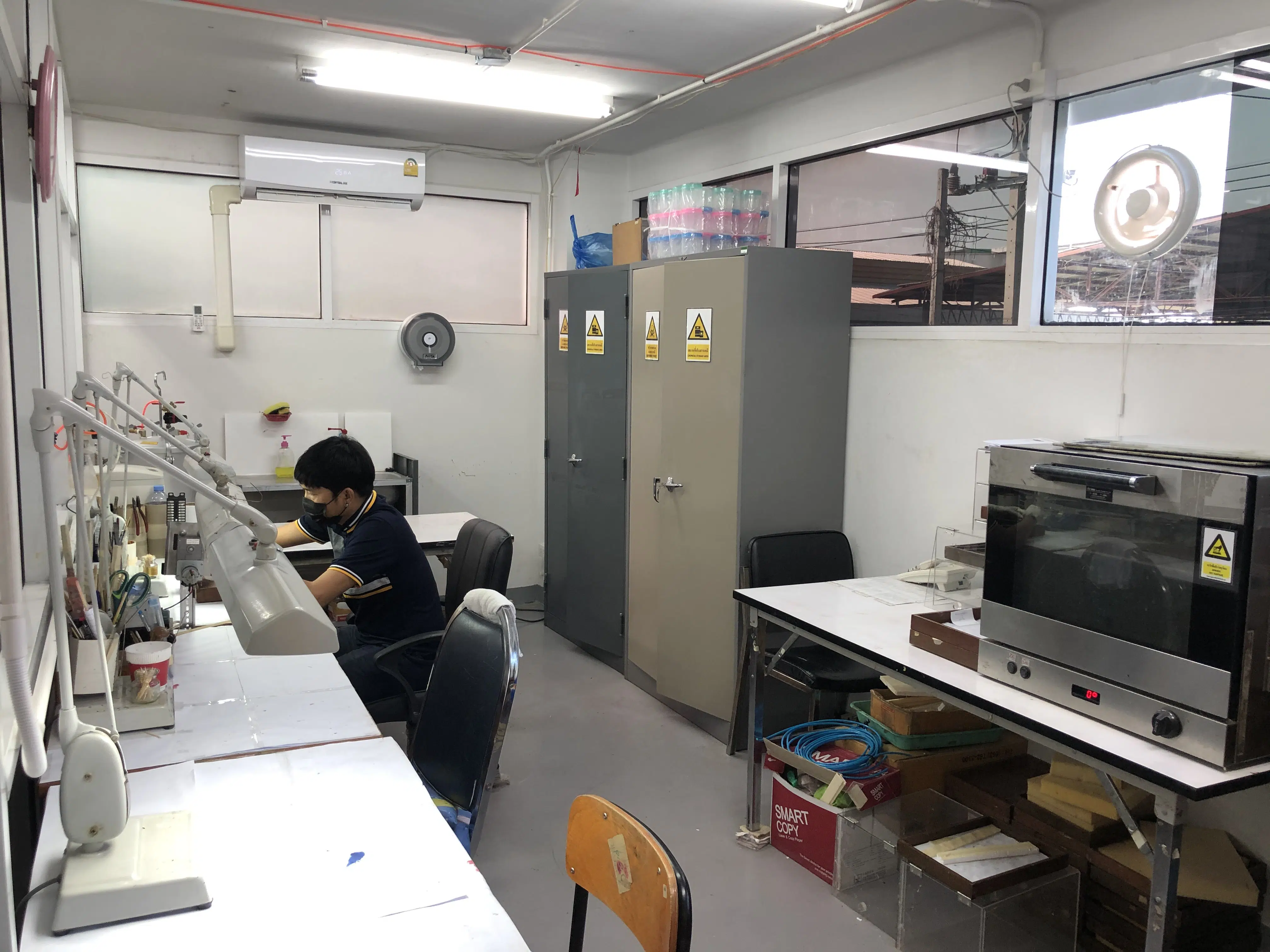
Working with a manufacturer that offers the full range of enameling techniques — both hot and cold — gives brands the flexibility to match the right technique to each product in their line. At Maneekan Siam, our enameling workshop handles everything from intricate cloisonné work on 18K gold to high-volume cold enamel production on silver and brass, ensuring that every piece receives the technique best suited to its design intent, price positioning, and durability requirements.
Frequently Asked Questions
What is the difference between cloisonné and champlevé enamel?
Cloisonné uses thin metal wires soldered onto the surface to create cells that are filled with enamel, while champlevé involves carving or etching recesses directly into the metal body. Cloisonné allows for finer, more intricate patterns with delicate wire outlines, whereas champlevé produces a more robust result with deeper color saturation. Both techniques are fired at high temperatures (750–850°C) and can be applied to gold, silver, and copper alloys. The choice between them depends on the desired visual effect and the design complexity.
How durable is enamel jewelry compared to other finishes?
Hot enamel (vitreous enamel) is extremely durable — it is essentially glass fused to metal at high temperatures, making it resistant to UV fading, chemical exposure, and everyday wear. It can last decades or even centuries with proper care, as evidenced by ancient cloisonné artifacts that remain vibrant today. Cold enamel and resin alternatives are less durable, being more susceptible to scratching, UV yellowing, and chemical damage over time. For luxury jewelry, hot enamel techniques such as cloisonné, champlevé, and plique-à-jour are the preferred choice for lasting quality.
What is plique-à-jour enamel and why is it so rare?
Plique-à-jour is a translucent enameling technique where enamel is applied within metal cells without any backing, creating a stained-glass effect that allows light to pass through. It is considered the most difficult enameling technique because the enamel must be carefully built up in thin layers and fired multiple times without a supporting surface. The slightest error during firing can cause the enamel to crack or collapse. Due to this extreme difficulty and the intensive labor required, plique-à-jour pieces are rare and highly valued by collectors.
Can enamel be applied to any metal?
Hot enamel works best on metals that can withstand high firing temperatures (750–850°C) and have compatible thermal expansion rates. Gold, fine silver, sterling silver, copper, and certain base metal alloys are the most suitable substrates. Cold enamel and UV-cured resin can be applied to virtually any metal, including brass, stainless steel, and plated surfaces, making them versatile alternatives for fashion and costume jewelry where kiln firing is not practical.
How should brands choose between hot enamel and cold enamel for their jewelry line?
The choice depends on the brand's positioning, budget, and target market. Hot enamel (vitreous enamel) is the standard for luxury and fine jewelry — it offers superior durability, color vibrancy, and a glass-like finish that justifies premium pricing. Cold enamel and UV-cured resin are more cost-effective and allow for a wider color range, making them suitable for fashion jewelry and designs requiring colors difficult to achieve with glass enamel. A manufacturer like Maneekan Siam that offers both hot and cold enamel capabilities provides the flexibility to match the right technique to each product line.
Bring Your Enamel Jewelry Vision to Life
Enameling is one of the oldest and most expressive decorative techniques in jewelry — a craft that transforms metal and glass into wearable art. Whether you are drawn to the bold precision of cloisonné, the sculptural depth of champlevé, the ethereal glow of plique-à-jour, or the practical versatility of cold enamel, the right enameling technique can elevate your jewelry collection from ordinary to extraordinary. Understanding the strengths and limitations of each method is the first step toward creating pieces that resonate with your brand identity and delight your customers.
At Maneekan Siam, our enameling workshop is staffed by artisans with decades of experience in both traditional hot enamel and modern cold enamel techniques. From Pantone color matching and sample development to full-scale production, we work closely with brands to bring their enamel jewelry vision to life — on gold, silver, brass, or any substrate that serves the design. With 17 specialized manufacturing expertises under one roof, including engraving, stone setting, and CNC guilloché, we can combine enameling with complementary techniques to create truly distinctive pieces.