Published on March 2, 2026
Manufacturing with Lab-Grown Diamonds: What B2B Buyers Need to Know
Lab-grown diamonds have moved from niche curiosity to mainstream manufacturing material. For jewelry brands seeking a custom jewelry manufacturer capable of working with lab-grown stones, understanding the production workflow — from sourcing and grading to setting and quality control — is critical to delivering consistent, high-quality collections at competitive price points.
As a vertically integrated custom jewelry manufacturer in Bangkok with over 300 skilled artisans, Maneekan Siam processes both natural and lab-grown diamonds across our full production line. This article shares our manufacturing perspective on lab-grown diamonds: what B2B buyers should know about sourcing, production processes, quality assurance, and the logistics of scaling lab-grown diamond jewelry collections.
Whether you are an OEM buyer placing your first lab-grown diamond order, a private label brand expanding into the category, or an established retailer seeking a reliable manufacturing partner, this guide covers the practical considerations that matter most for production success.
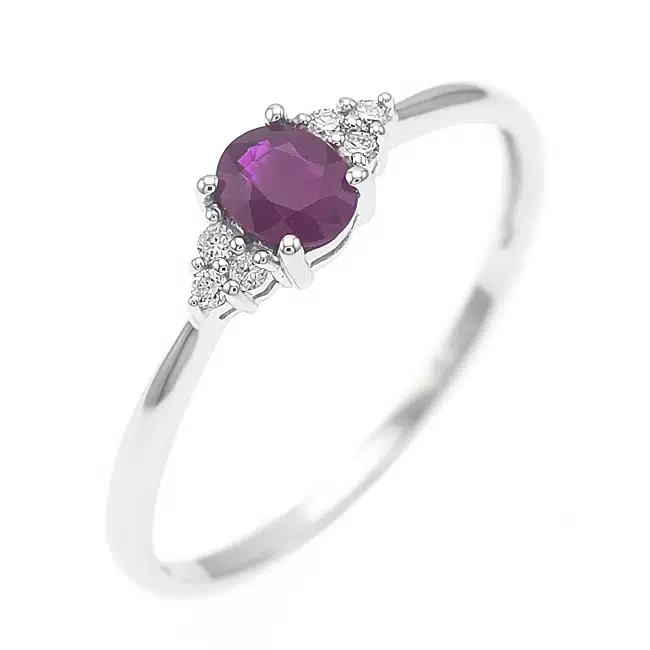
Lab-Grown Diamonds: Production Methods & Manufacturing Implications
CVD Diamonds in Jewelry Manufacturing
Chemical Vapor Deposition (CVD) is the dominant method for producing gem-quality lab-grown diamonds used in jewelry manufacturing. A diamond seed is placed in a vacuum chamber filled with carbon-rich gas (methane and hydrogen) heated to 700–1,300°C. Carbon atoms deposit layer by layer over 2–4 weeks. From a manufacturing standpoint, CVD stones offer excellent consistency in color and clarity — critical for production runs requiring matched stones across hundreds or thousands of pieces. CVD diamonds are available in sizes from melee (under 0.01 ct) to over 10 carats, giving custom jewelry manufacturers flexibility to fulfill diverse order specifications.
HPHT Diamonds in Jewelry Manufacturing
High Pressure High Temperature (HPHT) diamonds are grown by subjecting a carbon source and diamond seed to extreme pressure (5–6 GPa) and temperatures above 1,400°C inside a specialized press. HPHT is particularly relevant for manufacturers producing colored diamond jewelry — the process excels at creating fancy yellow and blue diamonds by introducing nitrogen or boron during growth. For custom jewelry manufacturers handling colored stone collections, HPHT-grown diamonds offer a cost-effective alternative to natural fancy colored diamonds, which are prohibitively expensive for most commercial production volumes.
Grading Standards: Same 4Cs, Same Manufacturing Process
Lab-grown diamonds are graded by the same laboratories (GIA, IGI, GCAL) using the identical 4Cs system as natural diamonds. They share the same hardness (10 Mohs), refractive index (2.42), and thermal properties. For jewelry manufacturers, this means the production process is identical — the same tools, setting techniques, polishing equipment, and quality control procedures apply to both lab-grown and natural diamonds. The key manufacturing distinction is supply chain management: lab-grown stones require separate inventory tracking, laser inscription verification, and disclosure compliance at every stage.
B2B Market Opportunity: Lab-Grown Diamonds by the Numbers
The global lab-grown diamond market reached approximately $12.8 billion in 2025, growing at over 9% annually. For B2B buyers, the numbers that matter most are production economics: lab-grown diamonds cost 60–85% less than natural equivalents at wholesale, enabling manufacturers to offer OEM clients significantly lower per-unit costs or higher margin potential on finished jewelry. In the US market alone, lab-grown diamonds now represent over 20% of diamond jewelry sales by volume.
From a manufacturing demand perspective, the trend is clear: more brands are requesting lab-grown diamond capabilities from their OEM and private label partners. Custom jewelry manufacturers who can handle both natural and lab-grown production are winning contracts over those limited to natural stones only. The ability to source, set, and quality-control lab-grown diamonds is becoming a baseline requirement for serious manufacturing partnerships.
Supply has expanded significantly, with growers in India, China, the US, Singapore, and Israel increasing capacity by 15–20% annually. For manufacturers, this means improving availability, shorter lead times for stone procurement, and more consistent calibrated stone supply — all factors that directly improve production planning and order fulfillment reliability.
Natural vs Lab-Grown: Manufacturing & Cost Comparison
Identical Manufacturing Properties
From a production floor perspective, lab-grown and natural diamonds are identical to work with. Same hardness (10 Mohs), same density (3.52 g/cm³), same thermal conductivity. Your setters, polishers, and QC inspectors use the same tools and techniques for both. A jewelry manufacturer does not need separate production lines or specialized equipment — the investment is in supply chain processes and compliance, not in new machinery. This makes it straightforward for existing custom jewelry manufacturers to add lab-grown diamond capability to their service offering.
Wholesale Price Impact on Production Economics
Lab-grown diamonds wholesale at 60–85% below natural diamond prices. For a 1-carat round brilliant (G color, VS1), wholesale lab-grown pricing ranges $300–$600 versus $2,000–$4,000 for natural. This price differential transforms production economics: brands can specify larger center stones, more generous pavé layouts, and higher stone counts per piece while maintaining target retail price points. For custom jewelry manufacturers, this means handling more stone-intensive designs and higher per-piece complexity — a shift that rewards manufacturers with strong setting capabilities and efficient production workflows.
Pricing Trends & Production Planning
Lab-grown diamond wholesale prices have declined 30–40% between 2022 and 2025 as production capacity increases. For manufacturers and their B2B clients, this ongoing deflation affects production planning: stone costs quoted at order placement may differ from costs at time of procurement. Experienced custom jewelry manufacturers build pricing structures that account for this volatility, typically locking stone costs at procurement rather than at order. Brands should discuss pricing mechanisms and lead time expectations upfront with their manufacturing partner.
Production Workflow: Lab-Grown Diamond Jewelry
Sourcing & Procurement
Lab-grown diamond sourcing is more streamlined than traditional diamond procurement. Stones can be ordered directly from growers or through specialized distributors with full traceability from reactor to finished cut stone. At Maneekan Siam, our stone sourcing team works with vetted lab-grown diamond suppliers who provide IGI or GIA-certified stones with laser inscriptions, detailed grading reports, and origin documentation. We source precisely calibrated parcels matched for color, clarity, and cut consistency — essential for production runs where stone uniformity across an entire order is non-negotiable.
Sourcing & Procurement →Incoming Quality Control & Verification
Every lab-grown diamond shipment undergoes incoming QC before entering our production floor. Our gemologists verify grading report accuracy against physical stones using calibrated equipment, confirm laser inscriptions match documentation, check for undisclosed treatments or enhancements, and sort stones by exact calibration. This incoming QC process is critical because lab-grown diamond quality can vary between growers and even between production batches. A reliable custom jewelry manufacturer catches discrepancies before they enter production, preventing costly rework and delivery delays.
Setting & Production Capabilities
Lab-grown diamonds are set using the same techniques as natural stones — prong, bezel, channel, pavé, invisible, and tension settings all apply identically. The cost advantage of lab-grown diamonds often leads to more ambitious designs: larger center stones, full pavé coverage, and multi-stone compositions that would be prohibitively expensive with natural diamonds. At Maneekan Siam, our setting department handles lab-grown diamonds daily across all setting types, from delicate melee pavé work to large solitaire mountings. Our in-house CAD team optimizes designs for manufacturability, ensuring that stone specifications align with production capabilities.
Setting & Production Capabilities →Why Brands Choose Lab-Grown Diamond Manufacturing
Lower MOQ & Better Production Economics
The lower per-stone cost of lab-grown diamonds fundamentally changes production economics for B2B buyers. Brands can achieve viable unit economics at lower minimum order quantities compared to natural diamond jewelry, making it easier to test new collections or enter the diamond jewelry category for the first time. For custom jewelry manufacturers, lab-grown orders often feature higher stone counts per piece, which means more setting labor but better overall value delivery to the client. The typical MOQ for lab-grown diamond jewelry at Maneekan Siam starts at 50 pieces per design — accessible for both emerging brands and established retailers testing new product lines.
Sustainability & RJC Compliance
Lab-grown diamonds support sustainability positioning for brands — no mining, no habitat disruption, full supply chain traceability. When combined with a custom jewelry manufacturer holding RJC certification and using recycled precious metals, brands can build genuinely defensible sustainability claims for their lab-grown diamond collections. Maneekan Siam's RJC certification covers our entire production chain, and our sustainability practices — including responsible sourcing, waste management, and environmental monitoring — apply equally to natural and lab-grown diamond production.
Sustainability & RJC Compliance →Design Freedom & Collection Development
Lab-grown diamonds unlock collection possibilities that natural diamond pricing constrains. Brands can develop lines with 1–3 carat center stones at accessible price points, offer full-diamond designs previously reserved for ultra-luxury, and experiment with fancy colored diamonds (blue, pink, yellow) at commercial volumes. For custom jewelry manufacturers, this means more creative design briefs, more technically demanding settings, and the opportunity to differentiate through manufacturing expertise. Brands that partner with a manufacturer strong in both design and production can leverage lab-grown economics to create distinctive, market-leading collections.
Manufacturing Challenges & How to Address Them
Stone Consistency Across Production Runs
The biggest manufacturing challenge with lab-grown diamonds is maintaining stone consistency across large production runs. Color and clarity can vary between growers, batches, and even individual growth cycles. A quality-focused custom jewelry manufacturer addresses this through rigorous incoming QC, supplier qualification programs, and strategic parcel buying that pre-sorts stones for production compatibility. At Maneekan Siam, we maintain relationships with multiple qualified growers to ensure backup sourcing and consistent quality across high-volume orders.
Price Volatility & Order Planning
Lab-grown diamond prices continue to decline as production capacity expands globally. For B2B buyers, this creates a planning challenge: a collection quoted today may face different stone economics by the time reorders are placed. Effective manufacturing partnerships address this with transparent pricing models that separate stone cost from manufacturing cost, flexible lead times that allow procurement optimization, and proactive communication about market pricing shifts. We recommend brands discuss pricing structure and reorder mechanisms with their manufacturer before committing to large programs.
Compliance & Documentation Requirements
Regulatory frameworks worldwide mandate clear lab-grown diamond disclosure at every supply chain stage. For manufacturers, compliance means verifying laser inscriptions on every stone, maintaining separate inventory systems for natural and lab-grown diamonds, ensuring all documentation and packaging clearly identifies stones as laboratory-grown, and meeting disclosure requirements specific to each target market (FTC in the US, EU regulations, etc.). A compliant custom jewelry manufacturer handles these requirements as standard operating procedure, protecting both their own reputation and their clients' brands from regulatory risk.
Frequently Asked Questions — B2B Manufacturing
What is the minimum order quantity for lab-grown diamond jewelry?
At Maneekan Siam, the typical MOQ for lab-grown diamond jewelry is 50 pieces per design. This applies to both OEM and private label orders. For simpler designs with readily available calibrated stones, we can accommodate smaller initial orders to help brands test the market. Volume pricing improves significantly at 200+ pieces per design, and large production runs (1,000+ pieces) benefit from dedicated stone procurement and priority production scheduling.
What are typical lead times for lab-grown diamond jewelry production?
Standard lead times for lab-grown diamond jewelry production range from 4–8 weeks from approved sample to delivery, depending on order complexity and stone specifications. Stone procurement typically takes 1–2 weeks for standard calibrated sizes. Sample development requires 2–3 weeks. Production for a typical 200-piece order takes 3–4 weeks. Rush orders can be accommodated with advance notice. Lead times are generally shorter than natural diamond orders because lab-grown stone availability is more predictable and procurement channels are more direct.
How does quality control work for lab-grown diamond jewelry?
Our quality control process for lab-grown diamond jewelry includes four stages: incoming stone inspection (verifying grading reports, laser inscriptions, and physical quality against documentation), in-process manufacturing QC (checking setting security, alignment, and finish at each production stage), final inspection (comprehensive quality check against approved sample and client specifications), and pre-shipment audit (random sampling for orders above 100 pieces). Each lab-grown diamond is verified as properly disclosed and documented throughout the production chain.
Do you provide IGI or GIA certificates with lab-grown diamond jewelry?
Yes. We source lab-grown diamonds with IGI, GIA, or GCAL grading reports as standard. For center stones above 0.30 carats, individual grading reports are included with each piece. For melee and smaller calibrated stones, parcel certificates documenting average quality grades and origin are provided. All certificates and laser inscriptions are verified during our incoming QC process before stones enter production. We can accommodate specific certification preferences — please specify your requirements when placing orders.
Can you manufacture both natural and lab-grown diamond jewelry?
Yes. Maneekan Siam is a custom jewelry manufacturer equipped to handle both natural and lab-grown diamond production. We maintain completely separate inventory and tracking systems for natural and lab-grown stones, ensuring full compliance with disclosure regulations. Our production capabilities — including all setting types, precious metal work (gold, silver, platinum, brass), enameling, engraving, and finishing — apply identically to both natural and lab-grown diamond jewelry. Many of our clients order both categories and appreciate working with a single manufacturing partner for their entire diamond jewelry range.
Partner with a Custom Jewelry Manufacturer for Lab-Grown Diamond Production
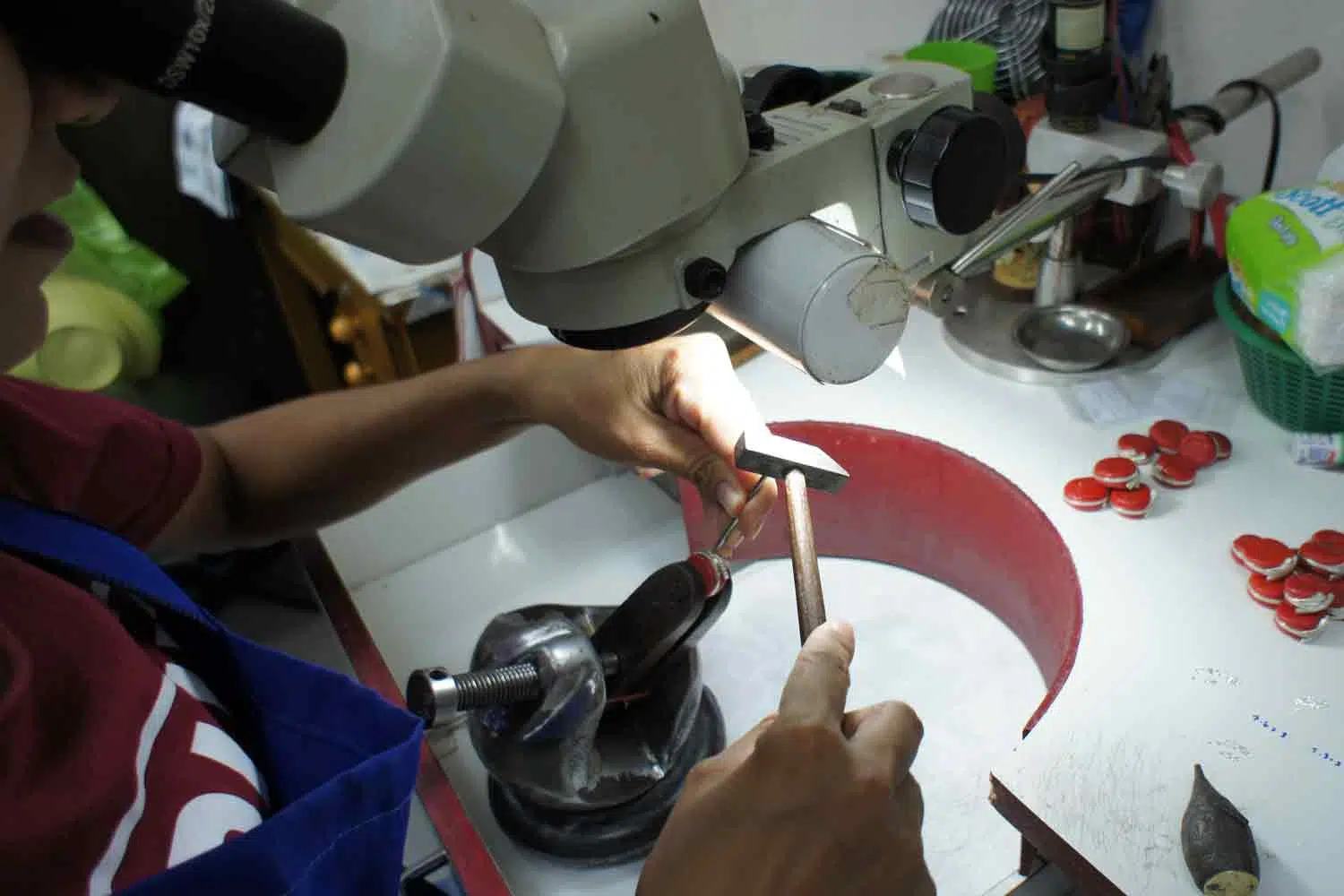
Lab-grown diamond jewelry manufacturing requires the same technical expertise as natural diamond production — plus additional supply chain processes for sourcing, compliance, and quality control. Choosing the right custom jewelry manufacturer is the single most important decision for brands entering or scaling in this category. The manufacturer you select should demonstrate proven experience with lab-grown diamond setting, rigorous incoming QC processes, transparent pricing structures, and the production capacity to support your growth.
Maneekan Siam is a vertically integrated custom jewelry manufacturer in Bangkok, Thailand, with comprehensive lab-grown diamond manufacturing capabilities. From stone sourcing and CAD design to casting, setting, quality control, and shipping — we handle every stage of production under one roof. Our RJC certification, 500,000+ annual production capacity, and experience working with international brands make us a trusted manufacturing partner for lab-grown diamond jewelry. Contact our team to discuss your next lab-grown diamond collection.