Published on March 2, 2026
Stone Carving: Where Nature Meets Precision Craftsmanship
What materials give luxury jewelry its most captivating visual effects? Beyond precious metals and faceted gemstones, it is often the carved and inlaid natural stones and shells that create the most striking and distinctive designs. Mother of pearl with its ethereal iridescence, abalone shell with its vivid color play, carved amethyst and jade with their sculptural depth — these materials transform jewelry from mere adornment into wearable art, and the techniques used to shape and set them represent some of the most demanding skills in the jewelry manufacturing industry.
Stone carving for jewelry encompasses a broad family of techniques: precision cutting of shell materials for flat inlay, three-dimensional sculpting of semi-precious gemstones, CNC machining of hard stones for calibrated components, and the meticulous art of setting carved elements into metal frameworks. Each material and technique demands specialized knowledge — the fracture behavior of nacre differs fundamentally from the conchoidal fracture of quartz, and the tools, speeds, and approaches required for each are correspondingly different.
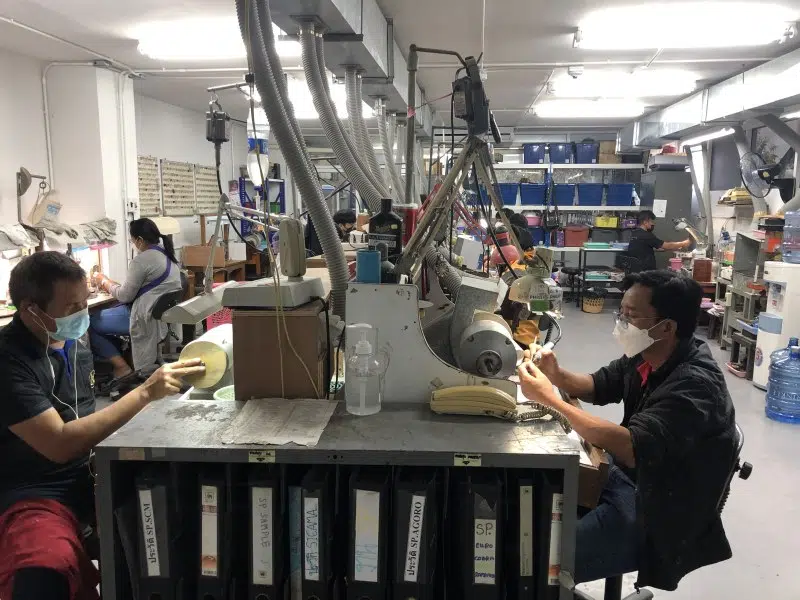
At Maneekan Siam, stone carving is one of our core manufacturing competencies. Our dedicated stone cutting and engraving departments handle everything from mother of pearl and abalone inlay for luxury watch dials and fashion jewelry to precision CNC carving of amethyst, citrine, onyx, and jade for high-jewelry applications. In this article, we explore the materials, techniques, and technologies that define modern stone carving in jewelry — and explain how our vertically integrated facility in Bangkok delivers these capabilities under one roof.
Mother of Pearl: The Quintessential Inlay Material
Properties & Sourcing
Mother of pearl — also known as nacre — is the iridescent inner lining of certain mollusk shells, most commonly harvested from oyster species (Pinctada) and freshwater mussels. Its luminous appearance results from a remarkable natural microstructure: thousands of microscopic layers of aragonite platelets, each approximately 0.5 microns thick, separated by thin sheets of organic conchiolin. When light passes through these layers, it undergoes interference and diffraction, producing the soft, shimmering iridescence that has made nacre one of the most prized decorative materials in jewelry and horology for centuries.
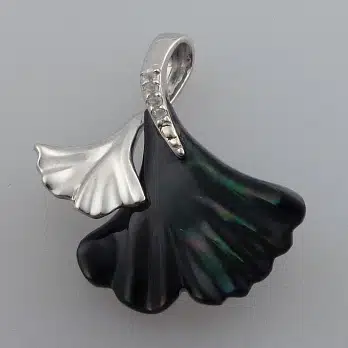
The quality and color of mother of pearl vary significantly by species and geographic origin. White and cream MOP from the gold-lip oyster (Pinctada maxima) of Australian and Indonesian waters is considered the premium grade for jewelry applications due to its consistent color, thickness, and workability. Black MOP from the black-lip oyster (Pinctada margaritifera) of Tahitian and Cook Islands waters offers dramatic dark tones with green, blue, and purple overtones. Pink MOP from queen conch shells provides a warm rose palette. Each variety is sourced from sustainable aquaculture or regulated wild harvest to ensure responsible supply chains.
Processing & Applications
Transforming raw shell into precision jewelry components requires careful, multi-stage processing. The shell is first cleaned, stabilized, and sawn into flat blanks using diamond-blade saws. These blanks are then ground to uniform thickness — typically 0.8 to 2.0 mm for jewelry inlay applications — using surface grinders with diamond abrasive wheels. The flattened blanks are cut to shape using CNC laser cutting, waterjet cutting, or precision hand cutting with jeweler's piercing saws, depending on the complexity and tolerance requirements of the design.
In luxury jewelry, mother of pearl is used extensively for dial blanks in high-end watches, inlay panels in pendants and earrings, cabochon-cut elements in rings and brooches, and decorative overlays in cufflinks and accessories. The material pairs beautifully with both yellow gold and white metals, and its neutral palette serves as an elegant canvas for additional decoration including hand engraving, gemstone setting, and enamel accents. At Maneekan Siam, our stone cutting department processes mother of pearl daily, producing calibrated inlay pieces to tolerances as tight as 0.1 mm for seamless integration with metal frameworks.
The Science of Iridescence
The iridescence of mother of pearl is not surface coloring — it is a structural optical phenomenon. The alternating layers of aragonite and conchiolin act as a natural photonic crystal, selectively reflecting certain wavelengths of light based on layer thickness, viewing angle, and illumination direction. This means that every mother of pearl element in a piece of jewelry displays subtly shifting colors as the wearer moves — an effect impossible to replicate with pigments or coatings, and one of the primary reasons that MOP remains a material of choice for luxury jewelry despite the availability of synthetic alternatives.
Abalone Shell: Nature's Most Vivid Palette
Unique Optical Properties
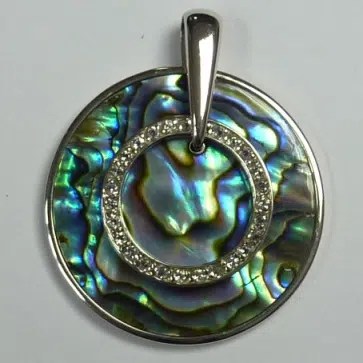
Abalone shell (from the Haliotidae family of sea snails) shares the nacre-based composition of mother of pearl but produces dramatically more vivid and varied colors. The abalone shell's unique layered microstructure — with aragonite tiles arranged in a characteristic brick-and-mortar pattern — creates intense blues, greens, purples, reds, and golds that shift and shimmer with movement. No two pieces of abalone display identical color patterns, making each inlay element naturally one-of-a-kind.
The most prized abalone species for jewelry include New Zealand paua (Haliotis iris), renowned for its intense blue-green coloring; red abalone (Haliotis rufescens) from the California coast, valued for its deep crimson and green tones; and Australian abalone varieties that offer softer pastel iridescence. Abalone is also significantly tougher than most mother of pearl varieties due to its brick-and-mortar nacre architecture, which gives it fracture resistance approximately 3,000 times greater than the aragonite mineral alone — a property that makes it well-suited for jewelry applications subject to daily wear.
Harvesting & Inlay Techniques
Working with abalone presents unique challenges compared to mother of pearl. The shell's natural curvature is more pronounced, its thickness varies more irregularly, and its hardness and toughness require diamond tooling and careful feed rates during cutting to prevent cracking or delamination. Skilled stone cutters select areas of the shell with the most desirable color patterns, then extract flat sections by careful sawing and grinding — a process that generates significant waste, contributing to abalone's higher cost relative to standard MOP.
Abalone inlay techniques in jewelry range from simple flat-cut elements set into recessed cavities to complex mosaic patterns that combine multiple pieces of abalone in a single design. Advanced techniques include graduated color inlay, where pieces are selected and arranged to create a natural color transition across the surface of a pendant or dial, and overlay inlay, where thin abalone veneer is applied to curved metal surfaces using specialized adhesives and finishing processes. The resulting visual effect — intense, shifting color against polished metal — creates statement pieces with immediate visual impact.
Precious & Semi-Precious Stone Carving
Amethyst & Citrine
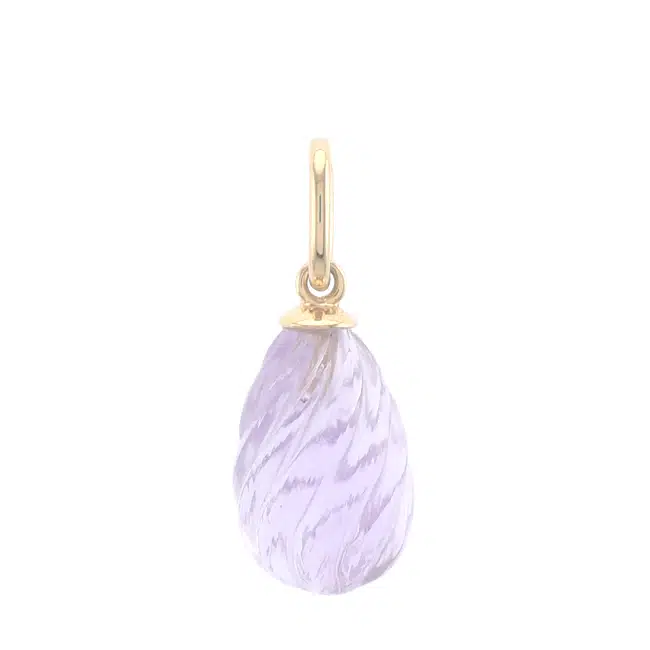
Amethyst and citrine, both members of the quartz family (SiO2), are among the most popular semi-precious stones for jewelry carving due to their attractive colors, good hardness (Mohs 7), and excellent workability. Amethyst ranges from pale lilac to deep royal purple, while citrine spans from light lemon to rich amber gold. Both stones carve cleanly, take a superb polish, and are available in sizes large enough for substantial sculptural elements — making them ideal for statement rings, pendants, and brooches.
Carving techniques for quartz gemstones include cabochon cutting (shaping smooth, domed forms), faceted carving (combining flat polished surfaces with sculptural elements), intaglio carving (engraving designs into the stone surface), and three-dimensional figurative carving. At Maneekan Siam, our stone engraving department produces custom-carved amethyst and citrine elements including fantasy-cut stones with artistic faceting patterns, calibrated cabochons for series production, and bespoke sculptural carvings for one-of-a-kind high-jewelry pieces.
Onyx & Jade
Black onyx and jade represent the opposite ends of the stone carving spectrum in terms of aesthetic character. Onyx provides a sleek, sophisticated black surface that pairs dramatically with white metals and diamonds — it is the material of choice for Art Deco-inspired designs, modern minimalist jewelry, and high-contrast inlay work. Jade, revered for millennia across Asian cultures, offers a range of greens from pale celadon to deep imperial emerald, with a waxy luster and translucency that give carved jade pieces a distinctive inner glow.
Both onyx and jade are classified as tough rather than hard — onyx has a Mohs hardness of 6.5 to 7 with excellent fracture resistance, while nephrite jade rates 6 to 6.5 on the Mohs scale but has an interlocking fibrous crystal structure that makes it one of the toughest natural materials known. This toughness allows both stones to be carved into thin, delicate forms without the risk of fracture that would make similar work impossible in harder but more brittle stones like sapphire. Onyx is typically cut into flat inlay pieces, calibrated cabochons, and geometric elements, while jade is often sculpted into three-dimensional forms including traditional motifs, botanical elements, and contemporary abstract shapes.
CNC Stone Carving: Digital Precision for Natural Materials
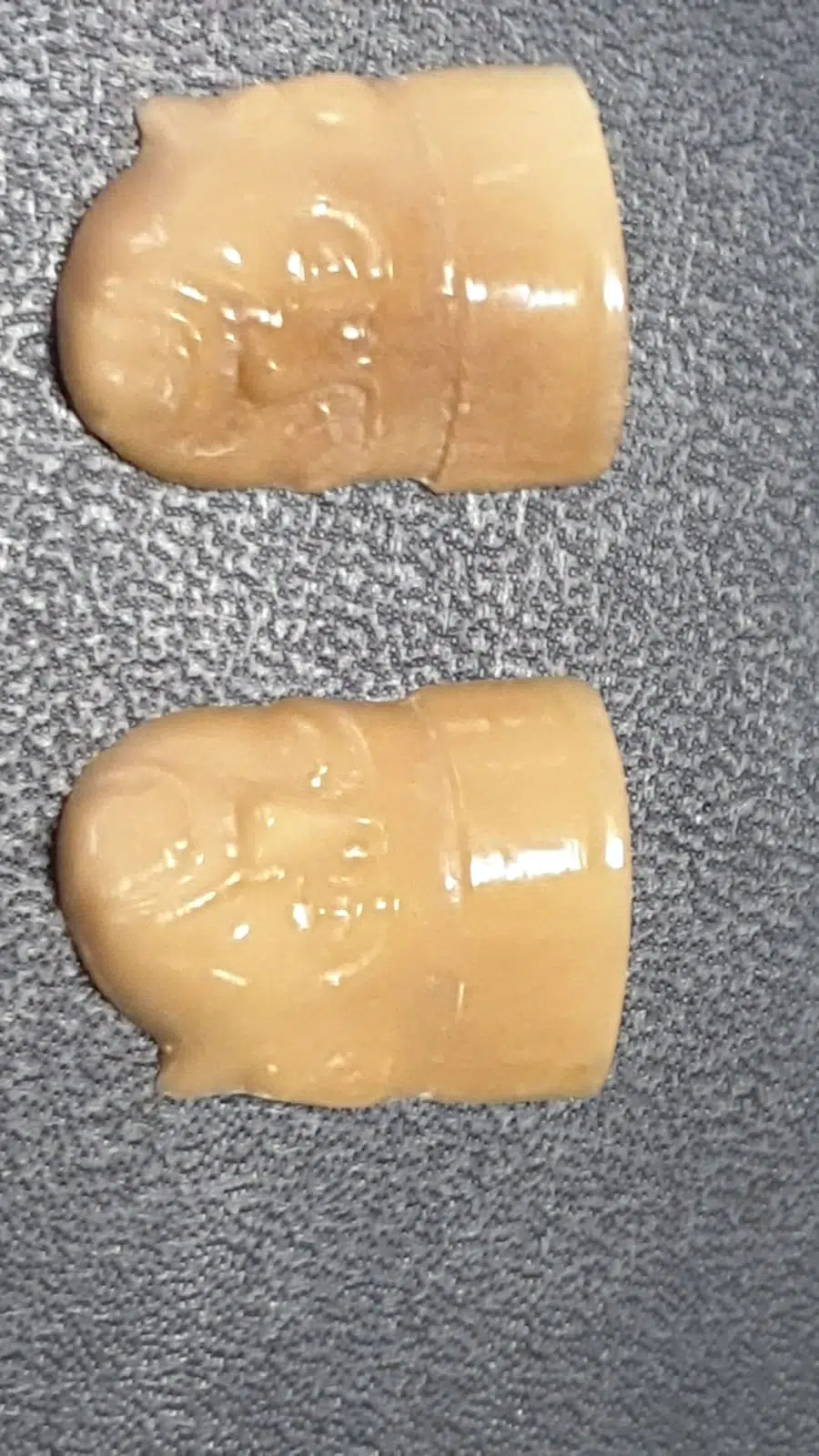
Modern CNC Technology for Stone
Computer numerical control (CNC) machining has transformed stone carving for jewelry from a purely manual craft into a precision manufacturing discipline. Modern multi-axis CNC machines equipped with diamond-tipped cutting tools can carve, drill, and profile natural stones with tolerances as tight as 0.05 mm — a level of accuracy that ensures perfect fit when calibrated stone elements are assembled into metal frameworks. The controlled speed, feed rate, and cutting pressure of CNC operations also dramatically reduce material waste and the risk of cracking or chipping compared to manual methods.
At Maneekan Siam, our CNC stone carving capability is integrated with our CAD design department, creating a seamless digital workflow from design concept to finished stone component. Designers create 3D models of the stone elements in CAD software, specifying exact dimensions, contours, and surface finishes. These files are translated into CNC toolpaths that guide the cutting machines with sub-millimeter precision. This digital integration means that complex multi-piece inlay designs — where dozens of individually shaped stone elements must fit together like a puzzle within a metal framework — can be produced with the consistent accuracy required for series production.
Precision & Complex Patterns
CNC stone carving excels at producing calibrated sets of stone elements where dimensional consistency is critical. When a jewelry design calls for multiple identical inlay pieces — for example, a bracelet with twelve matched mother of pearl panels, or a set of earrings with perfectly symmetrical onyx elements — CNC cutting ensures that every piece is dimensionally identical within tight tolerances. This consistency is essential for luxury jewelry where visible gaps, misalignments, or size variations between stone elements would be unacceptable.
Beyond flat inlay cutting, multi-axis CNC machines can produce three-dimensional carved stone forms including contoured cabochons, sculpted relief panels, and complex geometric shapes that would be extremely time-consuming to produce by hand with equivalent precision. Five-axis CNC systems can approach the workpiece from virtually any angle, enabling undercuts, curved surfaces, and intricate detail work that pushes the boundaries of what is achievable in carved stone jewelry. When combined with hand finishing by skilled artisans, CNC-carved stone elements achieve a quality standard that satisfies the most demanding luxury jewelry brands.
Inlay Techniques in Stone Jewelry
Flush Inlay
Flush inlay — also called surface inlay — is the most common technique for setting stone and shell elements into metal jewelry. A cavity is machined or hand-carved into the metal surface to the exact shape and depth of the inlay piece, which is then fitted into the recess and secured with epoxy adhesive. When executed properly, the stone surface sits perfectly flush with the surrounding metal, creating a smooth, continuous surface with no visible gap or lip. This technique demands extreme precision in both the metal cavity and the stone element — tolerances of 0.1 mm or less are required for a seamless result. Flush inlay is widely used for mother of pearl dial work, onyx panel inserts, and decorative shell elements in rings, pendants, and cufflinks.
Channel Inlay
Channel inlay involves setting stone or shell pieces into narrow grooves or channels cut into the metal surface, typically in linear or geometric patterns. The channels are precision-cut to a uniform width and depth, and the stone elements are shaped to fit precisely within them. Unlike flush inlay, channel inlay often features visible metal walls between the stone elements, creating a grid-like or striped visual pattern that uses the contrast between metal and stone as a deliberate design element. This technique is particularly effective with contrasting materials — black onyx channels in white gold, or alternating strips of mother of pearl and abalone — and is commonly seen in Art Deco-inspired jewelry, modern geometric designs, and luxury watch bezels.
Micro-Mosaic Inlay
Micro-mosaic inlay is a highly specialized technique that creates detailed pictorial or pattern designs using tiny pieces of stone, shell, or glass (tesserae) fitted together within a metal framework. Individual tesserae may be as small as 0.5 mm, and a single micro-mosaic panel can contain hundreds or thousands of individual pieces arranged to form flowers, landscapes, geometric patterns, or abstract compositions. This technique traces its origins to ancient Roman and Byzantine mosaic traditions and was adapted for jewelry in Renaissance Italy. Today, micro-mosaic jewelry is produced using a combination of CNC-cut tesserae for consistent sizing and hand assembly for artistic placement, producing pieces of extraordinary detail and visual complexity.
Stone Marquetry
Stone marquetry (also called pietra dura or Florentine mosaic) is the art of cutting and fitting together pieces of different colored stones to create pictorial or decorative designs, similar to wood marquetry but using semi-precious stone materials. Thin slices of stone — malachite, lapis lazuli, onyx, mother of pearl, coral, jasper, and others — are precision-cut to interlocking shapes and assembled into a flat panel that resembles a painting rendered in natural stone. In jewelry applications, stone marquetry is used for pendant panels, brooch faces, earring elements, and decorative box tops. The technique demands exceptional cutting precision since the stones must fit together tightly with no visible gaps, and the selection and placement of stones to achieve the desired color composition requires both technical skill and artistic sensibility.
Selecting the Right Stone for Your Jewelry Design
Durability & Hardness Considerations
Selecting the appropriate stone for a jewelry application requires careful consideration of durability in relation to the intended wear scenario. Stones for rings and bracelets — items subject to daily impact and abrasion — should have a Mohs hardness of at least 6.5 and good toughness to resist chipping. Onyx (6.5-7), quartz varieties including amethyst and citrine (7), and jade (6-6.5 with exceptional toughness) all meet this threshold. Mother of pearl and abalone (Mohs 2.5-4.5) are softer and better suited for earrings, pendants, brooches, and other items less exposed to mechanical wear. For all applications, the stone must be compatible with the adhesives, cleaning agents, and wear conditions it will encounter in use — factors that your manufacturing partner should evaluate during the design and material selection phase.
Aesthetic Character & Design Intent
Each stone material carries a distinct aesthetic language that should align with the design intent. Mother of pearl conveys understated luxury, soft luminosity, and refined elegance — it is the material of choice for classic, feminine, and haute horlogerie-inspired designs. Abalone makes a bolder statement with its vivid, shifting colors, suited for contemporary, artistic, and statement jewelry. Black onyx communicates modernity, sophistication, and graphic contrast, excelling in minimalist and Art Deco contexts. Jade carries cultural resonance, particularly in Asian markets, and conveys heritage, wellness, and natural beauty. Amethyst and citrine offer vibrant color for expressive, fashion-forward designs. Understanding these associations helps brands select materials that reinforce their design narrative and resonate with their target market.
Workability & Manufacturing Feasibility
Not all stone materials can be worked to all shapes and sizes with equal ease. Thin, flat inlay work is well-suited to mother of pearl, abalone, and onyx, which can be sawn and ground to uniform thickness without difficulty. Three-dimensional carving is best achieved with jade, quartz varieties, and other stones with consistent texture and good toughness. Extremely small or intricate shapes — micro-mosaic tesserae, thin fretwork patterns, or calibrated elements under 2 mm — require materials with fine, uniform grain structure and minimal internal stress. Your manufacturing partner should advise on the feasibility and cost implications of specific material and shape combinations during the design development phase, preventing costly surprises during production.
Frequently Asked Questions
What is the difference between mother of pearl and abalone in jewelry?
Mother of pearl (nacre) is the iridescent inner lining found in many mollusk shells, most commonly from oyster and freshwater mussel species. It has a soft, luminous white or cream appearance with subtle rainbow iridescence. Abalone shell, while also nacre-based, comes specifically from the Haliotidae family of sea snails and displays dramatically more vivid and varied colors — intense blues, greens, purples, and pinks — due to its unique layered microstructure. In jewelry manufacturing, MOP is preferred for its elegant uniformity and neutral palette, while abalone is chosen for bold, colorful statement pieces.
Can CNC machines carve natural gemstones for jewelry?
Yes, modern multi-axis CNC machines are widely used for precision carving and shaping of natural gemstones including amethyst, citrine, onyx, jade, and quartz varieties. CNC stone carving achieves tolerances as tight as 0.05 mm, enabling perfectly calibrated inlay pieces, custom cabochon shapes, and intricate three-dimensional sculptural forms that would be extremely difficult to produce consistently by hand. The controlled speed and pressure of CNC cutting also reduces material waste and prevents cracking in delicate stones.
What is flush inlay in jewelry stone carving?
Flush inlay is a technique where a precisely cut piece of stone, shell, or other material is set into a cavity carved into the metal surface so that the inlay material sits perfectly level with the surrounding metal. The cavity must be machined or hand-carved to exact tolerances to achieve a seamless, gap-free fit. This technique creates a smooth, uninterrupted surface that is both visually elegant and highly durable for everyday wear. Flush inlay is commonly used with mother of pearl, onyx, and malachite in rings, pendants, and watch dials.
Which stones are best suited for jewelry carving and inlay?
The best stones for jewelry carving and inlay balance hardness, workability, and visual appeal. Mother of pearl and abalone shell are ideal for flat inlay work due to their natural layered structure and iridescent beauty. Onyx and jade are excellent for carved elements because they are tough, take a high polish, and have consistent color. Amethyst and citrine from the quartz family (Mohs hardness 7) carve cleanly and offer vibrant color. For high-durability applications, harder stones like sapphire and ruby can be carved using diamond-tipped CNC tools, though at greater cost and production time.
How does Maneekan Siam handle stone carving for custom jewelry orders?
Maneekan Siam operates a dedicated stone cutting and carving department equipped with both CNC precision cutting machines and skilled hand-carving artisans. For custom orders, our process begins with CAD design to create exact templates for each inlay or carved element. We source materials — mother of pearl, abalone, onyx, amethyst, jade, and other stones — from trusted suppliers and cut them to precise specifications using CNC for complex geometries and hand finishing for organic shapes. Our vertically integrated facility allows seamless coordination between stone carving, metal fabrication, and assembly departments to ensure perfect fit and finish on every piece.
Bringing Stone Carving Excellence to Your Jewelry Collection
Stone carving in jewelry represents a fascinating intersection of natural beauty and precision craftsmanship. Whether your designs call for the soft iridescence of mother of pearl, the vivid spectacle of abalone, the sleek sophistication of onyx, the cultural resonance of carved jade, or the vibrant color of amethyst and citrine, each material offers unique possibilities that can differentiate your collection in the marketplace. The key to realizing these possibilities lies in partnering with a manufacturer that combines material expertise, precision cutting technology, and artisan finishing skills under one roof.
At Maneekan Siam, stone carving and inlay are integrated capabilities within our vertically integrated manufacturing facility in Bangkok. From CNC-cut mother of pearl dials to hand-carved jade pendants, from abalone mosaic earrings to onyx-inlaid Art Deco rings, our stone carving departments work in concert with our metalworking, setting, and finishing teams to deliver complete pieces of exceptional quality. Contact us to discuss how stone carving techniques can enhance your next jewelry collection, and let our team demonstrate the possibilities that these remarkable natural materials offer.