Published on March 2, 2026
Understanding Stone Settings in Jewelry Manufacturing
What are the different types of stone settings in jewelry? Stone setting is the art and technique of securing gemstones into metal mounts, and it is one of the most critical skills in professional jewelry manufacturing. The setting method chosen for a piece directly impacts its aesthetic, durability, light performance, and overall perceived value. From the timeless elegance of a classic prong setting to the technical mastery required for invisible setting, each technique serves a specific purpose and creates a distinct visual result.
For jewelry brands, designers, and buyers, understanding the full range of available stone settings is essential for making informed design decisions. The right setting can elevate a modest stone, enhance a piece's wearability, and define a brand's aesthetic identity. Conversely, choosing an inappropriate setting can compromise stone security, reduce brilliance, or create maintenance challenges for the end customer.
In this comprehensive guide, we examine 14 types of stone settings used in professional jewelry manufacturing — explaining the technique, ideal applications, advantages, and considerations for each. Whether you are developing a new collection or evaluating a manufacturer's capabilities, this knowledge will help you specify the right setting for every design in your line.
Prong Settings: The Foundation of Stone Mounting
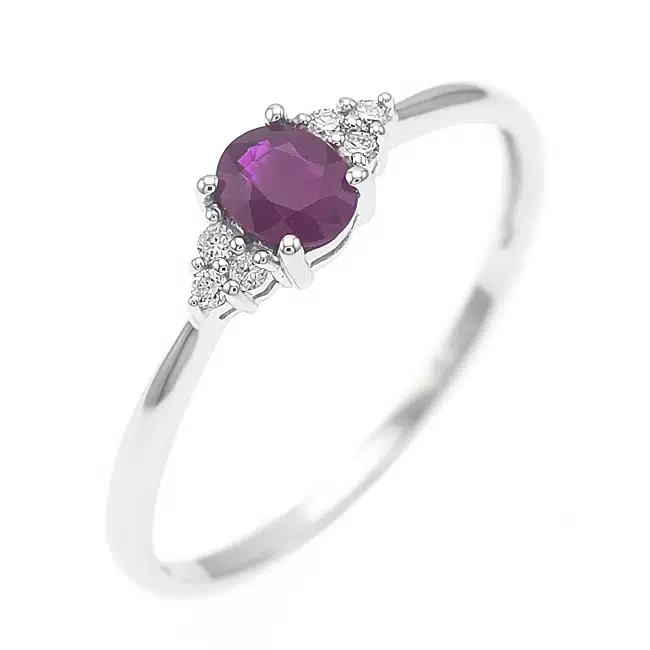
Prong settings — also called claw settings — are the most widely used and recognizable stone setting technique in fine jewelry. Metal prongs grip the gemstone at specific points along its girdle, raising it above the band and allowing maximum light to enter from all angles. The number, shape, and placement of prongs directly affect the stone's security, light performance, and visual character.
1. Four-Prong Setting
The four-prong setting is the classic choice for solitaire engagement rings and pendant stones. By using just four evenly spaced prongs, this setting provides the maximum amount of light exposure to the gemstone, enhancing its brilliance, fire, and scintillation. The simplicity of the design places full visual emphasis on the stone itself. Four-prong settings work best with round brilliant, oval, and cushion-cut stones. However, because fewer contact points are holding the stone, four-prong settings require careful craftsmanship to ensure each prong is precisely shaped and positioned for adequate security. Regular inspection is recommended for pieces worn daily.
2. Six-Prong Setting
The six-prong setting, famously associated with the Tiffany-style solitaire, adds two additional prongs for greater security without dramatically reducing light performance. The extra contact points distribute pressure more evenly across the stone's girdle, significantly reducing the risk of loss if a single prong is damaged. Six-prong settings create a slightly more rounded visual profile on round stones, which some designers prefer for its balanced symmetry. This setting is the preferred choice when stone security is a priority, particularly for high-value diamonds and gemstones in everyday wear pieces such as engagement rings.
3. V-Prong Setting
V-prong settings — also known as V-tip or claw-tip settings — are specifically designed to protect the vulnerable pointed ends of fancy-shaped stones such as marquise, pear, princess, trillion, and heart cuts. Instead of a round prong tip, the metal is shaped into a V or chevron form that cups around the stone's point, shielding it from chipping and impact damage. This is a structurally critical detail, as the pointed corners of these cuts are the weakest areas of the stone and most susceptible to fracture. Any well-designed piece featuring pointed gemstone shapes should incorporate V-prong protection at minimum.
Bezel Settings: Maximum Protection with Modern Appeal
Bezel settings secure a gemstone by encircling it with a thin wall of metal that is pushed or hammered over the stone's edges. This is one of the oldest stone setting techniques, dating back to ancient Egyptian and Roman jewelry, and it remains highly relevant in contemporary design for its clean lines, excellent security, and suitability for active lifestyles.
4. Full Bezel Setting
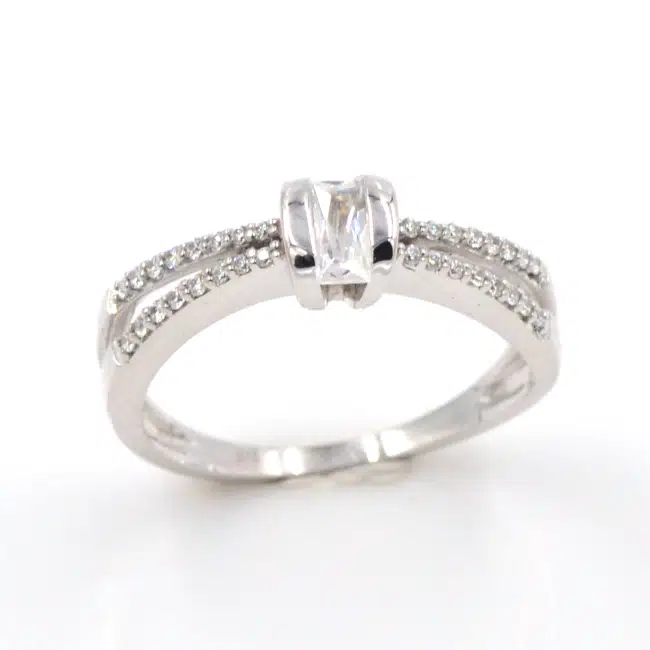
In a full bezel setting, a continuous rim of metal completely surrounds the gemstone's circumference, holding it firmly in place from all sides. This provides the highest level of stone security of any setting type, making it virtually impossible for the stone to fall out under normal wearing conditions. Full bezels create a sleek, modern aesthetic with clean lines that appeal to contemporary design sensibilities. They also protect the stone's girdle and edges from scratches and chips, making them ideal for rings worn during active daily use. The trade-off is that the metal rim reduces the amount of light entering the stone from the sides, which can slightly diminish a diamond's brilliance compared to prong-set alternatives.
5. Half Bezel (Partial Bezel) Setting
The half bezel — also called semi-bezel or partial bezel — wraps metal around only a portion of the gemstone, typically covering two opposite sides while leaving the remaining sides open. This creates an elegant compromise between the full protection of a complete bezel and the light performance of a prong setting. Half bezels allow more light to reach the stone while still providing significant physical protection and a contemporary, architectural look. They are particularly effective for elongated stone shapes such as baguettes and emerald cuts, where the partial metal frame accentuates the stone's geometric form. This setting style has become increasingly popular in modern fine jewelry collections seeking a balance between security and visual lightness.
Channel and Bar Settings: Seamless Stone Rows
Channel and bar settings are designed to secure rows of stones in a continuous line, typically along wedding bands, eternity rings, and accent bands. Both techniques create a smooth, uninterrupted surface that is comfortable to wear and provides excellent stone protection.
6. Channel Setting
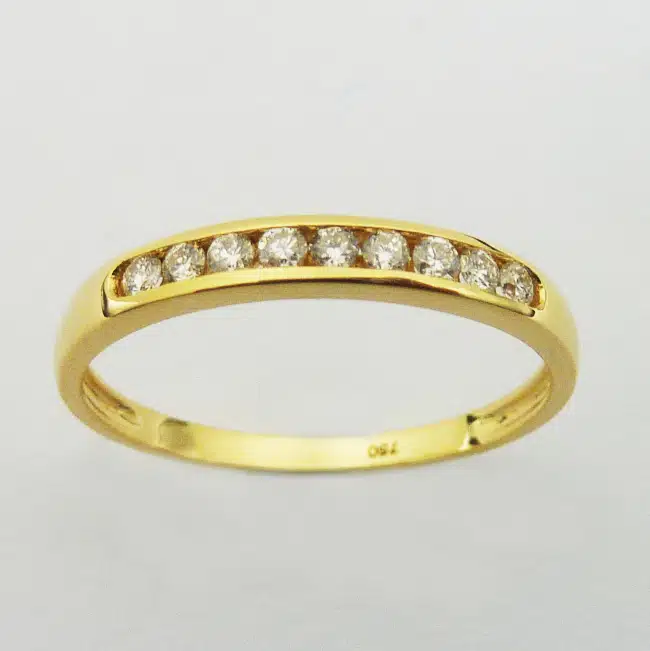
In a channel setting, gemstones are placed side by side between two parallel walls of metal that form a continuous channel. The stones sit within this channel with no metal separating individual stones — they are held in place by the pressure of the channel walls against their girdles and by a small lip or groove cut into the inside of each wall. Channel settings create a clean, streamlined appearance with no prongs or metal between stones to interrupt the line of brilliance. This makes them extremely popular for wedding bands and anniversary rings. The technique provides excellent stone protection since the stones sit flush within the metal walls, and the smooth profile eliminates any snagging risk. Channel setting requires precisely calibrated stones of identical dimensions to achieve a tight, seamless fit.
7. Bar Setting
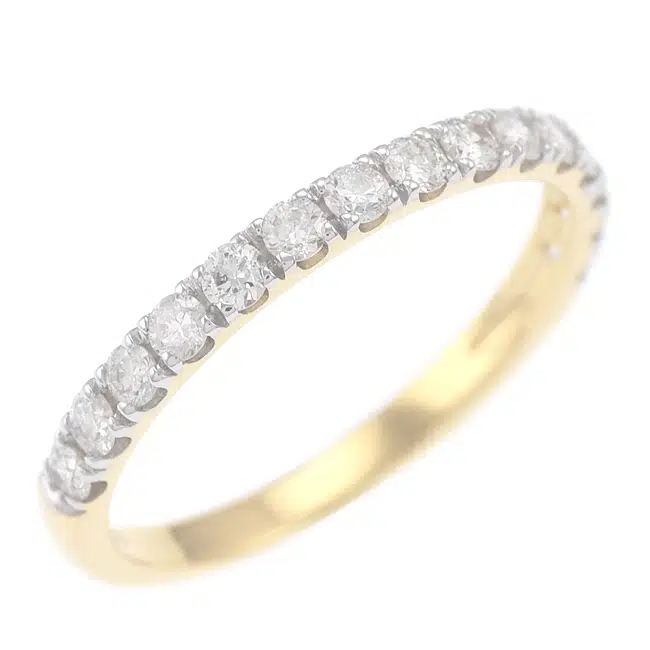
Bar settings are closely related to channel settings but use individual metal bars placed perpendicular to the row of stones, separating each stone with a thin strip of metal. Unlike a channel, where the stones share continuous walls, bar settings create individual compartments for each stone. This allows more light to enter each stone from the sides, enhancing brilliance compared to a standard channel. Bar settings offer a clean, modern aesthetic that highlights each individual stone while maintaining the linear flow of the design. They are commonly used in eternity bands, tennis bracelets, and as accent settings along ring shanks. The individual bars provide structural support and allow for slight variations in stone size, making bar settings slightly more forgiving to produce than channel settings.
Pavé and Micro-Pavé Settings: A Surface of Diamonds
Pavé setting — derived from the French word for 'paved' — involves covering a metal surface with small gemstones set very closely together, creating the visual impression of an unbroken field of diamonds. Tiny beads or mini-prongs of metal are raised from the surface between stones to hold each gem in place, but these are kept so small that the metal virtually disappears, and the surface appears to be entirely encrusted with stones. Standard pavé uses melee diamonds typically ranging from 1.0mm to 1.8mm in diameter, while micro-pavé pushes this technique to its technical limits with stones smaller than 1.0mm.
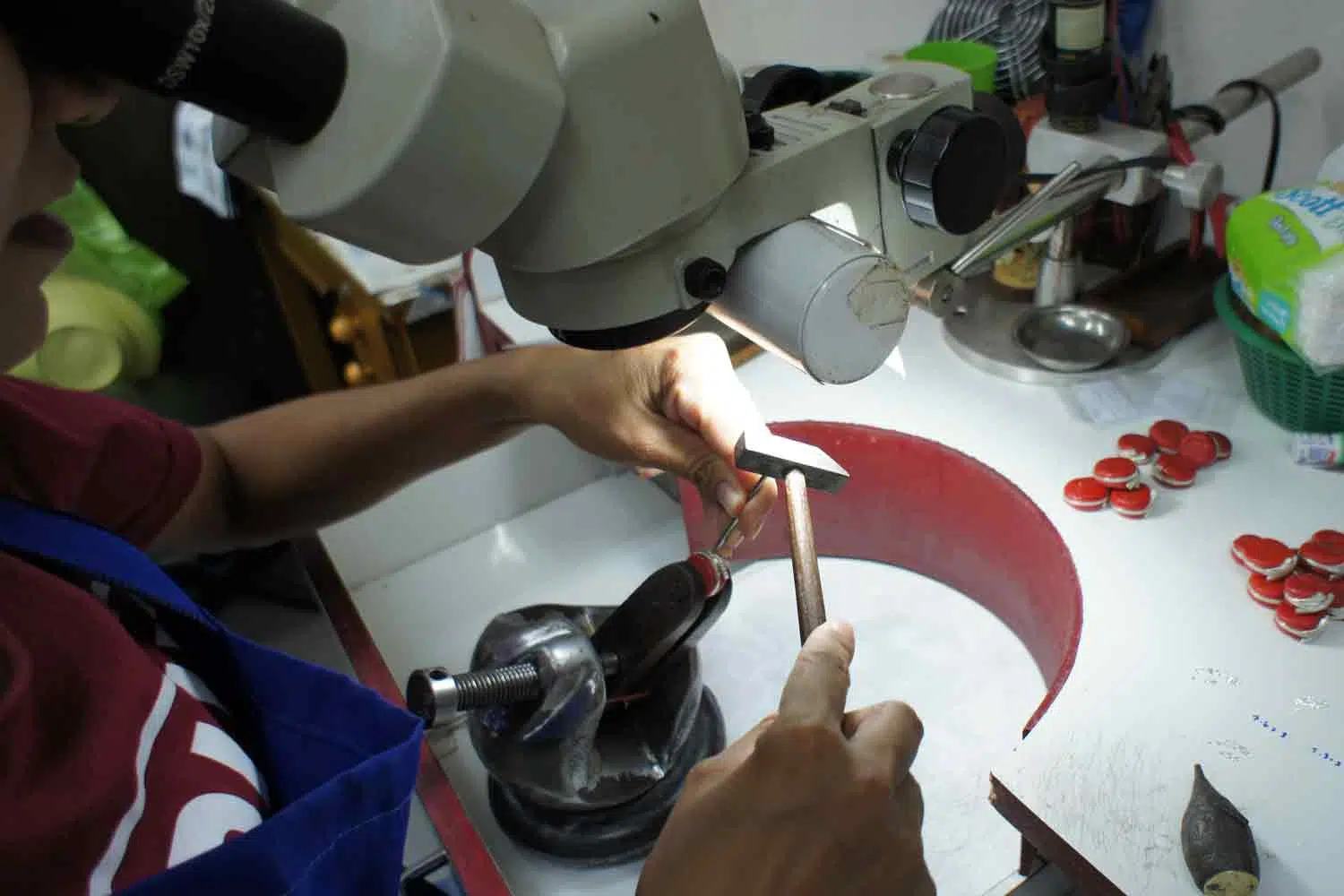
Micro-pavé is among the most technically demanding setting techniques, requiring exceptional hand skills, specialized magnification equipment, and perfectly calibrated stones. The setter must raise precisely sized beads from the metal to grip each tiny stone without disturbing its neighbors — a process that becomes exponentially more difficult as stone size decreases. The result, however, is a surface of unmatched brilliance and refinement that has become a defining feature of luxury jewelry. Pavé and micro-pavé are used extensively on ring bands, halos around center stones, pendant bails, earring surfaces, and bracelet links to add sparkle and perceived value to any design.
Flush Setting (Gypsy Setting): Understated Elegance
In a flush setting — also known as a gypsy setting, hammer setting, or burnish setting — the gemstone is set directly into the metal surface so that it sits level with or slightly below the surrounding metal. A seat is drilled or cut into the metal to match the stone's dimensions, the stone is placed into the seat, and the surrounding metal is pushed or hammered against the stone's girdle to hold it in place. The result is an exceptionally clean, smooth surface where the stone appears to emerge organically from the metal itself.
Flush settings are the preferred choice for men's jewelry, wedding bands, and any piece where a low-profile, snag-free design is desired. The stone is maximally protected within the metal surface, making this one of the most durable setting styles for everyday wear. Flush settings work best with round brilliant-cut stones, as the circular shape is easiest to seat cleanly into the metal. The contemporary, minimalist aesthetic of flush-set jewelry has made this technique increasingly popular in modern fine jewelry collections, particularly for brands targeting a clean, architectural design language.
Tension Setting: Engineering Meets Artistry
The tension setting is one of the most visually dramatic stone setting techniques in modern jewelry. The gemstone appears to float between the two ends of an open ring shank, held in place solely by the pressure (tension) of the metal pressing against the stone's girdle from two sides. In reality, small grooves or notches are precisely cut into the metal at the contact points to help position the stone, but the primary holding force comes from the spring tension of the metal band. The visual effect is striking — the stone seems suspended in mid-air with maximum light exposure from all angles.
Tension settings demand careful engineering and material science. The metal must maintain consistent spring tension over the lifetime of the ring, which limits the alloys that can be used — typically titanium, stainless steel, or specially formulated karat gold alloys designed for high elasticity. The gemstone must be extremely hard (diamonds, sapphires, and rubies are ideal) to withstand the constant pressure without cracking. Tension settings also require precise sizing, as resizing a tension-set ring is extremely difficult or impossible without disassembling the setting. Despite these constraints, the dramatic floating effect makes tension settings a compelling choice for statement pieces and contemporary engagement rings.
Illusion Setting: Maximizing Perceived Size
The illusion setting is a clever technique designed to make a smaller diamond appear significantly larger than it actually is. The stone is set into a polished or faceted metal plate — typically white gold or rhodium-plated — that is cut and finished to reflect light in a way that visually extends the apparent size of the diamond. The mirror-like metal surface surrounding the stone blends seamlessly with the diamond's brilliance, creating the optical illusion of a much larger stone.
Illusion settings are a commercially important technique because they allow brands to offer the visual impact of a larger diamond at a significantly lower price point. A 0.25-carat diamond in a well-designed illusion setting can appear comparable to a 0.50-carat or even 0.75-carat stone set in a standard prong mount. This technique is most effective with round brilliant and princess-cut diamonds and is commonly used in stud earrings, solitaire pendants, and engagement rings. The quality of the illusion depends heavily on the precision of the metal plate's finish and faceting — expert manufacturing is essential to achieve a convincing result.
Cluster Setting: Composite Brilliance
Cluster settings arrange multiple small gemstones closely together in a pattern — typically around a larger center stone or in a geometric formation — to create a composite design that delivers greater visual impact than any single stone of the same total weight. Common cluster arrangements include floral patterns, halo configurations (a ring of small stones around a center stone), and geometric shapes such as squares, hexagons, or free-form organic shapes.
The cluster technique is a versatile design tool that allows manufacturers and designers to create impressive, eye-catching pieces at a lower cost than using a single large stone of equivalent visual size. A cluster ring using twenty 1.5mm diamonds can deliver a visual spread comparable to a 1-carat solitaire at a fraction of the stone cost. Cluster settings are widely used in cocktail rings, statement earrings, pendants, and brooches. The key to a successful cluster is precise stone matching in color, clarity, and cut, combined with careful setting to maintain symmetry and consistent spacing throughout the arrangement.
Invisible Setting: The Pinnacle of Technical Mastery
Invisible setting — also known as mystery setting or serti mystérieux (a technique pioneered by Van Cleef & Arpels) — is the most technically demanding stone setting method in jewelry manufacturing. In an invisible setting, gemstones are set so closely together that no metal is visible between them from the top view, creating the appearance of a single, continuous field of color and brilliance. This is achieved by cutting precise grooves into the pavilion (bottom) of each stone, which then slide onto a hidden metal rail framework beneath the surface. The stones interlock on these rails, held securely in place without any prongs, bezels, or other visible mounting hardware.
Invisible setting commands a significant brand premium and is associated with the highest level of jewelry manufacturing expertise. The technique requires stones that are precisely calibrated in size, cut to exact specifications with grooved pavilions, and matched in color and clarity. The hidden rail framework must be engineered with exacting tolerances — too tight and the stones crack during assembly, too loose and they shift or fall out. Assembly is sequential and labor-intensive, often requiring stones to be placed in a specific order. At Maneekan Siam, our invisible setting department represents some of our most experienced artisans, each with years of specialized training dedicated exclusively to this technique.
Choosing the Right Setting for Your Design
Selecting the appropriate stone setting for a jewelry design requires balancing multiple factors: the type and hardness of the gemstone, the intended wearing conditions and required durability, the desired aesthetic effect, the target price point, and the manufacturing capabilities of your production partner. Hard gemstones like diamonds, sapphires, and rubies can be used in virtually any setting type, while softer stones like opals, emeralds, and pearls require protective settings such as bezels or flush mounts. Rings worn daily demand more secure settings than earrings or pendants that experience less physical stress.
From a manufacturing perspective, different settings require vastly different skill levels and production times. Prong and bezel settings are relatively straightforward and cost-effective, while pavé, tension, and invisible settings demand specialized expertise, advanced tooling, and significantly more production time per piece. When planning a collection, consider how your setting choices affect both per-unit cost and production lead times. A vertically integrated manufacturer with expertise across all setting types — like Maneekan Siam — can help you evaluate options and recommend the optimal setting for each design based on your technical, aesthetic, and commercial requirements.
Frequently Asked Questions
What is the most secure type of stone setting?
The full bezel setting is widely considered the most secure type of stone setting because it completely encircles the gemstone with a thin wall of metal, holding it firmly in place from all sides. This makes bezel settings ideal for active lifestyles and everyday jewelry. Flush settings and channel settings also offer excellent security since the stones sit within or level with the metal surface, reducing the risk of snagging or impact damage. For prong settings, a 6-prong configuration provides significantly more security than a 4-prong, though it allows slightly less light into the stone.
Which stone setting allows the most light into a diamond?
The 4-prong setting allows the most light to enter a diamond because it uses the minimum number of contact points to secure the stone, leaving the maximum surface area exposed to light from all angles. This maximizes the stone's brilliance, fire, and scintillation. Tension settings also allow exceptional light performance since the stone appears to float with virtually no metal obstruction. Bar settings permit more light than channel settings for side stones, as individual bars between stones create open galleries for light entry.
What is the difference between pavé and micro-pavé settings?
The primary difference between pavé and micro-pavé settings lies in stone size and the resulting visual effect. Standard pavé typically uses stones ranging from 1.0mm to 1.8mm in diameter, while micro-pavé employs stones smaller than 1.0mm — often as tiny as 0.5mm to 0.8mm. Micro-pavé creates a more refined, seamless surface of diamonds with less visible metal between the stones. The technique requires greater precision and more advanced tooling, as the tiny prongs and bead work demand exceptional skill from the setter.
Can any gemstone be used in a tension setting?
No, not every gemstone is suitable for a tension setting. Because the stone is held in place by the pressure of the metal band pressing against its sides, the gemstone must be hard enough to withstand this constant force without cracking or chipping. Diamonds (Mohs hardness 10), sapphires, and rubies (Mohs hardness 9) are the most commonly used stones in tension settings. Gemstones below Mohs hardness 7 — such as opals, pearls, emeralds, and tanzanite — are generally not recommended for tension settings due to their susceptibility to pressure damage.
What makes invisible setting so expensive?
Invisible setting is one of the most technically demanding and expensive setting techniques for several reasons. Each stone must be precision-cut with grooves on its pavilion to slide onto a metal rail framework beneath the surface — this custom cutting adds significant cost over standard calibrated stones. The metal framework itself requires meticulous engineering to create rails that hold each stone securely while remaining completely hidden from view. Assembly is extremely labor-intensive, and rejection rates are higher because stones must match precisely in color, size, and cut to create a seamless surface.
Master Every Setting Technique with the Right Partner
Understanding the full range of stone setting techniques — from foundational prong and bezel settings to advanced invisible and tension settings — is essential for any jewelry professional seeking to create exceptional pieces. Each of the 14 setting types covered in this guide offers unique advantages in terms of aesthetics, stone security, light performance, and design versatility. The most successful jewelry collections thoughtfully match setting techniques to design intent, target market expectations, and wearing conditions.
At Maneekan Siam, our setting department is one of the cornerstones of our vertically integrated manufacturing facility in Bangkok. Our team of specialized setters has mastered every technique outlined in this guide, from high-volume pavé production to exacting invisible setting work that demands years of dedicated experience. Whether you need precision micro-pavé for a halo engagement ring, secure bezels for an everyday collection, or the technical brilliance of invisible setting for a luxury flagship piece, we have the expertise and capacity to deliver at the highest standard. We invite you to explore how our setting capabilities can elevate your next collection.