Published on March 2, 2026
Two Paths to the Perfect Jewelry Prototype
How are jewelry prototypes made — by hand or by machine? The answer, increasingly, is both. Wax carving and 3D printing represent two fundamentally different approaches to creating the wax models that form the foundation of lost-wax casting, the process through which the vast majority of fine jewelry is produced. Each technique has distinct strengths, and understanding when to deploy one over the other is critical knowledge for any brand or buyer sourcing jewelry at scale.
Traditional wax carving is the artisan's domain — a centuries-old technique where skilled craftspeople sculpt wax blocks into three-dimensional jewelry forms using hand tools, heat, and exceptional spatial awareness. It is a process that rewards experience, patience, and an intimate understanding of how wax behaves under the blade. 3D printing, by contrast, leverages digital design and additive manufacturing to produce wax or resin models from CAD files with micron-level precision and overnight batch capability.
At Maneekan Siam, our Bangkok production facility operates both a dedicated hand wax carving department staffed by artisans with decades of experience and a 3D printing department equipped with professional-grade MJP and DLP printers. This dual capability allows us to select the optimal prototyping method for each project — or combine both in a hybrid workflow that captures the best of traditional craftsmanship and modern technology. In this article, we examine both techniques in detail to help you make informed decisions about your jewelry manufacturing process.
Traditional Wax Carving: The Artisan's Approach
History & Heritage
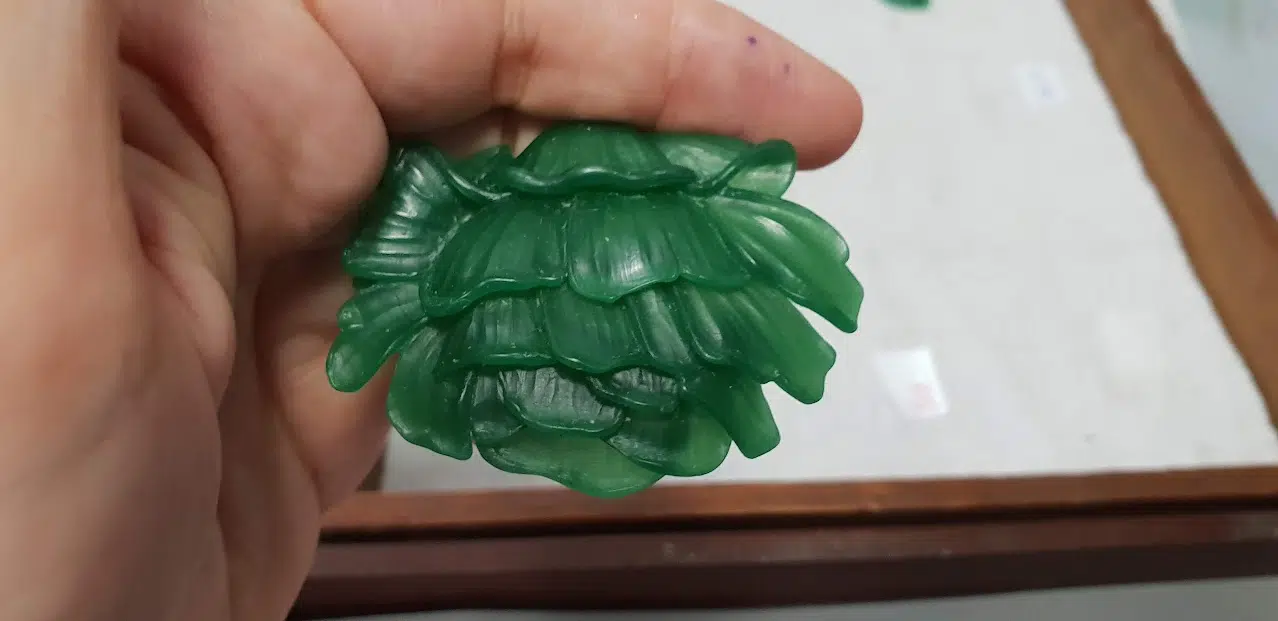
Wax carving for jewelry dates back thousands of years to the earliest civilizations that practiced lost-wax casting — ancient Mesopotamia, Egypt, and the Indus Valley cultures all used hand-carved wax models to create metal ornaments. The fundamental technique has remained remarkably unchanged: an artisan carves a three-dimensional form from a block or tube of specially formulated jewelry wax, creating a positive model that is then invested in plaster, burned out in a kiln, and replaced with molten metal.
In Thailand, wax carving has deep roots in the country's royal jewelry-making tradition. For generations, master carvers trained through years of apprenticeship, developing the eye-hand coordination and spatial reasoning required to translate two-dimensional designs into precise three-dimensional wax models. This tradition of skilled hand carving remains a cornerstone of Thai jewelry manufacturing, and Thailand's best wax carvers are recognized as some of the finest in the global industry.
Process & Tools
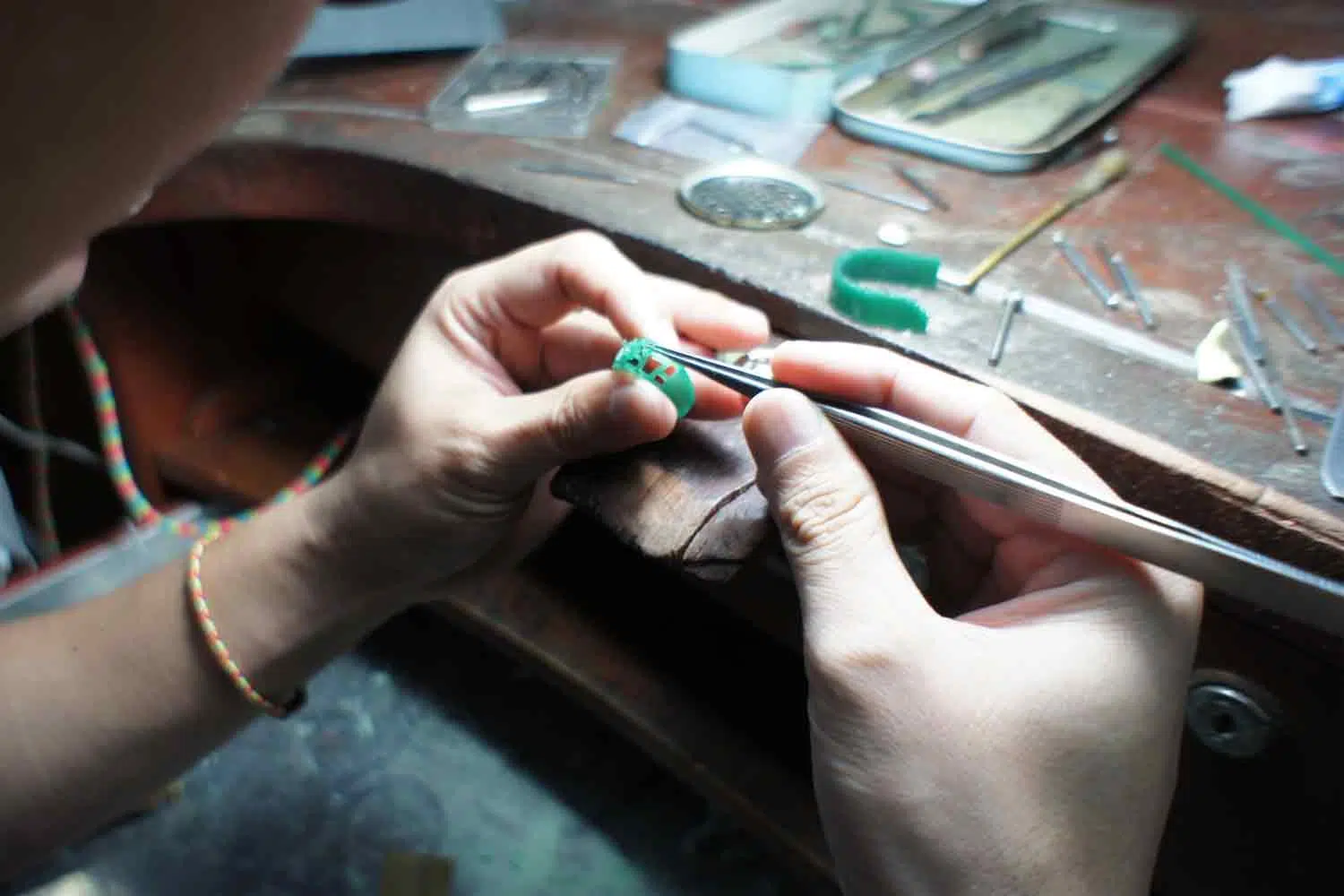
The wax carving process begins with selecting the appropriate wax type and form. Jewelry carvers work with a range of wax hardnesses — from soft, pliable waxes for organic shapes to hard, machinable waxes for precise geometric forms. Common starting forms include wax blocks, tubes (for rings), sheets, and wire. The carver uses a combination of hand tools — including wax files, scrapers, carving knives, heated spatulas, and precision dental tools — to remove material and build up detail.
A skilled carver works iteratively, roughing out the basic form, refining proportions, then adding increasingly fine detail. Surface textures, stone seats, prong structures, and decorative elements are all shaped by hand. The process demands constant measurement with calipers and gauges to maintain dimensional accuracy. Complex pieces may require the carver to work on multiple wax components separately and then assemble them using a heated wax pen — a technique that allows the creation of intricate, multi-layered designs that would be impossible to carve from a single block.
Materials & Artisan Skill
Jewelry wax is a specialized material engineered for carving and casting. It typically contains a blend of natural and synthetic waxes formulated to provide the right balance of hardness, flexibility, and clean burnout characteristics. Color coding is standard in the industry: blue wax is hard and ideal for detailed carving, green wax is slightly softer and better for filing and machining, and purple wax offers a medium hardness suitable for all-purpose work. Injection waxes, used for mold-based production, have different formulations optimized for flow and surface reproduction.
The artisan's skill is the defining variable in hand wax carving. An experienced carver can produce work of extraordinary detail and organic beauty — flowing curves, naturalistic textures, and sculptural forms that carry the unmistakable signature of human craftsmanship. This is the primary advantage of hand carving over digital methods: the ability to create forms that feel alive, with subtle asymmetries and surface qualities that are extremely difficult to replicate in CAD software. For figurative work, bespoke one-of-a-kind pieces, and designs that demand an artisanal character, hand wax carving remains unmatched.
Modern 3D Printing: Digital Precision at Scale
SLA, DLP & Multi-Jet Printing Technology
3D printing for jewelry prototyping has evolved rapidly since its introduction in the early 2000s. Today, three primary technologies dominate the professional jewelry market: SLA (stereolithography), which uses a UV laser to cure liquid resin layer by layer; DLP (digital light processing), which projects entire cross-sections simultaneously for faster build times; and MJP (multi-jet printing), which jets wax-based material from inkjet-style print heads to build highly accurate wax models directly.
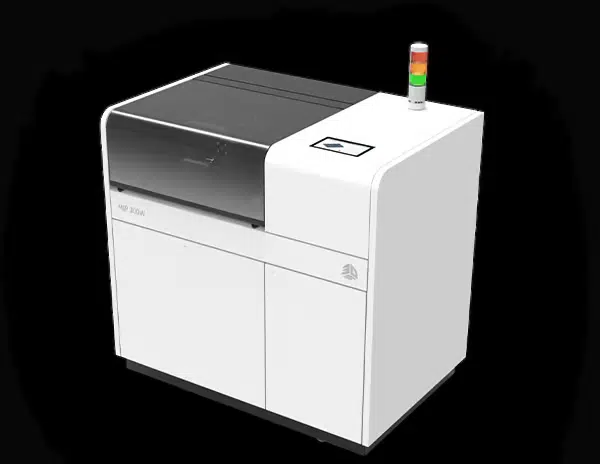
Each technology has its niche. SLA printers offer excellent surface quality and are well-suited for master models and presentation pieces. DLP printers excel at speed and are ideal for batch production of multiple pieces simultaneously. MJP printers, such as the 3D Systems MJP 300W used at Maneekan Siam, produce true wax models that can be cast directly without any resin-to-wax conversion — eliminating a step in the workflow and ensuring clean, residue-free burnout in the casting process.
Materials & Resolution
The resolution capabilities of modern jewelry 3D printers are remarkable. Professional DLP and MJP systems achieve layer heights as fine as 16 microns (0.016 mm) with XY pixel resolutions of 30 to 50 microns. To put this in perspective, a human hair is approximately 70 microns in diameter — meaning these printers can resolve details finer than the width of a hair. This level of precision is sufficient to produce micro-pavé stone seats, fine filigree patterns, and text engravings that would be extremely challenging to carve by hand with equivalent consistency.
Material science has kept pace with hardware advances. Castable resins formulated specifically for jewelry achieve clean, ash-free burnout during the investment casting process, producing casting results virtually indistinguishable from those achieved with traditional carved wax. Wax-based MJP materials go a step further, offering the familiar handling characteristics of injection wax while delivering the precision of digital fabrication. These materials can be finished, modified, and assembled using standard wax-working tools, bridging the gap between digital output and traditional workshop practices.
Speed & Scalability
The speed advantage of 3D printing becomes most apparent at scale. While a master wax carver might spend an entire day producing a single complex prototype, a 3D printer can produce dozens or even hundreds of identical pieces overnight with no human labor required during the print cycle. The MJP 300W at Maneekan Siam can fill its entire build platform with over 300 wax patterns in a single overnight print run — production volumes that would require weeks of manual carving by a team of artisans.
This scalability transforms the economics of prototyping and small-batch production. When a client requires 50 identical wax patterns for a limited-edition collection, 3D printing delivers them in hours rather than weeks. Revisions are equally efficient: modifying a CAD file and reprinting takes a fraction of the time required to re-carve a wax model from scratch. For brands that iterate rapidly on designs or produce collections with many SKUs, 3D printing dramatically compresses development timelines and reduces per-piece prototyping costs.
Head-to-Head Comparison
When comparing wax carving and 3D printing across key manufacturing criteria, the differences become clear. In terms of precision and repeatability, 3D printing holds a decisive advantage — digital files produce identical results every time, while hand carving inherently introduces variations between pieces. For geometric designs, micro-pavé layouts, and pieces requiring exact symmetry, 3D printing delivers superior consistency.
In terms of surface quality and artistic character, hand carving offers qualities that 3D printing cannot easily replicate. The organic flow of a hand-carved surface, the subtle tool marks that add texture and life to a piece, and the ability to make intuitive adjustments mid-process give carved models a distinctive character. For sculptural, figurative, and high-jewelry designs where each piece is meant to be unique, hand carving produces results with a warmth and authenticity that resonates with discerning collectors.
Cost dynamics differ by volume. For a single prototype, hand carving can be more cost-effective since it requires no CAD modeling investment. However, as quantities increase, 3D printing becomes dramatically cheaper per unit because the fixed cost of the CAD file is amortized across all pieces, and printing additional copies incurs only material costs. The break-even point typically occurs at 3 to 5 pieces, after which 3D printing offers clear economic advantages.
When to Choose Wax Carving
Hand wax carving is the ideal choice for one-of-a-kind bespoke pieces where the artisan's touch is part of the value proposition. High-jewelry houses and luxury brands creating limited collections of sculptural, figurative, or organic designs often prefer hand-carved prototypes because the process allows the carver to make creative decisions in real time — adjusting proportions, refining curves, and adding details that emerge naturally during the carving process.
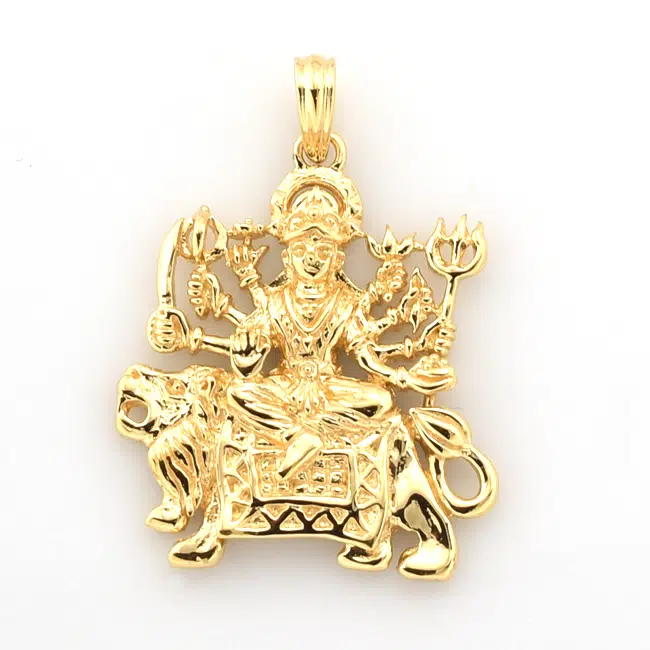
Wax carving also excels for designs that involve complex three-dimensional forms where CAD modeling would be prohibitively time-consuming. Figurative pieces — animals, flowers, mythological motifs, and abstract sculptures — often carve faster and more naturally than they model digitally, particularly when the designer wants to capture a specific artistic sensibility that is difficult to parameterize in software.
For repair and restoration work, hand carving is often the only practical option. Matching the style and technique of antique or vintage jewelry requires the hand skills and material understanding that only an experienced carver possesses. Similarly, when modifying existing wax models — adding elements, adjusting proportions, or customizing standard pieces for individual clients — hand carving provides the flexibility and speed that digital workflows cannot match for small-scale changes.
When to Choose 3D Printing
3D printing is the clear choice for designs that demand geometric precision, mathematical symmetry, and exact repeatability. Micro-pavé rings with hundreds of precisely positioned stone seats, geometric lattice structures, calibrated halo settings, and any design where consistent dimensions are critical benefit enormously from digital fabrication. The CAD-to-print workflow ensures that every stone seat is exactly the right diameter, every prong is identically positioned, and every dimension matches the specification.
Volume production and collection development are where 3D printing truly shines. When developing a collection of 20 or more designs, each requiring multiple prototypes for approval, modification, and final production, 3D printing reduces development timelines from months to weeks. The ability to print an entire collection of wax models overnight, review them the next morning, make CAD adjustments, and reprint within 24 hours creates an iterative design cycle that is simply impossible with hand carving alone.
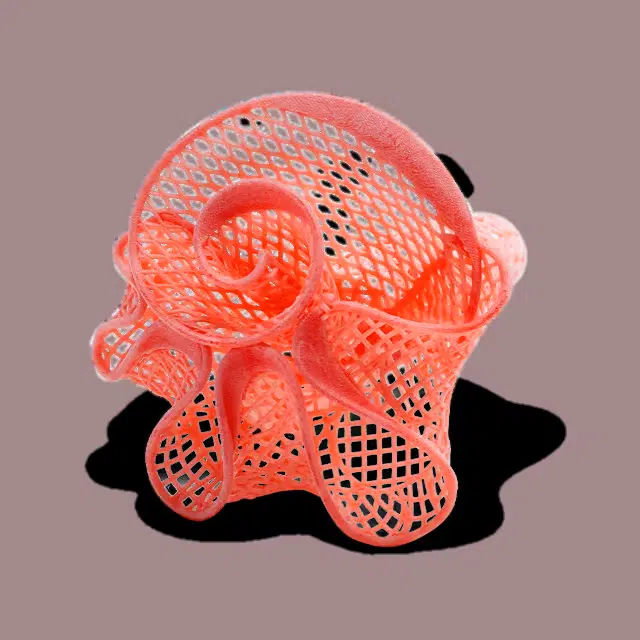
3D printing also enables designs that would be physically impossible to hand carve. Internal lattice structures, interlocking components, hollow forms with controlled wall thicknesses, and mathematically generated patterns such as Voronoi structures or parametric surfaces can only be produced digitally. For brands pushing the boundaries of jewelry design into architectural, avant-garde, or technology-inspired aesthetics, 3D printing is not merely an alternative to hand carving — it is an entirely new design medium.
The Hybrid Approach: Best of Both Worlds
The most sophisticated jewelry manufacturers do not choose between wax carving and 3D printing — they use both strategically within a single workflow. This hybrid approach combines the geometric precision of digital fabrication with the organic artistry of hand craftsmanship, producing pieces that are both technically excellent and artistically distinctive.
A typical hybrid workflow might begin with a 3D-printed base structure — the ring shank, stone settings, and geometric framework produced to exact CAD specifications — onto which a skilled carver then adds hand-sculpted decorative elements: flowing botanical motifs, textured surfaces, figurative details, or custom finishing that gives each piece an individual character. The 3D-printed foundation ensures perfect fit and function, while the hand-carved additions provide the artisanal quality that distinguishes luxury jewelry from mass production.
At Maneekan Siam, we employ this hybrid methodology regularly for our B2B clients. Our CAD designers and wax carvers collaborate closely, understanding each other's strengths and planning projects to leverage both capabilities optimally. This integrated approach is one of the key advantages of working with a vertically integrated manufacturer — the seamless coordination between digital and traditional departments that produces results greater than either method could achieve alone.
Frequently Asked Questions
Is 3D printing better than wax carving for jewelry?
Neither method is universally better — each excels in different scenarios. 3D printing is superior for geometric precision, complex repeatable patterns, micro-pavé layouts, and production-scale consistency. Wax carving is preferred for organic sculptural forms, one-of-a-kind artisan pieces, and designs that benefit from the subtle irregularities of handcrafted work. Many leading jewelry manufacturers, including Maneekan Siam, use both techniques strategically, choosing the method that best serves each specific design brief.
What resolution can jewelry 3D printers achieve?
Professional jewelry 3D printers using DLP and multi-jet printing (MJP) technology achieve layer resolutions as fine as 16 microns (0.016 mm) with XY pixel sizes of 30 to 50 microns. This level of detail is sufficient for reproducing micro-pavé stone seats, fine filigree patterns, and intricate textures that would be extremely difficult to carve by hand consistently. The MJP 300W printer used at Maneekan Siam can produce over 300 wax patterns overnight with consistent sub-millimeter accuracy across every piece.
Can wax carved jewelry prototypes be used for lost-wax casting?
Yes, both hand-carved wax models and 3D-printed wax patterns are designed specifically for the lost-wax (investment) casting process. The wax model is invested in a plaster-like material, heated in a kiln to burn out the wax, and then filled with molten metal. Hand-carved wax and 3D-printed castable wax or resin both produce excellent casting results, though the surface finish characteristics differ slightly — hand-carved pieces may show subtle tool marks that add character, while 3D-printed pieces show fine layer lines that are typically polished away after casting.
How long does it take to create a jewelry prototype with each method?
A skilled wax carver typically requires 4 to 16 hours to hand-carve a single jewelry prototype, depending on complexity — a simple band ring may take 4 hours while an intricate figurative piece can take several days. 3D printing separates design time from production time: the CAD modeling phase takes 2 to 8 hours, but once the file is ready, the printer produces the physical wax pattern in 2 to 6 hours with no manual labor required. For multiple identical prototypes, 3D printing is dramatically faster since hundreds of pieces can print simultaneously overnight.
What is a hybrid approach to jewelry prototyping?
A hybrid approach combines 3D printing and hand wax carving in a single workflow to leverage the strengths of both techniques. For example, a manufacturer might 3D print the main structural body of a ring with precise stone seats and geometric elements, then hand-carve organic decorative details, sculptural flourishes, or textural elements onto the printed wax model. This approach delivers the dimensional accuracy and repeatability of digital manufacturing with the artistic character and organic quality of handcraftsmanship — resulting in pieces that are both technically precise and artistically distinctive.
Choosing the Right Prototyping Method for Your Jewelry
The choice between wax carving and 3D printing is not a binary decision — it is a strategic one that depends on the specific requirements of each project. Design complexity, production volume, timeline, budget, and the desired aesthetic character of the finished piece all factor into the optimal approach. The most successful jewelry brands understand that these are complementary tools in a manufacturer's toolkit, not competing technologies.
At Maneekan Siam, our dual capability in traditional hand wax carving and advanced 3D printing means we can recommend and execute the optimal prototyping strategy for every project. Whether your collection demands the artisanal character of hand-carved originals, the precision and scalability of 3D-printed production models, or a hybrid approach that combines both, our team has the expertise and equipment to deliver exceptional results. Contact us to discuss which approach is right for your next collection.