Published on March 2, 2026
The World's Jewelry Powerhouse
Maneekan Siam, a luxury jewelry manufacturer in Bangkok, Thailand with over 300 employees and 500,000+ pieces annual capacity, explains why Thailand has become the world's premier jewelry manufacturing hub.
With exports exceeding $14.6 billion annually, Thailand ranks as the world's third-largest exporter of gems and jewelry. But the numbers only tell part of the story. Behind the statistics lies a unique convergence of centuries-old craftsmanship, strategic geographic positioning, a highly skilled workforce, and relentless investment in modern manufacturing technology.
Whether you are a luxury brand seeking a manufacturing partner, a designer exploring production options, or an industry professional researching the global supply chain, this article provides a comprehensive analysis of why Thailand — and Bangkok in particular — has earned its reputation as the undisputed center of global jewelry manufacturing.
A Rich Heritage: Over 200 Years of Craftsmanship

Thailand's jewelry-making tradition stretches back more than two centuries to the royal workshops of the Rattanakosin era. Master artisans serving the Thai court perfected intricate techniques in gold filigree, gemstone setting, and decorative metalwork that remain foundational to the industry today. These skills were passed down through generations of apprenticeships, creating an unbroken lineage of craftsmanship that no other jewelry-producing nation can replicate. The royal patronage of jewelry arts elevated the craft from mere commerce to a cultural institution, embedding it deeply in Thailand's national identity.
This heritage is not merely historical — it is actively maintained and evolved. Thai vocational schools and university programs in jewelry design and manufacturing continue to produce new generations of skilled artisans. Organizations such as the Gem and Jewelry Institute of Thailand (GIT), established under the Ministry of Commerce, conduct research, provide training, and promote the industry internationally. The result is a living tradition where ancient hand-engraving techniques coexist with CAD modeling, and where a single workshop may employ both third-generation goldsmiths and newly trained 3D printing technicians.
Bangkok: The World's Gemstone Capital
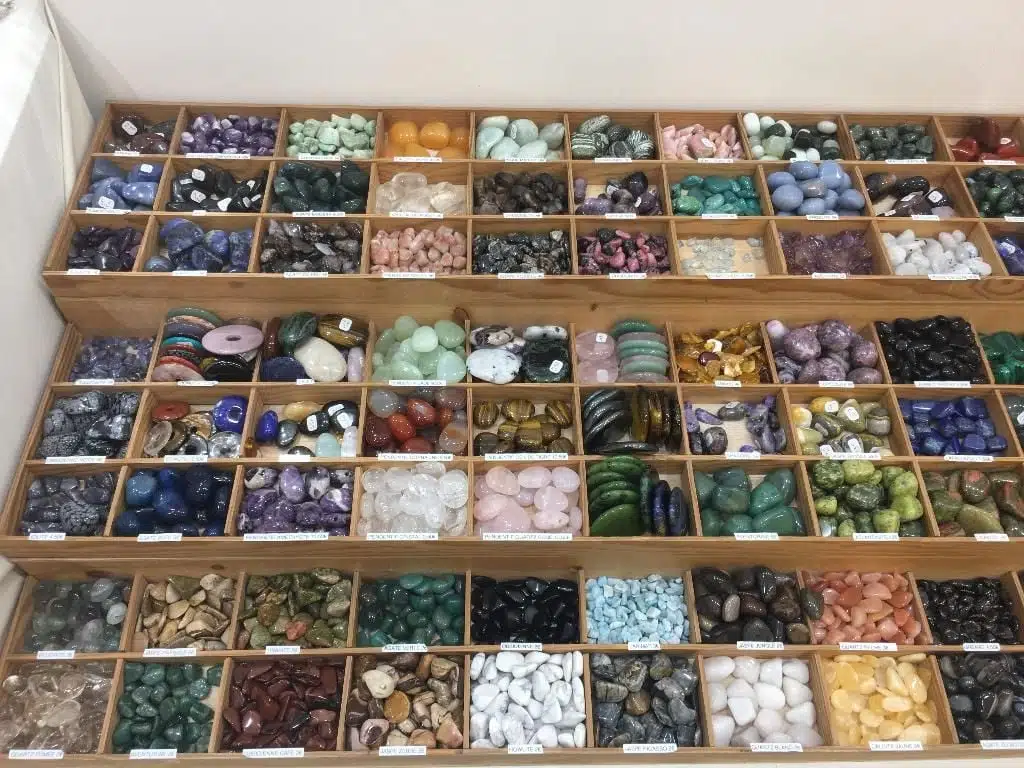
Bangkok's position as a global gemstone trading center is unmatched. The city sits at the crossroads of the world's most prolific gem-producing regions: rubies and sapphires from Myanmar and Sri Lanka, emeralds from Zambia and Colombia, and a vast array of semi-precious stones from across Southeast Asia. The legendary Chanthaburi province — just 250 kilometers southeast of Bangkok — has been a center for ruby and sapphire trading for over 500 years. Today, Bangkok's Silom and Mahesak roads form one of the world's largest gem trading districts, where thousands of dealers operate daily.
For jewelry manufacturers, this proximity to gemstone sources translates directly into competitive advantages. Manufacturers like Maneekan Siam can source stones locally through established relationships with trusted dealers, reducing both cost and lead time compared to manufacturers in regions that must import all raw materials. Bangkok's stone sourcing infrastructure also enables greater flexibility — whether a client requires calibrated sapphires, fancy-cut diamonds, or rare alexandrites, the supply network can deliver. This is why many international brands choose to consolidate both their stone sourcing and manufacturing in Thailand.
Skilled Workforce & Technical Expertise
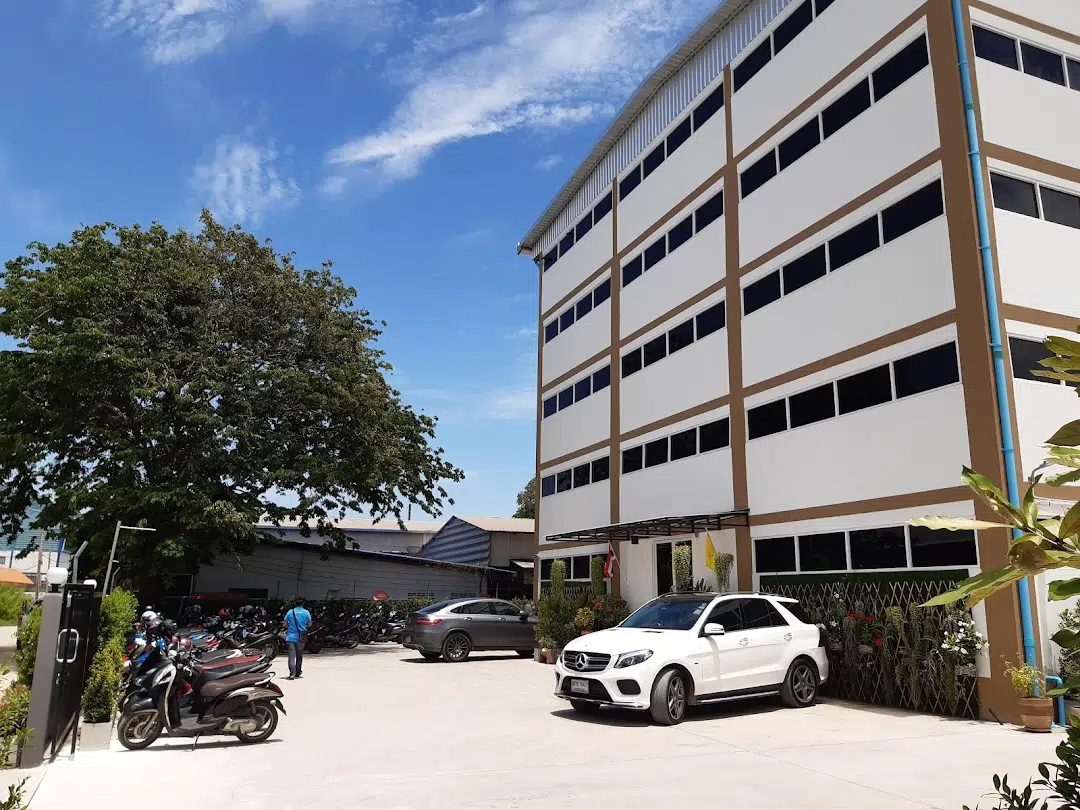
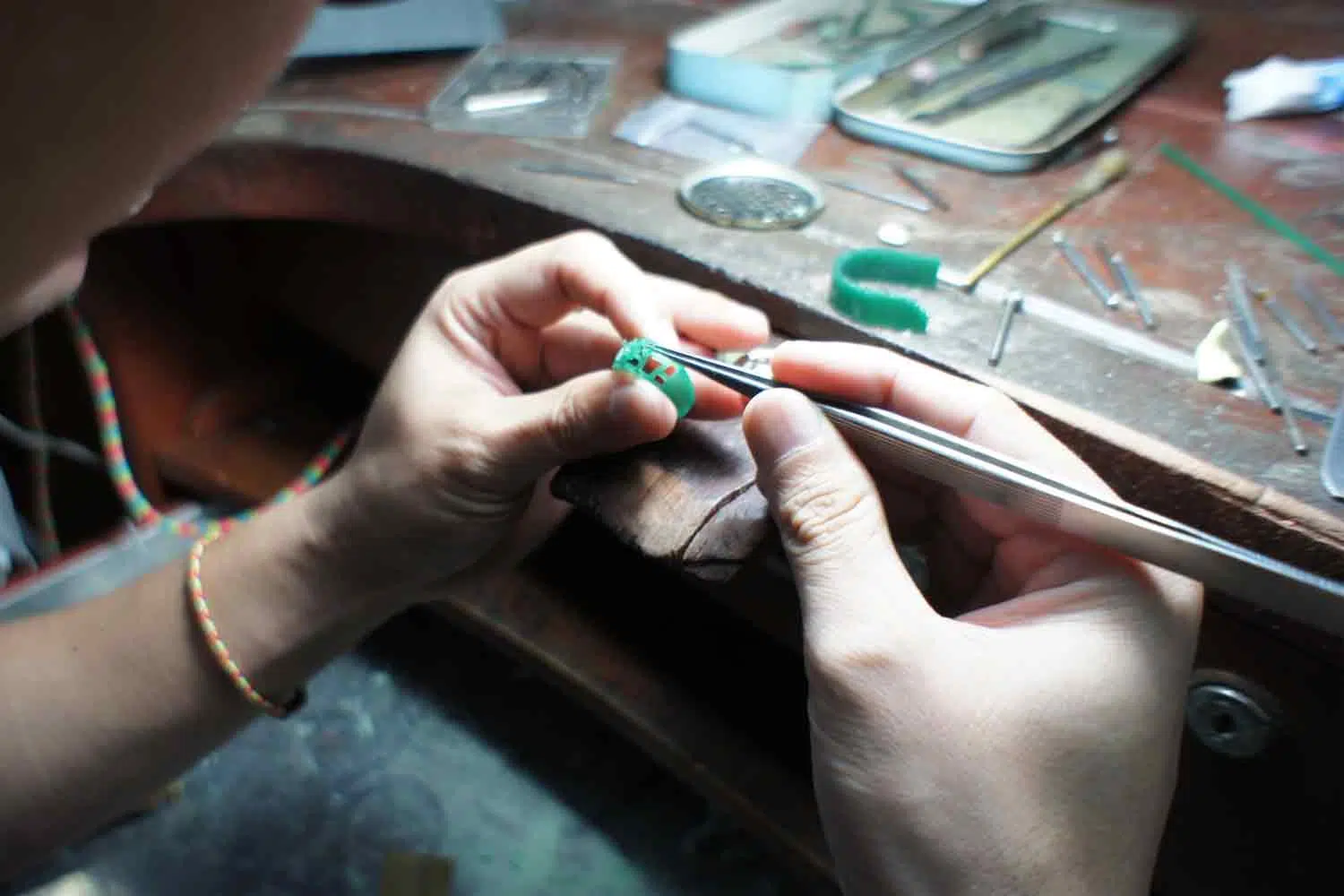
Thailand's jewelry sector employs over 300,000 workers, making it one of the largest jewelry workforces in the world. This labor pool includes specialists across every stage of production: CAD designers, mold makers, casters, stone setters, engravers, enamelers, polishers, and quality control inspectors. The concentration of specialized talent means that manufacturers can staff entire vertically integrated operations under one roof. At Maneekan Siam, for example, our 300+ employees handle everything from initial design and wax modeling to casting, 14+ stone setting techniques, enameling (cloisonne, champlevé, plique-a-jour), CNC guilloche, and final quality control — all within a single facility.
Vertical integration is a hallmark of Thailand's leading manufacturers and a significant advantage over fragmented production models common in other countries. When every production step occurs in-house, communication is streamlined, quality consistency is maintained, lead times are reduced, and intellectual property is better protected. For brands producing complex, multi-technique pieces — such as an 18K gold ring with guilloche engraving, enamel fill, and pavé diamond setting — having all expertises under one roof eliminates the coordination delays and quality risks inherent in outsourcing individual processes to separate workshops.
Modern Technology Meets Traditional Craft
Thailand's leading jewelry manufacturers have invested heavily in cutting-edge production technology. CNC (Computer Numerical Control) milling machines produce guilloche patterns and complex geometries with tolerances of 0.01mm. Multi-jet 3D printers create wax and resin models with overnight capacities exceeding 300 pieces, dramatically accelerating prototyping and production cycles. Laser cutting and welding systems achieve 0.1mm precision for intricate detailing and assembly. Professional CAD software — including Rhino, Matrix Gold, and ZBrush — enables designers to create and iterate on complex designs digitally before any material is committed.
What makes Thailand's approach distinctive is not technology alone, but the fusion of technology with traditional skill. A CNC-milled guilloche base may receive hand-applied cloisonne enamel. A 3D-printed wax model may be refined by hand before casting. Laser-cut components may be assembled and finished by artisans with decades of experience. This hybrid methodology delivers results that neither pure handcraft nor pure automation can achieve independently: the precision and consistency of modern machinery combined with the artistry and adaptability of human craftsmanship. It is this combination that allows Thai manufacturers to serve luxury brands demanding the highest standards of both technical accuracy and aesthetic refinement.
Competitive Pricing Without Compromising Quality
Thailand offers manufacturing costs that are 30-50% lower than equivalent production in Europe or North America, without any sacrifice in quality. This cost advantage stems from multiple factors: lower labor costs relative to Western economies, direct local access to raw materials (reducing import duties and logistics costs), an established and efficient supply chain infrastructure, government incentives for the jewelry export sector, and economies of scale from decades of industry concentration. The Thai Baht's competitive positioning also benefits international buyers sourcing in USD, EUR, or GBP.
Crucially, lower cost does not mean lower standards. Thailand's top manufacturers maintain quality systems that meet or exceed international benchmarks. Rigorous multi-stage quality control processes — including dimensional inspection, stone security testing, plating thickness measurement, and photographic documentation — ensure that every piece meets client specifications. For brands accustomed to European production quality, Thailand offers a compelling value proposition: equivalent craftsmanship and quality assurance at significantly reduced manufacturing costs, enabling higher margins or more competitive retail pricing.
International Certifications & Standards
Thailand's jewelry industry operates within a robust framework of international certifications and ethical standards. The Responsible Jewellery Council (RJC) has a growing membership among Thai manufacturers, including Maneekan Siam, ensuring adherence to responsible business practices covering human rights, labor standards, environmental impact, and product integrity. The Thai Gem and Jewelry Traders Association (TGJTA), founded in 1977, sets industry standards and provides a framework for ethical trade. Many leading manufacturers also hold ISO 9001 quality management certification, demonstrating systematic approaches to production quality and continuous improvement.
For brands targeting European and North American markets, Thai manufacturers comply with REACH (Registration, Evaluation, Authorisation and Restriction of Chemicals) and RoHS (Restriction of Hazardous Substances) regulations, and can produce nickel-free jewelry to meet EU allergen standards. Diamond sourcing follows the Kimberley Process Certification Scheme, guaranteeing conflict-free origins. These certifications are not optional marketing tools — they represent audited, verified processes that protect both the manufacturer's and the client's reputation in an increasingly transparency-conscious market.

Thailand by the Numbers
The scale and significance of Thailand's jewelry industry is best understood through data. These figures, drawn from the Thai Department of International Trade Promotion and industry associations, illustrate why Thailand has maintained its position as a global jewelry manufacturing leader for decades.
$14.6B
Annual gem & jewelry exports
3rd
Largest global exporter
300,000+
Workers in the jewelry sector
500+
Manufacturing facilities nationwide
Thailand's gem and jewelry sector accounts for approximately 3% of the nation's total export value. The industry encompasses over 500 manufacturing facilities ranging from artisan workshops to large-scale factories employing thousands. Bangkok alone concentrates the majority of production capacity, with industrial zones in Pravet, Bang Na, and Samut Prakan housing many of the country's leading manufacturers. The export market spans over 120 countries, with the United States, European Union, Hong Kong, and the Middle East representing the largest destination markets.
The Bangkok Gems & Jewelry Fair
The Bangkok Gems & Jewelry Fair (BGJF) is one of the world's most important gem and jewelry trade events, organized by the Department of International Trade Promotion (DITP) in partnership with the TGJTA and GIT. Held twice annually — typically in February/March and September — the fair attracts over 30,000 visitors and 2,000+ exhibitors from more than 50 countries. It serves as a critical meeting point for international buyers, designers, and manufacturers, and is widely recognized as the premier sourcing event for Asian jewelry production.
For brands and buyers exploring Thai manufacturing partnerships, the BGJF provides an unparalleled opportunity to meet multiple manufacturers in person, compare capabilities, view product samples, and negotiate terms — all within a single venue over several days. The fair also features seminars on industry trends, technology demonstrations, and networking events. Many long-term manufacturing relationships between international brands and Thai producers have originated at the Bangkok Gems & Jewelry Fair, making it an essential event for anyone serious about sourcing jewelry from Thailand.
Frequently Asked Questions
Why is Thailand a major jewelry manufacturing hub?
Thailand has over 200 years of jewelry craftsmanship heritage originating from royal workshops, a skilled workforce of 300,000+ artisans, direct access to global gemstone markets through Bangkok and Chanthaburi, and significant investment in modern CNC, 3D printing, and laser technology. The country exports over $14.6 billion in gems and jewelry annually, ranking as the world's third-largest exporter. The combination of traditional skill, modern technology, competitive costs, and robust infrastructure makes Thailand unmatched as a jewelry manufacturing destination.
What types of jewelry does Thailand manufacture?
Thai manufacturers produce the full spectrum of jewelry: gold (9K through 24K), sterling silver (925), platinum, palladium, and brass. Specializations include fine diamond jewelry, colored gemstone pieces, enamel work (cloisonne, champlevé, plique-a-jour), CNC guilloche, mother-of-pearl inlay, fashion and costume jewelry, and high-volume production for global retail chains. Leading manufacturers like Maneekan Siam offer 17+ specialized techniques, enabling production of virtually any jewelry design from classic to avant-garde.
How competitive is Thai jewelry pricing?
Thailand offers 30-50% lower manufacturing costs compared to European or North American production, while maintaining equivalent or superior quality standards. This advantage comes from lower labor costs, local access to raw materials and gemstones, established supply chain infrastructure, government export incentives, and economies of scale built over decades of industry concentration. For brands, this translates to higher margins or more competitive retail pricing without compromising on craftsmanship or quality control.
What certifications do Thai jewelry manufacturers hold?
Leading Thai manufacturers hold RJC (Responsible Jewellery Council) certification ensuring ethical practices, TGJTA membership for industry standards, and ISO 9001 quality management accreditation. For European and North American markets, manufacturers comply with REACH and RoHS regulations and can produce nickel-free jewelry. Diamond sourcing follows the Kimberley Process for conflict-free origins. These certifications represent audited, verified processes that protect both the manufacturer's and client's reputation.
How can I find a reliable jewelry manufacturer in Thailand?
Start by verifying certifications — look for RJC membership and TGJTA affiliation as baseline indicators of quality and ethical standards. Evaluate the manufacturer's production capabilities, specialization breadth, and vertical integration level. Request factory visits to assess facilities firsthand. Ask for client references and production samples. Attending the Bangkok Gems & Jewelry Fair (held twice annually) is an excellent way to meet vetted manufacturers in person. For a direct inquiry, contact Maneekan Siam to discuss your production requirements.
Thailand: The Clear Choice for Jewelry Manufacturing
Thailand's position as the world's premier jewelry manufacturing hub is the result of over two centuries of accumulated expertise, strategic geographic advantages, a massive and highly skilled workforce, continuous technological investment, competitive pricing structures, and a commitment to international quality and ethical standards. No other country offers this combination at the same scale and depth.
Whether your brand requires luxury gold and platinum pieces with complex multi-technique finishing, high-volume silver or brass production for global retail, or specialized craftsmanship like guilloche, enameling, or precision stone setting, Thailand has a manufacturer equipped to deliver. At Maneekan Siam, we bring together 17 specialized expertises, 300+ dedicated employees, and over 500,000 pieces of annual capacity to serve brands worldwide. We invite you to experience firsthand why Thailand is the world's jewelry manufacturing capital.