Published on March 2, 2026
Understanding Precious Metals in Jewelry Manufacturing
The key differences between gold, silver, and platinum in jewelry manufacturing come down to five factors: durability, workability, cost, weight, and market positioning. Gold offers unmatched versatility through its range of karats and color alloys. Silver provides the most accessible price point with excellent design flexibility. Platinum delivers superior durability and hypoallergenic properties at a premium cost. Understanding these distinctions is essential for any brand making informed material decisions.
For jewelry brands and designers, the choice of precious metal is one of the most consequential decisions in product development. It affects not only the look and feel of the finished piece but also manufacturing processes, production costs, retail pricing, and ultimately how consumers perceive your brand. A ring crafted in 18K rose gold tells a very different story than the same design executed in sterling silver or platinum.
In this guide, we draw on our experience manufacturing jewelry across all three precious metals to provide a detailed, production-focused comparison. Whether you are developing your first collection or expanding an established line into new metal categories, this article will help you understand the practical manufacturing implications of each metal choice and how to align material selection with your brand strategy.
Gold in Jewelry Manufacturing
Karats and Purity
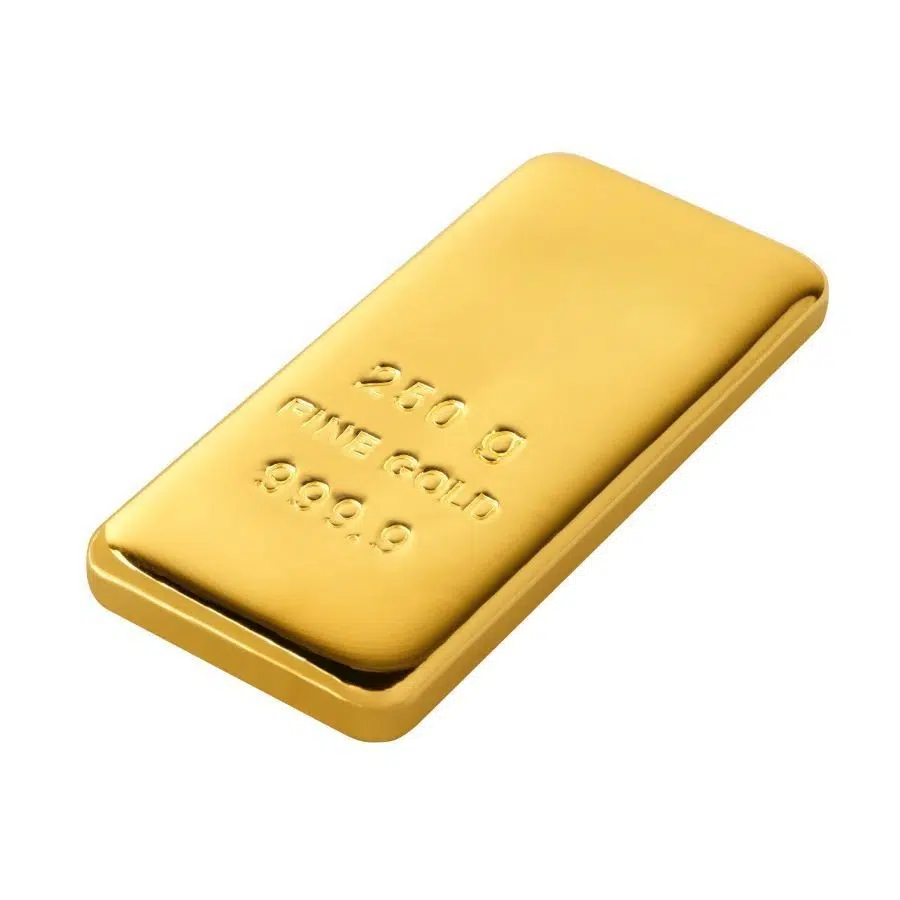
Gold purity is measured in karats, with 24K representing 99.9% pure gold. In jewelry manufacturing, pure gold is rarely used because of its extreme softness — it can be scratched with a fingernail. Instead, gold is alloyed with other metals to increase hardness and durability. The most common standards are 18K (75% gold), 14K (58.3% gold), 10K (41.7% gold), and 9K (37.5% gold). The karat choice has a direct impact on manufacturing: higher-karat gold is easier to cast but more prone to surface damage, while lower-karat gold is harder and more resistant to wear but requires higher casting temperatures and more careful finishing. For luxury brands, 18K is the global standard, offering the ideal balance of rich color, workability, and prestige. For accessible luxury and everyday jewelry, 14K provides superior scratch resistance at a significantly lower material cost.
Gold Colors and Alloys
One of gold's greatest advantages in jewelry manufacturing is the range of colors achievable through alloying. Yellow gold is created by combining pure gold with silver and copper in varying ratios. Rose gold, increasingly popular in contemporary jewelry, uses a higher proportion of copper to achieve its warm pink hue — 18K rose gold typically contains 75% gold, 22.25% copper, and 2.75% silver. White gold is alloyed with palladium or nickel (with palladium preferred for hypoallergenic formulations) and is almost always rhodium-plated to achieve a bright, cool-toned finish. Less common variants include green gold (gold-silver alloy), grey gold (gold-iron alloy), and champagne gold. This color versatility allows brands to offer diverse collections while maintaining the prestige and perceived value of gold.
Manufacturing Considerations
Gold is one of the most workable precious metals in jewelry production. Its relatively low melting point (1,064°C for pure gold) makes it well suited for casting, and its excellent malleability allows for intricate detailing, thin-wall construction, and complex multi-component assemblies. Gold responds beautifully to a wide range of finishing techniques: high polish, matte, satin, brushed, sandblasted, and hammered textures are all achievable with consistent results. Soldering gold is straightforward with properly matched solder alloys, enabling the construction of complex multi-part pieces. However, manufacturers must maintain strict separation between gold karats and colors throughout the production process to prevent contamination. At Maneekan Siam, we use dedicated casting equipment and finishing stations for each gold type to ensure material integrity.
Explore our production capabilities →Best Uses for Gold
Gold is the most versatile choice for jewelry brands targeting the luxury and fine jewelry segments. It is ideal for engagement rings and bridal jewelry where longevity and perceived value are paramount, statement pieces where rich color and weight create a sense of quality, collections requiring multiple color options (yellow, rose, white) under a unified material identity, and pieces featuring precious gemstone settings where the security and durability of gold prongs are essential. Gold also holds its value exceptionally well over time, which can be a meaningful selling point for brands positioning their pieces as investment-worthy heirlooms.
Silver in Jewelry Manufacturing
Sterling Silver and Alloy Standards
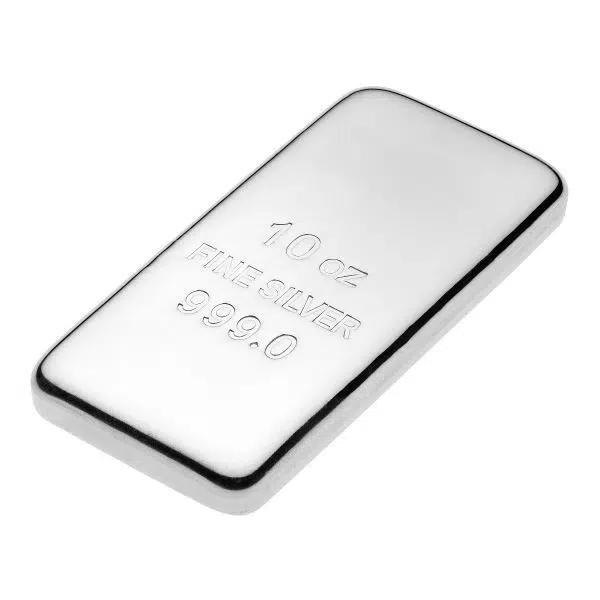
Sterling silver (925) is the industry standard for silver jewelry, containing 92.5% pure silver and 7.5% copper or other metals for added strength. Pure silver (999) is too soft for most jewelry applications, much like 24K gold. Beyond sterling, manufacturers may work with Argentium silver (93.5% or 96% silver with germanium), which offers superior tarnish resistance and a brighter finish, or Britannia silver (95.8% silver), favored in some European markets. The choice of silver alloy affects not only durability but also casting behavior, tarnish resistance, and final color. For most commercial jewelry production, sterling silver 925 remains the optimal choice, offering the best balance of workability, durability, and consumer recognition.
Tarnish Prevention and Management
Tarnishing is the single biggest challenge in silver jewelry manufacturing and retail. Silver reacts with sulfur compounds in the air to form silver sulfide, a dark discoloration that dulls the metal's surface. Effective tarnish management begins in the factory and continues through packaging and retail display. Manufacturing solutions include applying anti-tarnish coatings immediately after final polishing, using e-coating (electrophoretic lacquer) for a durable invisible barrier, rhodium plating for a bright and completely tarnish-proof surface, and packaging finished pieces in anti-tarnish tissue or bags with vapor-phase inhibitors. Brands that invest in proper anti-tarnish treatment at the manufacturing stage significantly reduce customer complaints and returns, making it a critical quality consideration when selecting a silver jewelry manufacturer.
Plating and Surface Treatments
Silver serves as an excellent base metal for plating, which dramatically expands its design possibilities and market appeal. Common plating options for silver jewelry include gold plating (yellow, rose, or white gold in various micron thicknesses), rhodium plating for a bright white finish that also prevents tarnishing, ruthenium or black rhodium for a contemporary dark finish, and two-tone or multi-tone combinations for visual interest. The plating process requires careful surface preparation — thorough cleaning, polishing, and in some cases nickel or palladium underplating to ensure adhesion and longevity. At Maneekan Siam, our finishing department offers a full range of plating services with precise micron control to meet the durability requirements of each brand and market.
Discover our finishing and plating expertises →Best Uses for Silver
Silver is the material of choice for brands targeting the accessible luxury, fashion jewelry, and contemporary design segments. It excels in fashion-forward collections where seasonal trends and frequent new releases benefit from lower material costs, high-volume production where cost efficiency is essential to maintaining healthy margins, pieces with large surface areas (cuffs, statement earrings, pendants) where the weight and cost of gold would be prohibitive, and designs featuring intricate textures and surface treatments where silver's bright white color provides an ideal canvas. Silver also resonates strongly with younger consumers and the growing market for affordable fine jewelry, making it a strategic choice for brands building their customer base.
Platinum in Jewelry Manufacturing
Physical Properties and Advantages
Platinum possesses a unique combination of properties that make it the most premium material in jewelry manufacturing. With a density of 21.45 g/cm³ (11% denser than gold), platinum jewelry has a substantial, luxurious weight that consumers associate with quality. It is naturally white — unlike white gold, platinum does not require rhodium plating to maintain its color, though many manufacturers do plate it for an extra-bright finish out of the box. Platinum is highly resistant to corrosion and tarnishing, maintaining its appearance over decades with minimal maintenance. It is also naturally hypoallergenic, making it the safest choice for consumers with metal sensitivities. Perhaps most importantly for jewelry durability, platinum does not lose metal when scratched — the metal is displaced rather than removed, which means platinum jewelry retains its mass and structural integrity over a lifetime of wear.
Manufacturing Challenges
Working with platinum presents significant manufacturing challenges that directly affect production costs and timelines. Its extremely high melting point (1,768°C) requires specialized casting equipment and investment materials that can withstand much higher temperatures than those used for gold or silver. Platinum's hardness and density make it more difficult to cut, file, set stones, and polish, requiring more skilled labor hours per piece. Soldering platinum requires different equipment and techniques than gold, including the use of a hydrogen-oxygen torch or laser welding. Sizing and repairs are also more complex and time-consuming. These challenges mean that manufacturers need dedicated platinum workstations, specialized tooling, and experienced artisans trained specifically in platinum work. Not all jewelry manufacturers are equipped to work with platinum, making it important to verify a manufacturer's platinum capabilities before committing to production.
Platinum Alloys for Jewelry
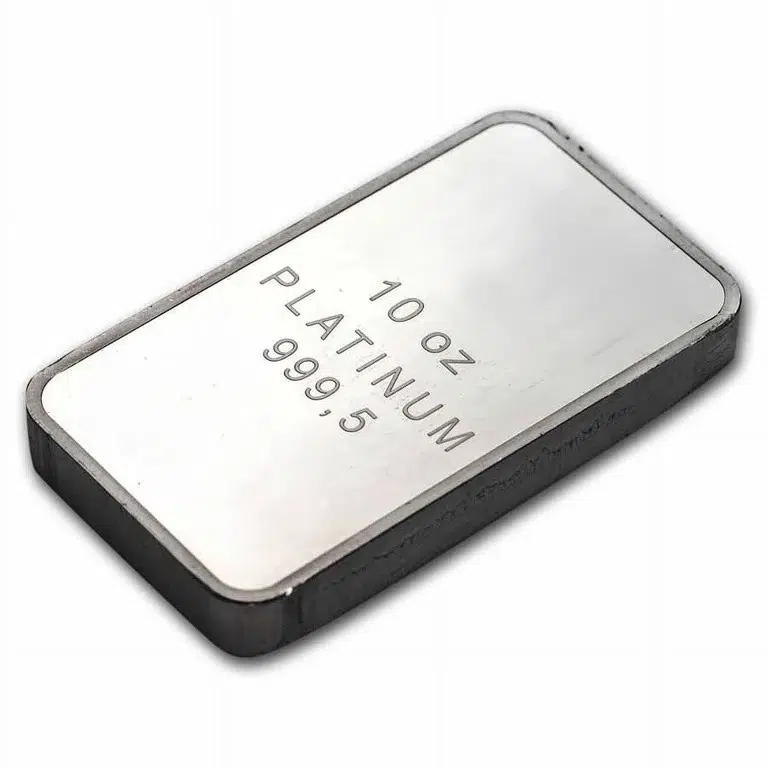
Jewelry-grade platinum is typically alloyed to 950 (95% platinum) or 900 (90% platinum), with common alloying metals including iridium, ruthenium, cobalt, and copper. The choice of alloy significantly affects manufacturing behavior. Platinum-iridium (Pt950/Ir) is the traditional standard, offering excellent hardness and a bright white color. Platinum-ruthenium (Pt950/Ru) provides good casting properties and grain structure. Platinum-cobalt (Pt950/Co) is popular for its excellent casting characteristics and magnetic properties that aid in certain manufacturing processes, though it is not suitable for consumers with cobalt sensitivities. Each alloy behaves differently during casting, setting, and polishing, so manufacturers must carefully select the alloy that best matches the specific piece design and production requirements.
Best Uses for Platinum
Platinum is the definitive choice for the highest tier of luxury jewelry. It is best suited for engagement rings and wedding bands where maximum durability and lifetime value are paramount, high-end pieces featuring significant precious gemstones where the security and integrity of platinum settings provide superior stone retention, brands positioning themselves at the ultra-luxury or haute joaillerie level where material exclusivity reinforces brand perception, and pieces designed for consumers with metal allergies or sensitivities who require a guaranteed hypoallergenic option. While platinum represents a higher manufacturing investment, it commands premium retail prices and communicates an uncompromising commitment to quality that discerning consumers value.
Head-to-Head Comparison: Gold vs Silver vs Platinum
Durability and Longevity
Platinum leads in overall durability — it is the hardest of the three metals in its jewelry-grade alloy forms, the most scratch-resistant, and the only one that does not lose metal mass when abraded. 18K gold offers excellent durability for fine jewelry, with 14K providing even greater scratch resistance due to its higher alloy content. Sterling silver is the softest of the three and the most prone to surface damage and tarnishing, requiring more frequent maintenance to maintain its appearance. For pieces that will endure daily wear — rings, bracelets, and watches — platinum or 14K gold are the most practical choices. For occasional-wear pieces like earrings and pendants, all three metals perform well.
Weight and Feel
The weight of a jewelry piece significantly affects the perceived quality and wearing experience. Platinum is the heaviest at 21.45 g/cm³, creating a substantial feel that luxury consumers associate with premium quality. Gold follows at 19.32 g/cm³ for pure gold (lower for lower karats due to lighter alloy metals). Sterling silver is considerably lighter at 10.49 g/cm³ — approximately half the weight of gold. This weight difference has practical implications for large-format pieces: a platinum cuff bracelet would be extremely heavy and potentially uncomfortable, while the same design in silver would be wearable and affordable. Manufacturers and brands should consider weight alongside aesthetics when selecting metals for specific piece types.
Cost and Pricing
Material and manufacturing costs vary dramatically between the three metals, directly affecting retail pricing strategy. As of current market conditions, platinum is the most expensive per gram, followed by gold (with significant price variation between karats), and silver is by far the most affordable. Manufacturing costs compound these differences: platinum pieces require more labor hours and specialized equipment, adding 40-60% to production costs compared to equivalent gold pieces. Silver production is the most cost-efficient, with lower material costs and faster processing times. For brands, the metal choice defines their price architecture — a silver collection might retail at $50-300 per piece, an equivalent gold collection at $300-3,000, and platinum at $1,000-10,000+. Understanding these cost structures is essential for building a viable business model.
Workability and Design Flexibility
Gold offers the greatest overall workability, responding well to virtually every manufacturing technique: casting, stamping, forging, wire drawing, engraving, and all forms of surface finishing. Its moderate melting point and predictable behavior make it the most versatile metal in a production environment. Silver shares many of gold's working properties and is equally adaptable to diverse techniques, with the added advantage of lower cost for prototyping and design development. Platinum is the most demanding to work with — its high melting point, density, and hardness require specialized equipment and techniques, limiting the range of manufacturers capable of producing it. However, platinum's strength allows for thinner, more delicate structural elements that would not be possible in softer metals, opening unique design possibilities for skilled manufacturers.
Market Positioning
Each metal occupies a distinct position in the consumer market. Platinum signals ultra-luxury, exclusivity, and uncompromising quality — it is the material of choice for the world's most prestigious jewelry houses. Gold is the universal symbol of fine jewelry, spanning from accessible luxury to haute joaillerie depending on the karat and design complexity. Silver has evolved from a traditional precious metal to the material of contemporary, fashion-forward, and accessible fine jewelry, particularly appealing to younger demographics and the growing demi-fine segment. Many successful brands strategically use multiple metals to address different market segments: a platinum bridal line, gold fine jewelry, and silver fashion pieces, creating a tiered offering that captures customers at various price points and life stages.
Choosing the Right Metal for Your Brand
Market Positioning Strategy
Your choice of metal should align directly with your brand positioning and competitive strategy. If you are building a luxury or ultra-luxury brand, platinum and 18K gold communicate the exclusivity and craftsmanship that justify premium pricing. For accessible luxury, 14K gold and vermeil (thick gold plating over sterling silver) offer the prestige of gold at more attainable price points. For contemporary and fashion jewelry brands, sterling silver with strategic plating options provides the design flexibility and margin structure needed for frequent collection releases. Consider also whether offering multiple metals creates a stronger brand proposition — a tiered material strategy can help you acquire customers at accessible price points and upgrade them to higher-value metals as brand loyalty grows.
Target Audience Considerations
Understanding your target consumer's priorities is essential for metal selection. Younger consumers (Gen Z and Millennials) often prioritize design, trend alignment, and accessibility over traditional material hierarchy, making silver and gold-plated silver strong choices for this demographic. Affluent consumers purchasing engagement rings and milestone jewelry typically expect gold or platinum and associate these metals with permanence and investment value. Consumers with metal sensitivities require nickel-free options — platinum is naturally hypoallergenic, while specific gold and silver alloys can be formulated to be nickel-free. Geographic preferences also matter: 18K gold is standard in Europe and the Middle East, while 14K is more common in North America, and 22K-24K gold dominates in Asian markets. A knowledgeable manufacturer can advise on the optimal metal specifications for your target market.
Budget and Production Considerations
Material costs represent a significant portion of your production budget and directly affect minimum order values, inventory investment, and cash flow requirements. Silver collections require the lowest upfront investment, allowing brands to carry broader assortments and test new designs with minimal financial risk. Gold collections demand substantially higher inventory investment but generate higher absolute margins per piece. Platinum collections require the greatest investment but command the highest retail prices and attract the most affluent consumers. When planning with your manufacturer, discuss not only per-piece costs but also the total investment required for sampling, initial production runs, and inventory, ensuring the chosen metal aligns with your available capital and growth trajectory. At Maneekan Siam, we work with brands across all three metals and can help you develop a material strategy that balances ambition with financial sustainability.
Frequently Asked Questions
Which precious metal is best for everyday jewelry?
For everyday jewelry, platinum and higher-karat gold alloys (14K and 18K) offer the best combination of durability and beauty. Platinum is extremely resistant to wear and does not tarnish, making it ideal for rings and bracelets that endure daily contact. 14K gold provides excellent durability due to its higher alloy content while maintaining the prestige of gold. Sterling silver, while beautiful and affordable, requires more maintenance for daily wear due to its tendency to tarnish and its relative softness compared to gold and platinum.
What is the difference between 14K, 18K, and 24K gold?
The karat system measures gold purity in parts out of 24. 24K gold is 99.9% pure gold — the softest and most yellow but too malleable for most jewelry. 18K gold contains 75% pure gold alloyed with metals like copper, silver, or palladium, offering a rich color with improved durability — it is the standard for luxury jewelry. 14K gold contains 58.3% pure gold, providing greater hardness and scratch resistance at a lower price point, making it popular for everyday pieces. The choice between karats affects color intensity, durability, weight, price, and hypoallergenic properties.
Why is platinum more expensive than gold?
Platinum is more expensive than gold for several manufacturing reasons beyond raw material cost. Platinum has a significantly higher melting point (1,768°C vs 1,064°C for gold), requiring specialized equipment and more energy to work. Its density (21.45 g/cm³ vs 19.32 g/cm³ for gold) means more metal by weight is needed for the same piece. Platinum alloys used in jewelry are typically 90-95% pure (compared to 75% for 18K gold), further increasing material costs. The metal is also harder to cast, solder, and polish, requiring more skilled labor hours per piece. These combined factors make platinum jewelry 40-60% more expensive to manufacture than equivalent gold pieces.
How do manufacturers prevent silver jewelry from tarnishing?
Jewelry manufacturers use several techniques to prevent or minimize silver tarnishing. The most common approach is applying protective coatings: rhodium plating provides a bright, tarnish-resistant surface; e-coating (electrophoretic lacquer) creates an invisible barrier; and anti-tarnish lacquers offer affordable protection for fashion jewelry. Some manufacturers use tarnish-resistant silver alloys such as Argentium silver, which contains germanium to significantly reduce tarnishing. At the production level, proper storage in anti-tarnish packaging, silica gel desiccants, and controlled environments also help maintain finish quality from factory to retail.
Can a single manufacturer work with all three precious metals?
Yes, but it requires significant investment in equipment, training, and facility design. Each metal has different melting points, casting requirements, and finishing techniques. A manufacturer working with all three must maintain separate crucibles and casting equipment to prevent cross-contamination, specialized polishing compounds for each metal, trained artisans experienced with different working properties, and separate quality control protocols. At Maneekan Siam, our vertically integrated facility in Bangkok is equipped to manufacture jewelry in gold (9K to 24K), sterling silver, platinum, palladium, and brass, allowing brands to develop cohesive collections across multiple metal types with a single production partner.
Making the Right Metal Choice for Your Brand
Choosing between gold, silver, and platinum is far more than a material decision — it is a strategic choice that shapes your brand identity, defines your price architecture, and determines which consumers your jewelry will reach. Each metal brings distinct advantages to the manufacturing process and the finished product. Gold offers unmatched versatility and universal prestige. Silver provides accessibility and design freedom at scale. Platinum delivers the ultimate in durability and luxury positioning. The most successful jewelry brands understand these distinctions and leverage them to build compelling, well-differentiated product offerings.
At Maneekan Siam, we manufacture jewelry across all three precious metals as well as palladium and brass, giving our brand partners the flexibility to develop complete collections under one roof. Our vertically integrated facility in Bangkok combines 17 specialized expertises — from design and CAD modeling through casting, stone setting, finishing, and quality control — ensuring consistent quality regardless of the metal you choose. Whether you are launching a new metal category, developing your first collection, or optimizing your existing production, our team is ready to share our expertise and help you make the material choices that will drive your brand forward.