Published on March 3, 2026
Understanding Jewelry Materials: A Manufacturer's Perspective
What materials are used in jewelry manufacturing? The answer spans a remarkable spectrum — from precious metals like gold, silver, and platinum to base metals such as brass and stainless steel, from diamonds and sapphires to organic materials like pearl and coral, and from mirror-polished surfaces to advanced PVD coatings. Each material brings distinct properties in terms of durability, aesthetics, workability, and cost, and selecting the right combination is fundamental to creating jewelry that meets both design vision and market requirements.
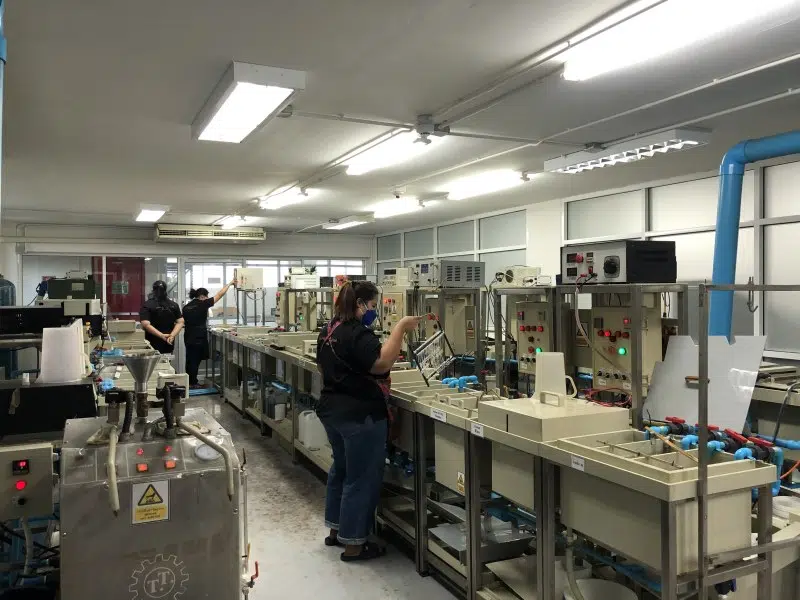
At Maneekan Siam, our vertically integrated manufacturing facility in Bangkok works across the full range of jewelry materials — precious metals, base metals, natural and lab-grown gemstones, and every major finishing and plating technique used in modern jewelry production. With over 300 skilled artisans and 17 specialized departments, we help brands navigate material selection decisions that directly impact product quality, pricing, and market positioning.
This comprehensive guide covers every major category of jewelry material, from metals and stones to surface finishes and protective coatings. Whether you are a jewelry brand owner evaluating production options, a designer specifying materials for a new collection, or a buyer comparing manufacturer capabilities, this resource provides the technical foundation you need to make informed material choices.
Precious Metals in Jewelry Manufacturing
Gold: Karats, Colors & Alloys
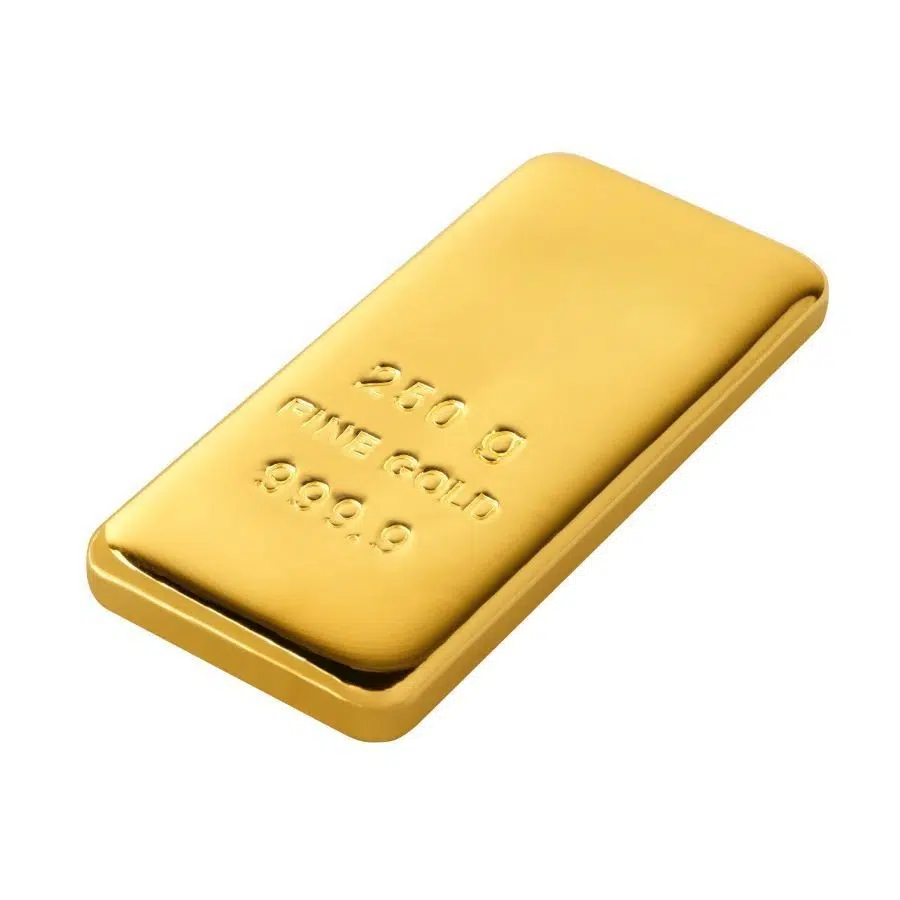
Gold remains the most sought-after precious metal in jewelry manufacturing, valued for its natural luster, malleability, resistance to tarnish, and enduring cultural significance. Pure gold (24 karat) is too soft for most jewelry applications, so it is alloyed with other metals to increase hardness and durability. 18K gold (75% pure gold) is the standard for luxury and fine jewelry, offering an ideal balance of purity, color richness, and structural integrity. 14K gold (58.3% pure) provides greater durability at a more accessible price point and is widely used in the American and Northern European markets. 9K and 10K gold alloys serve the value segment with excellent wearing properties. Gold color is determined by the alloying metals: yellow gold uses copper and silver, white gold uses palladium or nickel with rhodium plating, and rose gold uses a higher copper ratio to achieve its warm pink hue. At Maneekan Siam, we work with all gold karats and colors, producing everything from 9K fashion pieces to 18K high-jewelry collections.
Silver: Sterling, Argentium & Alloys
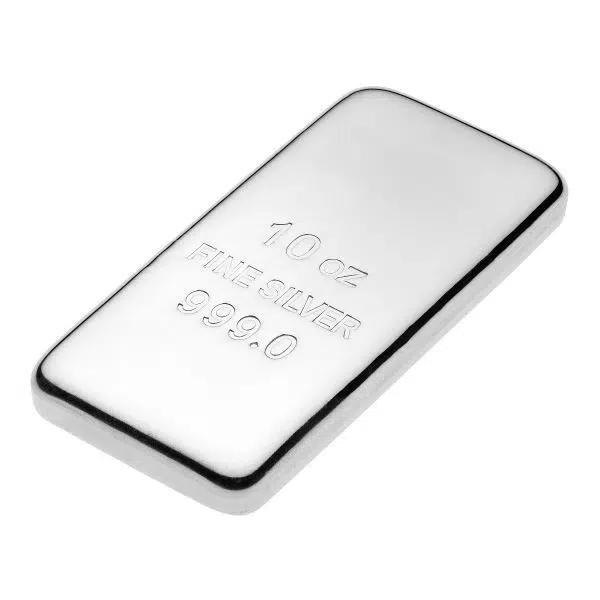
Sterling silver (92.5% silver, 7.5% copper) is the industry standard for silver jewelry, offering excellent workability, a bright white color, and an accessible price point that makes it one of the most popular materials in global jewelry markets. Sterling silver's primary challenge is tarnishing — the copper content reacts with sulfur compounds in air and skin, creating a dark patina over time. Anti-tarnish treatments, rhodium plating, and e-coating can significantly extend the time between cleanings. Argentium silver is a modern alloy that replaces some copper with germanium, resulting in superior tarnish resistance and a slightly whiter color than traditional sterling. Fine silver (99.9% pure) is occasionally used for specific applications such as granulation, filigree, and Thai silver jewelry traditions, though its softness limits its use in structural components. Silver is highly versatile in manufacturing — it casts, stamps, solders, and plates exceptionally well, making it suitable for virtually every jewelry production technique.
Platinum: The Premium Choice
Platinum is the densest and most durable precious metal used in jewelry, with a natural white color that never fades or tarnishes. Its exceptional hardness (4-4.5 on the Mohs scale in jewelry alloys) and resistance to wear make it the preferred metal for high-end engagement rings, wedding bands, and heirloom pieces designed to last generations. Platinum jewelry is typically produced in 950 (95% pure) or 900 (90% pure) alloys, with iridium, ruthenium, or cobalt as the alloying elements. Platinum's density — approximately 60% heavier than 14K gold — gives platinum jewelry a substantial, luxurious feel in hand. Manufacturing with platinum requires specialized expertise due to its high melting point (1,768°C), different soldering requirements, and specific polishing techniques. Platinum develops a characteristic surface patina over time that many connoisseurs appreciate, though it can be re-polished to a mirror finish. Its hypoallergenic properties make it the ideal choice for clients with metal sensitivities.
Explore our precious metal production capabilities →Base Metals in Jewelry Production
Brass: Versatile & Cost-Effective
Brass (primarily a copper-zinc alloy) is the workhorse material of the fashion and costume jewelry industry, and for good reason. It offers excellent casting and machining properties, accepts plating beautifully, and costs a fraction of precious metals — enabling brands to produce design-forward jewelry at accessible price points. Brass alloys commonly used in jewelry include C26000 (cartridge brass, 70% copper / 30% zinc) for stamping and forming, and C36000 (free-cutting brass) for CNC machining and turning. With quality gold, rose gold, or rhodium plating, brass jewelry can achieve an appearance virtually indistinguishable from solid precious metal pieces. At Maneekan Siam, brass represents a significant portion of our production, and our plating department applies multiple layers of base coat, precious metal, and protective top coat to ensure long-lasting finish quality on every brass piece.
Bronze: Heritage & Character
Bronze (primarily copper-tin alloy) has been used in decorative metalwork for thousands of years and is experiencing a renaissance in contemporary jewelry design. Bronze offers a warm, rich color ranging from golden to deep brown depending on the alloy composition and surface treatment. Its natural patina development — the characteristic green-brown oxidation that occurs over time — is often embraced as a design feature rather than a defect, giving bronze jewelry a lived-in, vintage character that appeals to artisan and heritage-inspired brands. Bronze is harder than brass, providing better scratch resistance for everyday wear, and it casts with excellent detail reproduction, making it suitable for intricate sculptural designs. Tin bronze alloys (typically 88-92% copper, 8-12% tin) are most common in jewelry applications, offering good corrosion resistance and a warm color that complements both casual and formal styling.
Stainless Steel: Durability & Modern Appeal
Stainless steel — particularly 316L surgical grade — has established itself as a major material in men's jewelry, fashion accessories, and the watch industry. Its exceptional corrosion resistance, scratch hardness (Mohs 5.5-6.5), hypoallergenic properties, and virtually indestructible nature make it ideal for jewelry designed for daily wear in demanding conditions. 316L stainless steel contains chromium, nickel, and molybdenum, creating a self-healing oxide layer that prevents tarnishing and corrosion even with constant skin contact, water exposure, and chemical contact. Stainless steel's weight and solidity give pieces a premium, substantial feel. It pairs exceptionally well with PVD coating technology, accepting black, gold, rose gold, and gunmetal finishes with outstanding durability. Manufacturing with stainless steel requires specialized tooling due to its hardness — CNC machining, laser cutting, and precision casting (investment casting or MIM — metal injection molding) are the primary production methods.
Gemstones in Jewelry Manufacturing
Diamonds: Natural & Lab-Grown
Diamonds remain the most commercially important gemstone in jewelry, valued for their unmatched hardness (Mohs 10), exceptional brilliance, and powerful cultural association with love, commitment, and luxury. Natural diamonds are graded on the 4Cs — cut, color, clarity, and carat weight — with the Gemological Institute of America (GIA) grading system serving as the global standard. Lab-grown diamonds, produced through HPHT (High Pressure High Temperature) or CVD (Chemical Vapor Deposition) processes, are chemically, optically, and physically identical to natural diamonds but typically cost 60-80% less, making them increasingly popular for fashion jewelry and brands targeting value-conscious consumers. Both natural and lab-grown diamonds are available in a full range of shapes — round brilliant, princess, emerald, oval, cushion, marquise, pear, and more — and can be set using every standard technique including prong, bezel, pave, channel, and invisible setting.
Colored Precious Gemstones: Sapphire, Ruby & Emerald
The 'big three' colored gemstones — sapphire, ruby, and emerald — represent the pinnacle of colored stone jewelry. Sapphires (corundum, Mohs 9) are available in every color of the spectrum, with blue sapphire being the most commercially significant, followed by pink, yellow, padparadscha (pink-orange), and white sapphires. Ruby (also corundum, Mohs 9) ranges from pinkish-red to the prized 'pigeon blood' deep red. Both sapphire and ruby offer exceptional hardness, making them suitable for everyday wear in rings and bracelets. Emerald (beryl, Mohs 7.5-8) is valued for its rich green color but requires more careful handling due to its characteristic inclusions (called 'jardin') that can make it prone to chipping. Thailand is a global center for colored gemstone trading and treatment, and Maneekan Siam's location in Bangkok provides direct access to the world's largest colored stone supply chain for our stone sourcing department.
Semi-Precious Gemstones: Amethyst, Citrine, Topaz & More
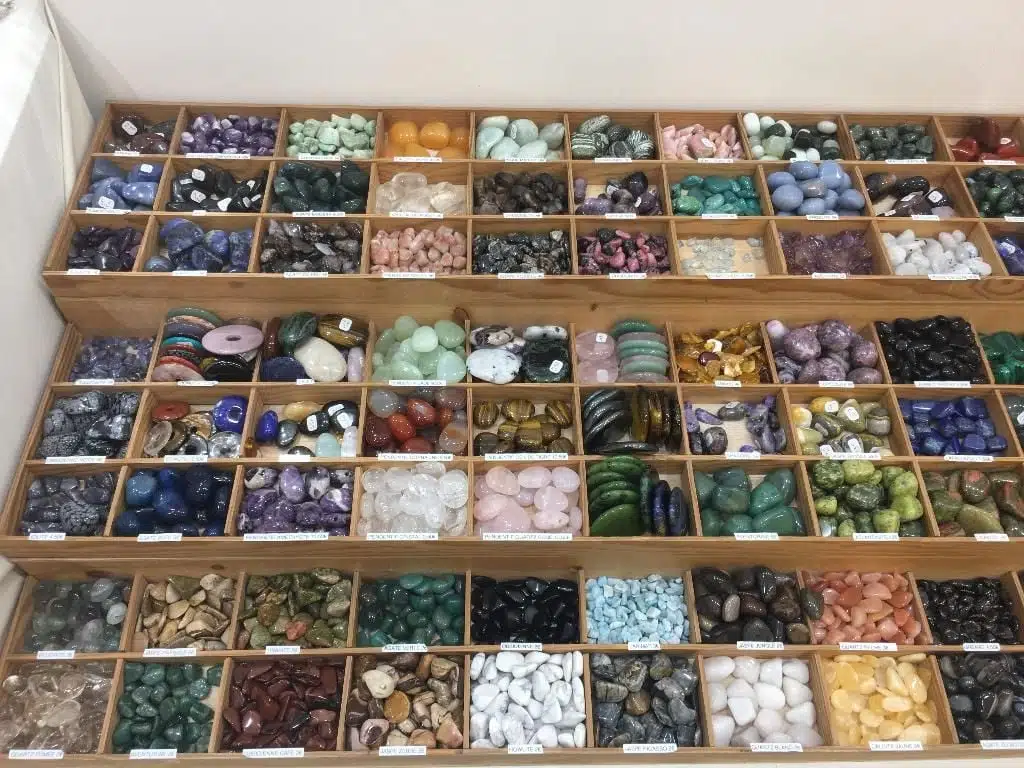
Semi-precious gemstones offer an extraordinary range of colors, optical effects, and price points that enable brands to create vibrant, design-forward collections without the cost of precious stones. Amethyst (purple quartz, Mohs 7) ranges from pale lavender to deep royal purple and is one of the most popular colored stones in jewelry. Citrine (yellow-orange quartz, Mohs 7) provides warm golden tones that complement both gold and silver settings. Blue topaz (Mohs 8) — available in sky, Swiss, and London blue — is the best-selling colored gemstone in many markets. Garnet spans from deep red (pyrope, almandine) to vivid green (tsavorite, demantoid). Peridot offers a distinctive yellow-green, tourmaline covers virtually the entire color spectrum, and aquamarine provides a serene blue that works beautifully in both fine and fashion jewelry. All of these stones are widely available in calibrated sizes for series production, making them excellent choices for commercial jewelry lines.
Organic Gems: Pearl, Coral & Amber
Organic gemstones — materials of biological origin — bring unique textures, lusters, and cultural associations to jewelry design. Pearls, both natural and cultured, are available in freshwater and saltwater varieties, with Akoya, South Sea, and Tahitian pearls representing the premium end of the market. Pearls range from 2mm seed pearls to exceptional 18mm+ South Sea specimens, in colors from white and cream to pink, gold, silver, and black. Coral — particularly Mediterranean red coral (Corallium rubrum) and Japanese aka coral — provides a distinctive warm red to pink color with a smooth, waxy luster, though ethical sourcing concerns have increased attention on sustainable harvesting practices. Amber, fossilized tree resin ranging from 20 to 300 million years old, offers warm golden to cognac tones with occasional fascinating inclusions of ancient insects or plant material. Mother of pearl and abalone shell provide iridescent surfaces for inlay work, dial making, and decorative elements. All organic gems require gentler treatment during manufacturing — lower processing temperatures, careful polishing, and secure but non-damaging setting techniques.
Explore our stone sourcing expertise →Surface Finishes in Jewelry
Polishing: Mirror, High-Polish & Bright Finishes
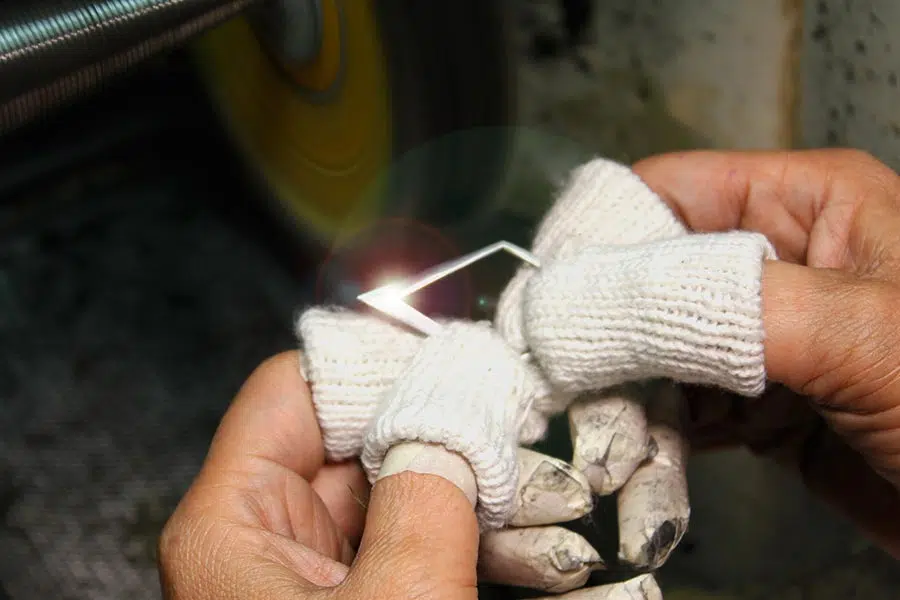
Polishing is the most fundamental surface finish in jewelry manufacturing, transforming raw metal into the brilliant, reflective surfaces that define fine jewelry's visual appeal. Mirror polishing (also called high-polish or bright finish) produces a perfectly smooth, highly reflective surface that maximizes light return and gives metals their characteristic luster. The polishing process progresses through multiple stages — from coarse abrasive removal of casting marks and tool lines, through medium-grit smoothing, to fine polishing with rouge compounds that produce the final mirror surface. At Maneekan Siam, our finishing department uses a combination of hand polishing by skilled artisans, barrel tumbling for batch processing, and magnetic pin tumbling for reaching into complex geometries and recessed areas. The quality of the polish directly affects the perceived quality of the finished piece — even minor surface imperfections visible under 10x magnification can distinguish luxury-grade finishing from commercial-grade work.
Matte & Satin Finishes
Matte and satin finishes have become increasingly popular in contemporary jewelry design, offering a sophisticated alternative to traditional high-polish surfaces. A matte finish produces a flat, non-reflective surface achieved through bead blasting (propelling fine media particles against the metal surface), chemical etching, or controlled abrasive techniques. Satin finish — sometimes called brushed finish — creates fine parallel lines on the metal surface that diffuse light into a soft, directional sheen, achieved by brushing the metal with abrasive pads, sandpaper, or specialized wire wheels in a consistent direction. Both finishes are highly effective at concealing minor scratches during daily wear, making them practical choices for rings and bracelets. Matte and satin surfaces also create striking visual contrast when combined with polished elements in the same piece — a design technique widely used in modern luxury jewelry and high-end watches.
Hammered & Textured Finishes
Hammered, textured, and patterned finishes add dimensionality and visual interest to jewelry surfaces, creating pieces with distinctive character and tactile appeal. Hand-hammered finishes are produced by striking the metal surface with planishing hammers of various shapes, creating irregular faceted impressions that catch and scatter light in unpredictable patterns. Each piece is unique because the hammer pattern is never exactly replicated. Florentine finish uses a specialized engraving tool to create a crosshatched pattern of fine lines, producing a distinctive soft luster associated with Italian jewelry tradition. Sandblasted textures, achieved by propelling fine abrasive particles at the metal surface under controlled pressure, can range from subtle matte effects to deeply textured surfaces depending on the media type, pressure, and duration. Laser texturing — an increasingly important technique — uses focused laser beams to engrave precise patterns, logos, textures, and even photographic images onto metal surfaces with micron-level accuracy.
Discover our finishing and surface treatment capabilities →Plating & Coatings for Jewelry
Rhodium Plating
Rhodium plating is the standard finish for white gold jewelry and is increasingly applied to sterling silver to enhance whiteness and prevent tarnishing. Rhodium — a platinum group metal — produces an exceptionally bright, white, and highly reflective surface that is harder and more scratch-resistant than the underlying metal. A typical rhodium plating thickness for jewelry ranges from 0.5 to 1.5 microns, applied through electroplating over a nickel or palladium barrier layer. Rhodium-plated surfaces resist tarnishing and maintain their bright white appearance significantly longer than unplated white gold or silver. The plating will gradually wear over time with regular use, particularly on high-contact areas like ring shanks and bracelet clasps, and will eventually require re-plating. At Maneekan Siam, our plating department applies rhodium using controlled-thickness processes that ensure consistent coverage and optimal durability across every piece in a production run.
Gold Plating & Vermeil
Gold plating applies a thin layer of gold onto a base metal or silver substrate through electroplating, enabling the production of gold-toned jewelry at a fraction of solid gold's cost. Plating thickness is the primary determinant of durability and quality: flash plating (under 0.5 microns) is the most economical but wears quickly; standard plating (0.5 to 2.5 microns) provides reasonable longevity for fashion jewelry; and heavy gold plating (2.5 to 5 microns) offers extended wear life suitable for premium fashion and demi-fine markets. Gold vermeil — sterling silver plated with at least 2.5 microns of gold — occupies a specific market position between fashion and fine jewelry, combining a precious metal base with gold aesthetics at an accessible price. Gold plating can replicate yellow gold, rose gold, and champagne gold tones depending on the bath chemistry. Multiple underlayers — including copper strike, nickel or palladium barrier, and finally the gold layer — are essential for proper adhesion, color consistency, and longevity.
PVD (Physical Vapor Deposition) Coating
PVD (Physical Vapor Deposition) represents the most advanced coating technology available for jewelry, producing coatings that are dramatically harder, more durable, and more wear-resistant than traditional electroplating. PVD works by vaporizing a target material in a high-vacuum chamber and depositing it atom by atom onto the jewelry surface, creating an extremely thin (typically 0.5 to 5 microns) but remarkably hard and adherent film. PVD coatings achieve hardness levels of 2,000 to 3,000 Vickers — compared to approximately 200 Vickers for gold plating — making them virtually scratch-proof under normal wearing conditions. Available PVD colors include gold (using titanium nitride), rose gold (using zirconium nitride), black (using diamond-like carbon or titanium carbonitride), and gunmetal gray. PVD is the finish of choice for premium stainless steel jewelry, watches, and accessories where long-term surface durability is a primary requirement. The technology requires significant capital investment in vacuum chamber equipment, making it a capability that distinguishes well-equipped manufacturers.
Ruthenium Plating
Ruthenium plating produces a distinctive dark gray to black finish that has become highly popular in contemporary men's jewelry, fashion accessories, and edgy designer collections. Ruthenium — another platinum group metal — creates a harder and more durable dark finish compared to black rhodium plating, with excellent resistance to scratching and chemical attack. The color ranges from medium gunmetal gray to near-black depending on plating thickness and bath chemistry, with a characteristic metallic sheen that distinguishes it from the flat black of PVD or black oxide coatings. Ruthenium plating is applied through standard electroplating processes, making it accessible to manufacturers with existing plating infrastructure. It adheres well to silver, gold, and brass substrates with appropriate underlayers. Ruthenium's combination of dark aesthetic, durability, and relative ease of application has made it a go-to choice for brands seeking sophisticated dark-toned jewelry without the higher cost and specialized equipment requirements of PVD coating.
Frequently Asked Questions
What is the best metal for jewelry manufacturing?
The best metal depends on the design intent, target market, and price point. Gold (14K or 18K) offers the ideal balance of durability, workability, and luxury appeal for fine jewelry. Sterling silver (925) is the standard for accessible luxury and fashion-forward designs. Platinum is the premium choice for high-end bridal and heirloom pieces due to its density, durability, and hypoallergenic properties. For fashion jewelry at competitive price points, brass with quality plating delivers excellent aesthetics and design flexibility.
What is the difference between gold plating and gold vermeil?
Gold plating applies a thin layer of gold (typically 0.5 to 2.5 microns) over a base metal such as brass or stainless steel through electroplating. Gold vermeil is a specific type of gold plating where sterling silver is the base metal and the gold layer is at least 2.5 microns thick. Vermeil is considered a higher-quality option because it uses a precious metal base, offers better durability due to the thicker gold layer, and carries a more premium market positioning. Both options are significantly more affordable than solid gold.
Which gemstones are most durable for everyday jewelry?
Diamonds (Mohs hardness 10) are the most durable gemstone for everyday wear. Sapphires and rubies (Mohs 9) are excellent alternatives offering exceptional hardness and scratch resistance. For colored stone options, topaz (Mohs 8) and aquamarine (Mohs 7.5-8) provide good durability. Stones below Mohs 7, including opals, pearls, and emeralds, require more careful wear and are better suited for earrings, pendants, and occasion jewelry rather than daily-wear rings and bracelets.
What is PVD coating in jewelry?
PVD (Physical Vapor Deposition) is an advanced coating technology that deposits a thin, extremely hard film onto jewelry surfaces in a vacuum chamber. PVD coatings are significantly more durable than traditional electroplating, with superior scratch resistance and color retention. Common PVD finishes include gold tones, rose gold, black, and gunmetal. PVD is especially popular for stainless steel jewelry and watches because of its exceptional longevity — PVD-coated pieces can maintain their appearance for years of daily wear without fading or tarnishing.
How does Maneekan Siam handle material selection for custom jewelry orders?
At Maneekan Siam, material selection is an integral part of our design and development process. Our team works with clients to evaluate the optimal combination of metals, stones, finishes, and coatings based on the design concept, target price point, durability requirements, and intended market. We maintain relationships with certified precious metal refiners and trusted gemstone suppliers, ensuring consistent quality and ethical sourcing across all materials. Our vertically integrated facility in Bangkok allows us to prototype and test material combinations in-house before committing to production.
Choosing the Right Materials for Your Jewelry Collection
Jewelry material selection is far more than a technical decision — it defines the character, quality perception, price positioning, and durability of every piece in your collection. From the warm richness of 18K gold to the modern resilience of PVD-coated stainless steel, from the timeless brilliance of diamonds to the vibrant palette of semi-precious gemstones, from mirror-polished surfaces to artisan hammered textures, each material choice shapes the story your jewelry tells. Understanding these materials and their manufacturing implications empowers brands to make decisions that align design vision with market reality.
At Maneekan Siam, materials expertise is at the core of our manufacturing capability. Our vertically integrated facility in Bangkok works across the full spectrum of jewelry materials — gold, silver, platinum, brass, stainless steel, natural and lab-grown gemstones, and every major finishing and plating technique covered in this guide. With over 300 skilled artisans and 17 specialized departments, we help brands translate material specifications into finished pieces of exceptional quality. Contact us to discuss the material requirements for your next collection, and let our team demonstrate how the right material choices can elevate your designs from concept to reality.