Published on March 3, 2026
Your Most Important Jewelry Manufacturing Questions, Answered
Whether you are launching your first jewelry brand, expanding your existing collection, or evaluating a new manufacturing partner, you likely have questions about how jewelry production actually works. From minimum order quantities and lead times to sustainability certifications and pricing structures, the jewelry manufacturing process involves numerous decisions that directly impact your product quality, margins, and brand reputation.
We have compiled the 25 most frequently asked questions we receive from brands, designers, and buyers worldwide, and answered each one with clear, factual information drawn from our decades of experience as an RJC-certified manufacturer in Bangkok. Each answer is designed to give you the essential knowledge you need to make informed decisions about your jewelry production.
Manufacturing Process
What is the typical minimum order quantity (MOQ) for jewelry manufacturing?
The typical MOQ for jewelry manufacturing ranges from 50 to 500 pieces per design, depending on the manufacturer and production method. Casting-based production generally allows lower MOQs of 50-100 pieces, while stamping and die-striking processes require higher quantities of 300-500 pieces to justify tooling costs. Many manufacturers, including Maneekan Siam, offer flexible MOQs for first orders to allow brands to test quality before scaling up.
How long does jewelry production take from order to delivery?
Jewelry production typically takes 4 to 10 weeks from order confirmation to delivery. Simple cast pieces may be completed in 3-4 weeks, while complex designs involving multiple techniques such as enameling, stone setting, and hand finishing can require 8-12 weeks. Sampling and prototyping add 2-3 weeks before bulk production begins, so total lead time from initial inquiry to final delivery is usually 6-14 weeks.
Explore our production facility →What metals are commonly used in jewelry manufacturing?
The most commonly used metals in jewelry manufacturing are gold (9K, 14K, 18K, 22K), sterling silver (925), platinum, palladium, and brass. Gold and silver are the most popular choices for fine jewelry due to their workability and market demand. Brass and bronze are widely used for fashion jewelry and costume pieces, offering an affordable alternative that can be plated with gold, rhodium, or other precious metal finishes.
What manufacturing techniques are used to produce jewelry?
The primary jewelry manufacturing techniques include lost-wax casting, stamping, die-striking, electroforming, and hand fabrication. Lost-wax casting is the most versatile method, suitable for complex three-dimensional designs. Stamping and die-striking are used for high-volume flat or relief designs. Advanced manufacturers also employ CNC milling, laser cutting, and 3D printing for prototyping and production of precision components.
Discover our finishing expertise →What are the main steps in the jewelry manufacturing process?
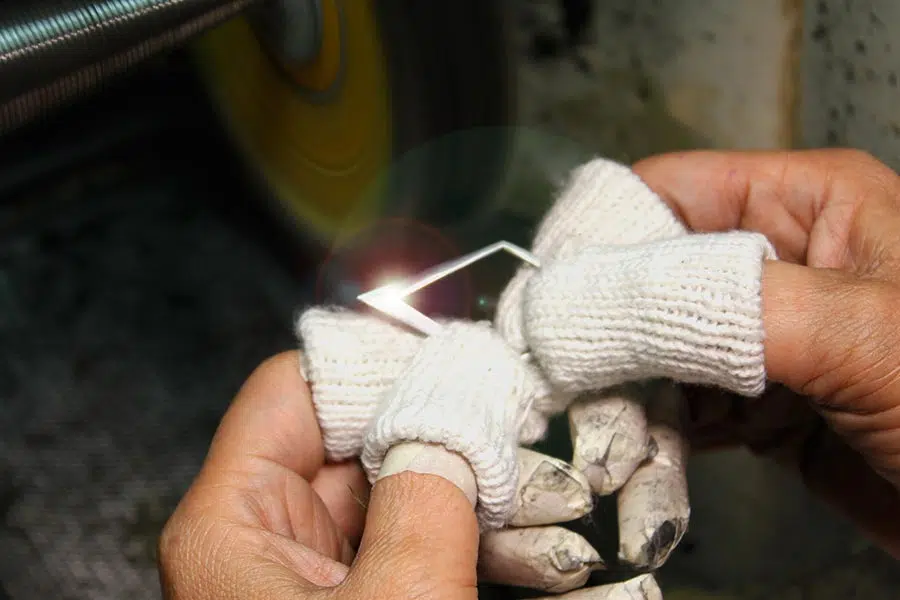
The main steps in jewelry manufacturing are design and CAD modeling, prototyping (3D printing or wax carving), mold making, casting or fabrication, assembly, stone setting, finishing and polishing, quality control, and packaging. Each step involves specialized equipment and skilled artisans. A vertically integrated manufacturer handles all these steps in-house, which ensures quality consistency and shorter lead times.
See our full production process →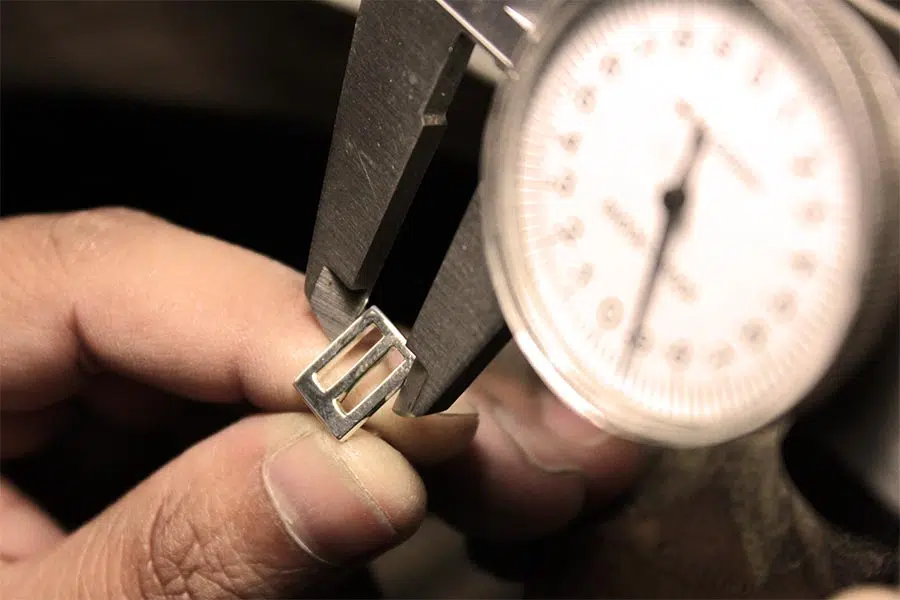
Materials & Quality
What is the difference between gold karats (9K, 14K, 18K, 22K)?
Gold karat indicates the proportion of pure gold in an alloy, measured on a scale of 24. 9K gold contains 37.5% pure gold, 14K contains 58.5%, 18K contains 75%, and 22K contains 91.7%. Higher karat gold has a richer yellow color and greater intrinsic value but is softer and less durable for daily wear. 14K and 18K are the most popular choices for fine jewelry, balancing beauty, durability, and value.
What is sterling silver and how is it used in jewelry?
Sterling silver is an alloy containing 92.5% pure silver and 7.5% other metals, typically copper, designated by the 925 hallmark. Pure silver (999) is too soft for most jewelry applications, so the copper addition provides the necessary hardness and durability. Sterling silver is widely used for rings, necklaces, earrings, and bracelets, and can be rhodium-plated to prevent tarnishing and enhance brightness.
What types of plating are available for jewelry?
Common jewelry plating options include gold plating (yellow, rose, and white gold), rhodium plating, ruthenium plating, black PVD coating, and two-tone combinations. Gold plating thickness is measured in microns, with flash plating at 0.1-0.5 microns and heavy plating at 2.5-5 microns for greater durability. Rhodium plating is applied to white gold and sterling silver to enhance brightness and scratch resistance.
How is quality control performed in jewelry manufacturing?
Quality control in jewelry manufacturing involves multiple inspection checkpoints throughout production. Key QC procedures include metal purity assay testing, dimensional measurement with digital calipers and micrometers, visual inspection under magnification for surface defects, stone setting security testing, plating thickness measurement with XRF analyzers, and final inspection against approved samples. A rigorous QC process typically achieves defect rates below 2%.
What certifications should a jewelry manufacturer hold?
A reputable jewelry manufacturer should hold RJC (Responsible Jewellery Council) certification, which verifies ethical sourcing and responsible business practices across the entire supply chain. Other valuable certifications include ISO 9001 for quality management, REACH and RoHS compliance for European markets, and Kimberley Process certification for conflict-free diamonds. Industry association memberships such as TGJTA further demonstrate professional standards.
View our certifications →Design & Prototyping
What is CAD design in jewelry manufacturing?
CAD (Computer-Aided Design) is the process of creating precise three-dimensional digital models of jewelry using specialized software such as Rhino 3D and Matrix Gold. CAD allows designers to visualize a piece from every angle, calculate exact metal weights, plan stone placements, and identify structural issues before any physical production begins. CAD files are used directly for 3D printing prototypes and for creating production-ready molds.
Learn about our CAD capabilities →How is 3D printing used in jewelry production?
3D printing in jewelry production is primarily used for creating wax or resin prototypes and casting patterns. High-resolution printers can produce models with layer thicknesses as fine as 16 microns, capturing intricate details that would be impossible to achieve by hand. Modern jewelry manufacturers can 3D print 300 or more pieces overnight, making it an efficient method for both prototyping and direct casting pattern production.
Explore our 3D printing technology →What is wax carving and when is it used?
Wax carving is a traditional jewelry technique where artisans hand-sculpt jewelry models from blocks of carving wax, which are then used to create molds for lost-wax casting. Wax carving is used when designs require organic, flowing shapes that benefit from a hand-crafted touch, or when a one-of-a-kind master model is needed. While 3D printing has replaced wax carving for many applications, skilled wax carvers remain essential for custom and haute joaillerie work.
How does the sampling process work?
The sampling process begins with the client submitting a design brief, reference images, or CAD files. The manufacturer creates a CAD rendering for approval, followed by a 3D-printed or wax-carved prototype. After the prototype is approved, a production sample is made in the final material with full finishing and stone setting. This sample serves as the quality benchmark for bulk production. The entire sampling process typically takes 2-4 weeks.
Do jewelry manufacturers offer design services?
Many professional jewelry manufacturers offer comprehensive design services, from initial concept sketching to full CAD modeling and rendering. ODM (Original Design Manufacturing) services include trend research, collection development, technical design optimization, and rendering of photorealistic visuals for marketing. Manufacturers like Maneekan Siam maintain in-house design teams that can develop complete collections based on a client brand brief and target market requirements.
Discover our design services →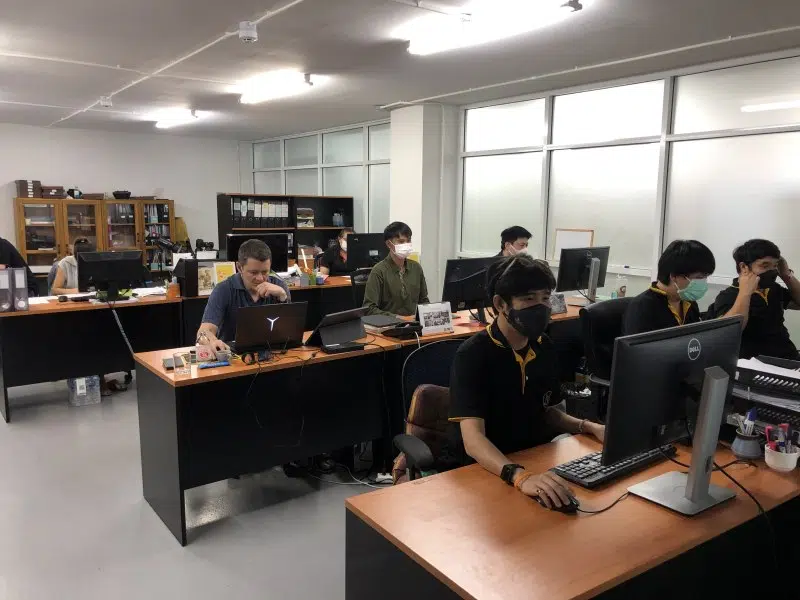
Business & Ordering
How is jewelry manufacturing pricing determined?
Jewelry manufacturing pricing is determined by four main components: raw material cost (metal weight multiplied by current market price), labor cost (based on complexity and time per piece), overhead costs (factory operations, QC, packaging), and margin. Precious metal prices fluctuate daily, so quotes typically lock the metal price for a limited period. Stone costs are quoted separately based on type, size, and quality grade.
What payment terms do jewelry manufacturers typically offer?
Standard payment terms for jewelry manufacturing are 50% deposit upon order confirmation and 50% balance before shipment. Some manufacturers offer 30/70 or 40/60 splits for established clients. Payment is typically made by wire transfer (T/T), with some manufacturers accepting letters of credit for large orders. First-time orders almost always require a deposit to cover raw material procurement costs.
How is finished jewelry shipped internationally?
Finished jewelry is typically shipped via insured express courier services such as DHL, FedEx, or UPS, with full declared value insurance. Shipments are securely packaged in tamper-evident containers and tracked from dispatch to delivery. For high-value shipments, specialized secure logistics providers like Brinks or Malca-Amit may be used. The manufacturer handles export documentation, and the buyer is responsible for import duties and customs clearance.
Can jewelry manufacturers provide custom packaging?
Most jewelry manufacturers offer custom packaging services, including branded boxes, pouches, bags, cards, and tissue paper printed with the client logo and brand identity. Custom packaging is typically quoted separately from the jewelry production and requires minimum order quantities, usually 500 to 1,000 units. Lead time for custom packaging production is generally 3-4 weeks, so it should be ordered in advance of the jewelry production completion date.
How do you communicate with an overseas jewelry manufacturer?
Effective communication with an overseas jewelry manufacturer involves a combination of email for formal correspondence and documentation, messaging apps like WhatsApp or LINE for quick updates and photo sharing, and video calls for design reviews and factory tours. A dedicated account manager should be assigned to each client to ensure continuity. Time zone differences should be planned for, and all design approvals and order confirmations should be documented in writing.
Contact our team →
Sustainability & Ethics
What is RJC certification and why does it matter?
RJC (Responsible Jewellery Council) certification is the leading international standard for responsible business practices in the jewelry supply chain. RJC-certified companies are independently audited to verify compliance with standards covering human rights, labor practices, environmental impact, mining practices, and product integrity. For brands and retailers, partnering with an RJC-certified manufacturer demonstrates a verified commitment to ethical sourcing and responsible production.
Learn about our RJC certification →How can I ensure my jewelry is made with conflict-free materials?
Ensuring conflict-free materials requires working with manufacturers who maintain documented, auditable supply chains for all precious metals and gemstones. Key indicators include RJC certification, Kimberley Process compliance for diamonds, and the ability to provide certificates of origin for stones and metals. Reputable manufacturers source materials from established, vetted suppliers and can provide chain-of-custody documentation upon request.
Can jewelry be manufactured using recycled metals?
Recycled precious metals are widely available and commonly used in modern jewelry manufacturing. Recycled gold and silver are refined to the same purity standards as newly mined metals, making them chemically identical with no quality compromise. Using recycled metals reduces the environmental impact of mining and is increasingly demanded by sustainability-conscious consumers and brands. Many manufacturers now offer recycled metal options as standard.
Read about our sustainability practices →What does carbon-neutral jewelry manufacturing mean?
Carbon-neutral jewelry manufacturing means a manufacturer has measured its total greenhouse gas emissions from production operations and offset them through verified carbon reduction or removal projects. This includes emissions from energy consumption, transportation, waste processing, and supply chain activities. Some manufacturers achieve partial carbon neutrality through on-site solar energy, energy-efficient equipment, and waste reduction programs before offsetting remaining emissions.
Explore our carbon-neutral commitment →How do ethical jewelry manufacturers source gemstones responsibly?
Ethical jewelry manufacturers source gemstones through established supply chains with full traceability from mine to market. This includes working with suppliers who comply with the Kimberley Process for diamonds, sourcing colored gemstones from mines with documented fair labor practices, and maintaining supplier audit records. Some manufacturers also work with Fairtrade-certified or community mining cooperatives to support responsible small-scale mining operations.
Partner with an Experienced Jewelry Manufacturer
Understanding the fundamentals of jewelry manufacturing empowers you to ask the right questions, evaluate potential partners effectively, and make decisions that protect your brand quality and margins. From production processes and material choices to sustainability certifications and business terms, every aspect of the manufacturing relationship impacts your final product and your brand reputation.
At Maneekan Siam, we welcome your questions. As an RJC-certified, vertically integrated manufacturer in Bangkok with expertise spanning 17 specialized departments, we have the experience and transparency to provide clear answers and deliver exceptional results. Contact us to discuss your jewelry manufacturing requirements and discover how our team can bring your designs to life.